

Serwan Zangana | Exclusive to iKurd.net
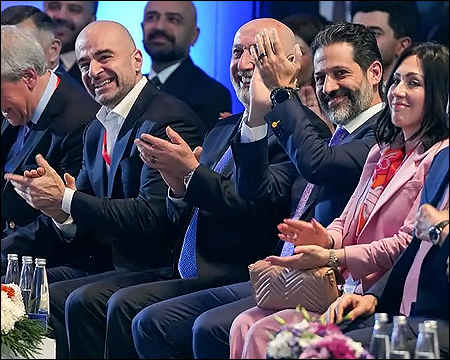
On June 6–7, 2026, the Delphi Economic Forum, which is a Greek organization that discusses topics of economy, politics, and global affairs, held its international conference in Sulaimani City of the Kurdistan Region, Iraq.
A group of politicians, educators, and prominent figures participated in the forum and discussed the significant potential for businesses and economic development specifically in Sulaimani and, generally, in the Kurdistan Region.
Kurdistan and Iraq’s political situation and the ongoing conflicts in the Middle East, including the U.S.-Iran war and its impact on the entire region, were the main topics of concern, and they were covered in detail by the group as well.
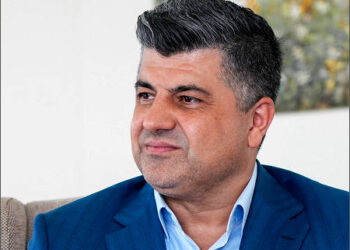
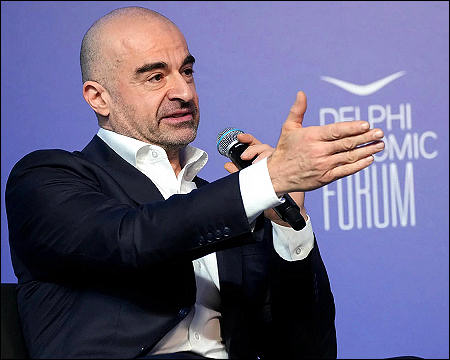
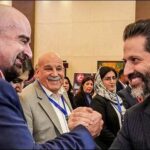
Bafel Talabani, the President of the Patriotic Union of Kurdistan (PUK), was among the participants as he underlined the existing issues and the deficiencies in the Kurdistan Region and the bitter relationship between the political parties in the Kurdistan Region and, on the other hand, the relationship with Baghdad.
Such relationships are generally attributed to the mentality of political leaders across all parties, particularly those of the Kurdistan Democratic Party (KDP).
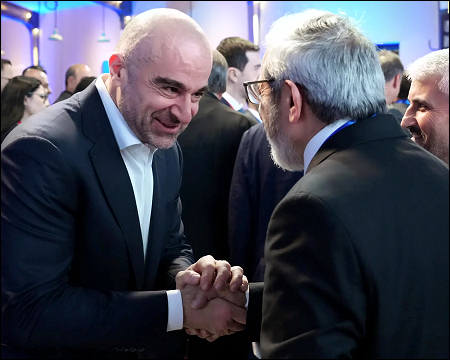
Bafel and his brother Qubad are also part of the Kurdish problems in the region, as corruption can obviously be seen under their power through controlling Sulaimani’s revenue to be used for their interests and lifestyle.
At the forum, however, he mentioned Massoud Barzani’s stubbornness and unwillingness to meet and agree to solve the issues. “Why can I sit with Mamosta Salahaddin Bahadin [Secretary-General of the Kurdistan Islamic Union]… Why can’t we do that with Kak Massoud?” Bafel said.
The Barzani family’s closed mindset, as they control the Kurdistan Region Government (KRG) and the capital of the region, Erbil, has definitely delayed forming the government since the parliamentary election of Iraq was conducted in November 2025.
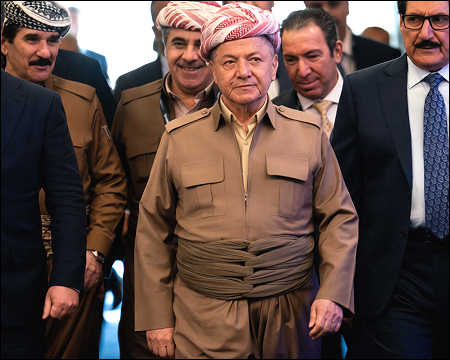
Massoud Barzani is not able to accept a democratic system that is run by the people and through which they reject one political party and elect another. Applying the rule of one leader, one party, and sanctifying leaders and even religious figures are the major problems in the Middle East, including the Kurdistan Region.
Neither Delphi nor any other forum is able to advance the region and positively impact the lives of people unless the Kurdish leaders make an effort and willingly put their political conflict aside and implement an agenda that completely serves the people of Kurdistan. Perhaps the foreign participants of the forum were not aware of the reality of the people of Kurdistan and the broken system of the Kurdistan Region government.
All that can be seen in Kurdistan is the tall buildings, the wide streets, and the fancy malls and hotels. But behind these fancy places are the majority of working people who grapple with economic hardship and struggle for their basic needs. The question that should have been asked is: How many more years do the people of Kurdistan have to beg Barzani, Talabani, and the Iraqi government for their legitimate salary?
Apparently, no members of Barzani’s family attended the forum, and this should not be a surprise for observers. However, two hours after the forum began, the host remembered to welcome Falah Mustafa Bakir, the representative of Kurdistan Region President Nechirvan Barzani.

Barzani’s family has been the engineer of division and plots in Kurdish history, as it has caused more damage to the Kurdish revolution than construction, and in some areas such damage remains irreversible. Distinguishing themselves and granting the family the ownership of Kurdistan and the entitlement of the ultimate right to rule the region, Massoud has created the kingdom of Barzani with a plan to pass it on to the family’s posterity.
The KDP and the PUK are not able to form a government despite the parliamentary election result, which gave Barzani’s party 26 seats versus 15 seats for Talabani’s party. Obviously, the political conflict between the KDP and the PUK is an indication of the failure of both parties in running the region, which can assure the nations in the region, such as Turkey, Iran, and Iraq, that this Kurdish leadership has no ability to govern an independent Kurdistan.
As the negotiations to form a government in the Kurdistan Region continuously fail, the KDP and the PUK are usually derailed by blame-shifting without admitting their errors, which leads to failed negotiations. Understanding leadership is not such a complicated calculation, and forming a government can be as simple as assigning qualified and ethical individuals to the departments of the government.
But such a process is complicated because the KDP and the PUK monopolize the region and disregard the interests of the people of Kurdistan. What distinguishes Barzani from Talabani is only the public appearance and approach; otherwise, the two are aiming at the same target, which is their interests and lavish lifestyles.
According to the KDP, on June 13 in Erbil, the party’s political bureau, at the instruction of Massoud Barzani, started meeting with the political parties of the region to end the political deadlock. Realizing that Massoud is an obstacle per se in forming the government, and by overseeing the process and involving himself in every political decision-making process, he only hinders political progress in the region.
However, with optimism and cheers from the group of politicians and entrepreneurs, the Delphi Economic Forum ended in Sulaimani, but the struggle of the people of Kurdistan has not ended and will not end soon, U.S. policy in the region will not shift based on the Delphi Forum’s suggestions, and Massoud Barzani remains a constant barrier to the political process.
Serwan Zangana, a contributing writer for iKurd.net, lives in Virginia, U.S. He serves as a correction officer.
The views expressed are solely those of the author and do not necessarily reflect the opinions of iKurd.net or its editorial team.
Copyright © 2026 iKurd.net. All rights reserved.
Related posts:
 Iraqi Kurdistan: The Emperors’ New Clothes
 The Suffocation of Iraq Kurdistan
 The Mustashar and the Jash – A View from the Position of ‘Iraqi National Unity’ on the ‘Descendants of Treason’
 Iraqi Kurdistan – “Sold Out!” – Part II
 The Resurrection (Ba’ath) Party – Before the Iran-Iraq War
 Why corrupt Kurdish politicians don’t land in jail in Iraqi Kurdistan
 U.S. departments must drop the “Kurds will be Kurds” mindset
 Bafel Talabani “mentally ill and in need of treatment” says KDP’s Fazil Mirani
 Iraq – The Cynical Swindle
 KDP publishes fake audio of PUK leaders discussing election manipulation