

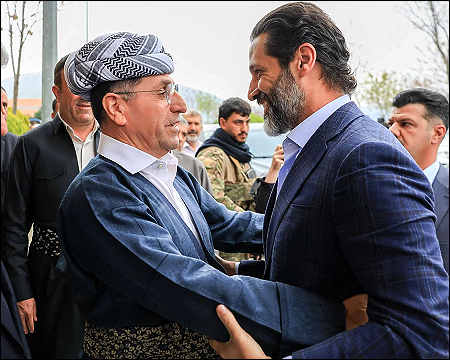
Will members of the KDP and PUK have the audacity to strongly condemn corruption within the Barzani family and among Talabani’s sons?
Serwan Zangana | Exclusive to iKurd.net
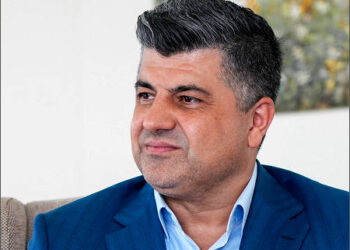
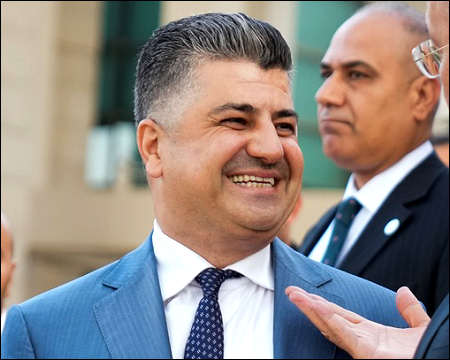
In a surprise move, the prominent figure of the Patriotic Union of Kurdistan (PUK), Faisal Karim Khan Bradosti, resigned from the leadership council and exited the party. Bradosti was an active member of the council and an official of the (PUK) and participated in many meetings representing the party. The reasons for the resignation are officially unclear; however, such a move is a blow to the (PUK).
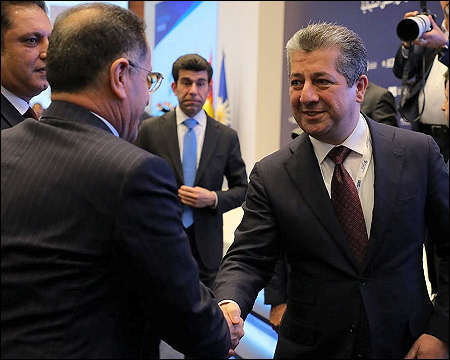
Overall, the Bradosti family has been influential in the region and its ties with Talabani have been traced back for decades. The resignation of Faisal Bradosti was attributed to the failure of Talabani’s sons, Qubad and Bafel’s leadership in handling the political situation generally, and the (PUK) specifically.
Obviously, any resignation of a member of a party’s leadership is a happy moment for a rival party, which is, in this case, the Barzani’s Kurdistan Democratic Party (KDP), which can have a blissful moment and maneuver around to perhaps attract Bradosti toward the party.
The Talabani’s sons are paralleled with the Barzani’s as they are ruling the two significant sources of Kurdistan revenue, the cities of Sulaimani and Erbil. While the parties’ principles are derived from the Talabani and Barzani family’s desires, there are only two options for the members of the (KDP) and the (PUK) to choose:
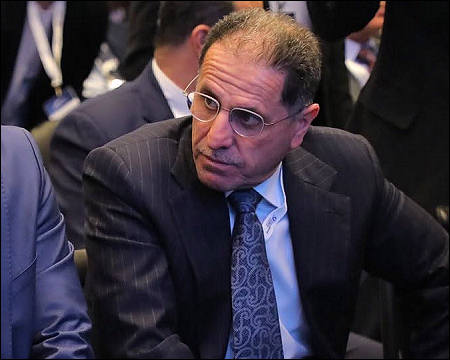
Either follow the party’s leadership blindly or reject the political manipulation and exit. People of Kurdistan have already given up hope in the political process of Kurdistan, with the understanding that it is not as simple as voting for an alternative and expelling the current leaders.
However, the resignation of Bradosti is beyond a simple disagreement with the (PUK) as it is a frustration that was kept for many years and finally exploded as the result of the two brothers, Qubad and Bafel’s actions and behavior. Bradosti has in the past expressed his concern about the Kurdish politicians and leaders in the region and their authoritarian rule in Kurdistan.
At the Delphi Forum in Sulaimani in 2023, Bradosti shed light on the dark areas and pointed at the main issues in Kurdistan. “… we believe that if this autocracy is not ended, the consequences would be quite unpleasant, and the adverse impacts will progressively become more obvious,” Bradosti said.
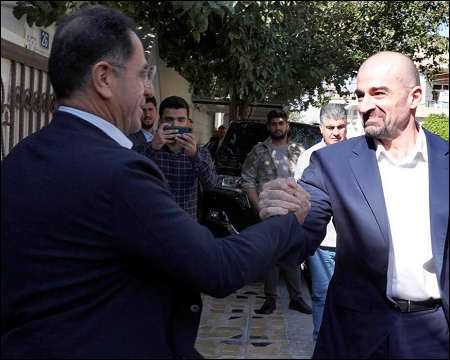
Obviously, Bradosti’s faith in the (PUK) and its leadership evaporated after he once saw such a leadership as the savior of the situation in Kurdistan. “…and dear brother Mr. Qubad in this difficult period. He will handle this scenario with patience and wisdom in the best interests of the public,” Bradosti said in the past.
Bradosti has been closer to Qubad than to Bafel according to Kurdistan Watch posts, and however, the brothers’ villainy in general and Qubad’s specifically was perhaps a great disappointment and one of the factors that prompted Bradosti’s resignation. The political unethical behavior in Kurdistan has widely been observed among the Kurdish politicians in general.
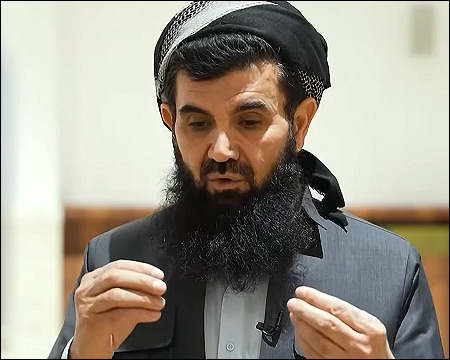
Apparently, unethical behavior among the political community in Kurdistan is not limited to the abuse of public office, but also extends to the social lives of the politicians, including secular and religious leaders.
For example, the recent allegation against the prominent religious Salafi leader, Abullatif Salafi, and the accusation of ethical violation and sexual harassment of female students at the College of Islamic Sciences in Sulaimani should be a factor that Kurdish Muslims review their perspective regarding sanctifying religious leaders and clerics, as well.

Furthermore, according to sources from Kurdistan, Qubad has not been holding a better moral character than those who hide their actions and behaviors behind Kurdish culture and Islamic faith in Kurdistan. Obviously, Qubad’s lavish lifestyle and affairs cannot be hidden anymore.
Such acts and behaviors are signs of severe moral decay in the political community that devalues the Kurdish culture and tarnishes its society. The political community seemingly has no place for those who believe in traditional morality and apply it to their actions.
The autocrats’ tight grips on power in Kurdistan have been blocking the path of others and preventing them from reaching high offices in the government. Between the Talabani and the Barzani’s family, even the people of Kurdistan have adopted a mindset to only see leadership in these two.

But to realize that the authoritarian rule of both Talabani and Barzani will not last forever, as the (PUK) has already been divided within and many former loyal members of the party have either quit or joined different factions, the (KDP) has traditionally been more secretive about its internal conflict.
However, as Massoud Barzani has not been promised an eternal life, the questions are: What will happen to the (KDP) after Massoud’s death? Will Massoud’s sons and his nephew, Nechirvan, bring their conflict to the public or will everyone accept Masrour as the successor?
The (KDP)’s tribal foundation, with the members of the party being completely submissive to the party and unwilling to see the world outside of the box, the party will not see such a crisis compared to the (PUK)’s. Embracing the tribal tradition and obeying the rules of the Barzani family while granting it privileges disables the Kurds from thinking beyond Barzani.
However, it is improbable that Barzani’s sons and nephew, Nechirvan, bring their political conflict to the public as it occurred between Talabani’s sons and cousin, Lahur Sheik Jangi (Talabani) in 2025, which exploded into armed violence and ended with Lahur being captured by cousin Bafel.
Generally, unethical actions and immoral behaviors have become common among Kurdish leaders in Southern Kurdistan. The loyalists of both families, the Talabani and the Barzani, are contributing to such actions of the two families’ members.
Now, the question is: How many members of the (PUK) and (KDP) will have the audacity to vehemently condemn Barzani’s family and Talabani’s sons’ immorality and corruption?
Serwan Zangana, a contributing writer for iKurd.net, lives in Virginia, U.S. He serves as a correction officer.
The views expressed are solely those of the author and do not necessarily reflect the opinions of iKurd.net or its editorial team.
Copyright © 2026 iKurd.net. All rights reserved.
Related posts:
 Iraqi Kurdistan: The Emperors’ New Clothes
 The Suffocation of Iraq Kurdistan
 The Resurrection (Ba’ath) Party – Before the Iran-Iraq War
 The Mustashar and the Jash – A View from the Position of ‘Iraqi National Unity’ on the ‘Descendants of Treason’
 Iraq comes full circle: The rehabilitation of Abd al-Karim Qasim
 Iraqi Kurdistan – “Sold Out!” – Part II
 U.S. departments must drop the “Kurds will be Kurds” mindset
 KDP publishes fake audio of PUK leaders discussing election manipulation
 The Assassination of Abdurrahman Ghassemlou: No Friends but the Mullahs?
 Why corrupt Kurdish politicians don’t land in jail in Iraqi Kurdistan