


The Arabization of Iraq’s Kurdistan Region?! – Part III
Salih Zhajlayi | Exclusive to iKurd.net
Translated by iKurd.net from Kurdish Awene
In this article, I would like to bring a few points to the attention of my dear readers regarding a writing by my dear brother, Mr. Rebin Herdi, which was published on the Awene website under the title: “Is There a Danger of Arabization?”
Mr. Rebin has pointed out that, for some time, rumors have been spreading about the danger of Arabization, and that this was the reason he wrote his article. In reality, I personally first came across this concern in a writing by the highly respected Dr. Burhan Yasin, who discussed in great detail the danger of the process of Arabization. Later, I also wrote an article about this issue and published it on Facebook. After that, many other people here and there also spoke about this danger and expressed their opinions.
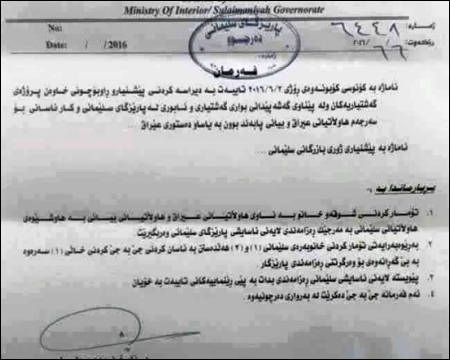
Recently, I came across another article by the highly respected Mr. Niaz Saeed Ali, which was published on the Shar Press website, and it completely shocked me.
This respected writer republished one of his own articles from 15 years ago about how, in 2016, the Governor of Sulaimani, based on a proposal from the Sulaimani Chamber of Commerce, requested that the governor at the time issue a decision allowing Arab citizens to buy apartments and properties and register them in their names, something that had been prohibited until then.
The governor immediately accepted the proposal. On Friday, June 3, 2016, he issued the decision, and on Monday, June 6, 2016, he made the decision official and put it into effect.
That decision had many negative consequences, and the increase in the number of Arab citizens in the Kurdistan Region has caused great concern because, in the future, it could create a very serious danger for Iraq’s Kurdistan Region.
Therefore, I was also very concerned, and until now I have written two articles about “Arabization Arabization of the Kurdistan Region.” This third part is dedicated to a number of comments about Mr. Rebin Herdi’s article.
Before going into the details of the discussion, I would like to talk about three points:
First: I consider Mr. Rebin a dear friend of mine. However, my views on this issue are one hundred percent opposite to his views. I consider the arguments he has presented to show that there is no danger of Arabization to be very weak. His opinion is also opposite to the opinion of the majority, as can be seen from the comments people have written under his article.
Second: Other people have also written similar things, and I personally would never have expected that, on such an important and dangerous issue, Mr. Rebin would think in this way and have such an opinion. However, everyone is free to think in their own way.
Third: If Mr. Rebin believes that the way other people think is incorrect, that it is closer to the thinking of nationalist and chauvinistic people, and that such thinking belongs to a past era, I do not know how accurate this is, and I cannot speak on his behalf. But I would like to say this:
Personally, I have very little feeling of chauvinism or nationalism. In my view, all human beings, regardless of differences in culture, language, and religion, ultimately come together and are equal in their humanity.
I do not hate an Arab citizen because I am Kurdish and he is Arab. My problem is with that Arab person who considers himself superior to me, who believes he has the right to take away my rights, remove me from my own homeland, deny me everything, and treat me as a slave and someone who must obey him.
The truth is that all the countries among which we Kurds have been divided look at us in this way.
Does Mr. Rebin accept these views and agree with them?
Now I will begin answering Mr. Rebin’s article point by point:
1- In his first point, Mr. Rebin considers the arrival of this large number of Arab citizens to be something completely normal. He says that the arrival of several Arab families in the major cities of Kurdistan will not cause demographic change unless it is part of a planned policy by the central government and a special budget is allocated for it.
My response is:

We are not an independent government, so we cannot be completely free of danger. Look at the Arabization process in Khanaqin, Saadiyah, Jalawla, Kirkuk, Makhmur, and Shengal, which separated these areas from the Kurdish population. The geographical distance between those cities and the cities of Sulaimani, Erbil, Duhok, and other towns is not large. If the situation continues as it is now, in the long term these areas could also become the property of Arabs.
2- Mr. Rebin says in this point:
The number of Arabs who have settled in the major cities of the Kurdistan Region, no matter how large it is, will not have an impact on the percentage of Kurdish residents because they are a very small minority and are not even noticeable.
Then he says:
After this current generation of Arabs, the second and third generations will be different from the first generation; they will mix with Kurds, and they themselves will identify as Kurds.
This is a very weak possibility because Arabs have their own private schools and study in the Arabic language. This is also a policy of the central government to ensure that those who are born in the Kurdistan Region never lose their identity and do not dissolve into Kurdish society.
As Dr. Yasin has written, there are 179 Arabic-language schools in the Kurdistan Region. There are currently one million three hundred thirty-two thousand Arabs living in the Kurdistan Region, representing 26 percent of the population of the Kurdistan Region.
Now, if only 10 percent of people today understand this and feel concerned about the future danger, do they not think about what will happen if this process continues and thousands of apartments are sold to Arabs for the benefit and profits of greedy officials, profit-seeking businessmen, and people who sell their homeland?
After another 20 years, what percentage will Arab citizens represent?
Or do we not need to think about the future and only focus on the food on today’s table?
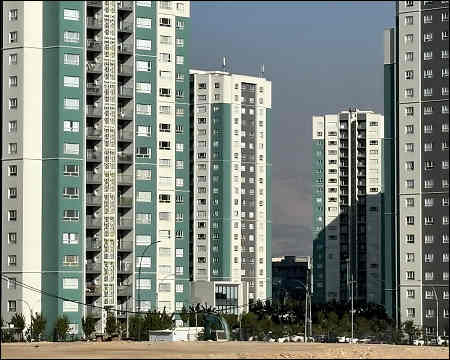
3- Mr. Rebin has pointed out that the conditions and weather in southern Iraq are very difficult, while the climate of the Kurdistan Region is pleasant, and that this has caused many people to travel toward the Iraqi Kurdistan Region for tourism.
Well, this is something to be happy about. The arrival of Arabs for tourism is very different from their coming to Kurdistan, settling there, and changing the demographics of the region.
Instead of building apartments, let the government and greedy investors create tourist sites, establish factories, and build investment projects so that the economic infrastructure of the region becomes stronger.
Is building only apartments a sign of economic development?
In another part, Mr. Rebin says:
Because of delayed salaries and the poor economic situation in the region, the market of the Kurdistan Region is increasingly looking toward the arrival of Arabs.

No one disagrees with that, and we are not against Arabs coming to the Kurdistan Region. But as we said, let us create the conditions for them to come for tourism, not to settle here.
Is it necessary to sell the Kurdistan Region just because Arab citizens come to buy goods and property?
4- Mr. Rebin says:
This region has been established according to the law, and Kurds and Arabs have equal rights. Everyone has the right to live anywhere in Iraq, and everyone has equal rights.
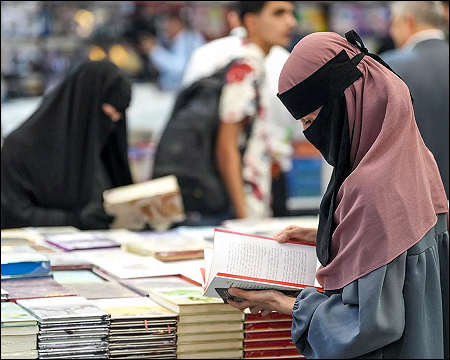
However, Mr. Rebin has forgotten that Kurdish citizens, as individuals, do not want to settle in other parts of Iraq because:
We have two cultures that are very different from one another.
Kurds have always been oppressed by the dominant and powerful Arab nation.
On the other hand, the environment and climate of the Kurdistan Region encourage the continuous migration of Arabs toward it.
Most importantly, the Arab population in Iraq is increasing rapidly and continuously. The environment and climate of central and southern Iraq, along with the availability of the necessary conditions for continued life there, cannot accommodate such a large population increase. Therefore, the arrival of Arabs in large numbers to the Kurdistan Region and their settlement there will have negative consequences.
In another sense, the desire and wish that Arab citizens have to settle in the Kurdistan Region is something Kurdish citizens do not have. As a result, we Kurds will be the first to suffer the consequences.
Mr. Rebin says:
The environment of the Kurdistan Region has caused Arab citizens to turn toward it.
But our concern is this:
Has Kurdistan made any plans for the dangers that may result from this migration to the Kurdistan Region?

Or is the only purpose to allow greedy and corrupt Kurds to sell as many apartments as possible and share the profits with officials who sell their homeland, while people in the market increase their business by selling fake honey, pistachios, sunflower seeds, and dried fruits, and the homeland is left behind like a torn net?
5- At the end of his article, Mr. Rebin says:
The increase in the number of Arabs in this way is natural, and the demographics of the Kurdistan Region will never change. Just as the migration of millions of Kurds, Turks, Arabs, and other peoples to European countries resulted in them becoming citizens and mixing with the cultures of those countries, rather than making those countries Kurdish, Arab, or Turkish.
In my opinion, Mr. Rebin has made a mistake here to some extent.
This is because I still have many other comments regarding Mr. Rebin’s points; however, this discussion will not end here. I do not want the article to become too long and cause readers to become tired of reading.
I will complete the remaining points in the fourth part of this discussion so that people can better understand the danger of the arrival and increase of Arab citizens and not view it as a normal phenomenon.
Because, in the end, a thousand regrets are not worth a bunch of radishes.
Salih Zhajlayi, one of the political figures in Sulaimani city, Iraqi Kurdistan, and formerly the Deputy Head of the General Assembly of the Gorran (Change) Movement, is currently working independently in Sulaimani.
This article was originally published in the Kurdish language in Awene Newspaper on July 26, 2026.
The opinions are those of the writer and do not necessarily represent the views of iKurd.net or its editors.
Copyright © 2026 iKurd.net. All rights reserved.
Related posts:
 Who’s Really Arabizing Kurdistan? It’s Not Baghdad – Part IV
 Who’s Really Arabizing Kurdistan? It’s Not Baghdad – Part I
 Who’s Really Arabizing Kurdistan? It’s Not Baghdad – Part V
 Who’s Really Arabizing Kurdistan? It’s Not Baghdad – Part II
 The Resurrection (Ba’ath) Party – Before the Iran-Iraq War
 Land Distribution in Kurdistan Is an Unforgivable Crime
 Massoud Barzani, Stop Selling Kurdistan to Arabs
 The Kurds Between the Holocaust and the Arab Conscience
 Business with ISIS – Updated
 The Syrian Al-Jazeera Province: An Ethnic, Social and Political Study – Book