

The Arabization of Iraq’s Kurdistan Region?! – Part I
Salih Zhajlayi | Exclusive to iKurd.net
Translated by iKurd.net from Kurdish Awene
There is an old saying that goes: “If an ignorant person throws a stone into a pond, a thousand wise people cannot take it out.” In other words, when an irresponsible and uninformed official makes a bad decision, the consequences can become so harmful and disastrous that even a thousand knowledgeable people cannot fix them.
For some time now, discussions have been spreading on Facebook pages and websites about the increasing number of Arab citizens in the Kurdistan Region and the danger of demographic changes in the region.
We Kurds have a dark history regarding the occupation of our land in all parts of Kurdistan. For example, the process of Arabization in the Kurdistan Region was continuously carried out by successive Iraqi governments.
Kurdish citizens were expelled from their own homeland, and Arabs were settled in their place. Kirkuk, Khanaqin, Makhmour, Sinjar, and many other areas of Kurdistan are witnesses to this. This process is known as Arabization.
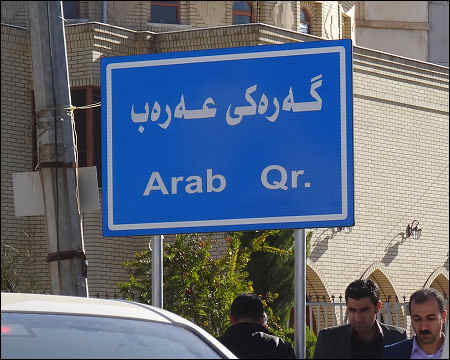
Today, however, another way has emerged for increasing the number of Arab citizens in the cities of Kurdistan, such as Sulaimani, Erbil, and Duhok. This is what is now being called the Arabization of the Kurdistan Region. In reality, both methods carry the same source of danger.
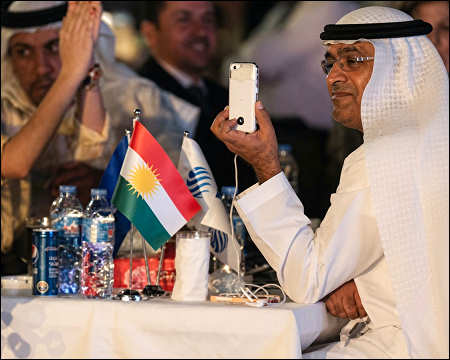
We have a Kurdish saying that is often used: “All roads lead to Sardasht.” This means it does not matter which road you take; what matters is that you eventually arrive in Sardasht. Likewise, it does not matter how, through what route, or by what method the number of Arabs on Kurdish land increases; what matters is that their numbers increase.
Arabization means removing Kurdish citizens from their ancestral lands and replacing them with Arab citizens. The Arabization of the Kurdistan Region, on the other hand, does not involve expelling Kurds from their cities.
Rather, it involves an increase in the Arab population through different means, as Arabs come, settle, and eventually alter the demographic balance of the Kurdish population. This creates a serious threat to the future of the Kurdistan Region.
If you calculate twenty years into the future, some seats in parliament and provincial councils could belong to Arabs because birth rates among Arabs are very high. Therefore, the Arabization of the Kurdistan Region through this gradual and indirect method may be even more dangerous than traditional Arabization.
The process of Arabization, in which a family is expelled from its own homeland, creates public outcry and is clearly visible. However, the Arabization of the Kurdistan Region—where Arabs can freely come to Kurdish cities, buy houses and apartments, open shops, and conduct business—is more dangerous than Arabization because it is legally permitted.
Note: When I speak about Arabs here, I am not speaking from a chauvinistic or nationalist perspective. I view Arab citizens as human beings and do not consider them my enemies. Furthermore, according to the law, an Arab from Basra and I in Sulaimani are both Iraqi citizens, and each of us has the right to live wherever we wish in Iraq.
The major issue, however, is this: if 40 percent of Kurdish citizens were to move and settle in southern Iraq, they would not become a threat to the Arab character of that land, nor could we ever become owners of those regions.
Besides being recognized as Arab lands, they possess demographic and geographic depth, and Arabs govern them. On the other hand, if the number of Arabs in the Kurdistan Region becomes very large, the demographic structure of the region will change. We have limited geographic depth, and our neighbors are not our friends; they view Kurds in the same way that many Arabs in Iraq do.
If one day the Arab population in the Kurdistan Region reaches 50 percent, then there will effectively be nothing left that can be called the Kurdistan Region. In my view, if the situation continues in this direction while we Kurds remain under the rule of these leaders, such an outcome is not impossible.
Look at how, in pursuit of wealth and money, Erbil has become a center for laundering the stolen wealth of Iraqi officials. The indifference of Kurdish leaders toward what is happening in the Kurdistan Region is creating a frightening and dark future for the region.
Many people constantly worry about the future of the Kurdistan Region. They speak out, write articles, and warn officials about future dangers. However, these officials consider themselves highly intelligent, wise, and knowledgeable—when in reality they are none of these things.
They are never willing to listen to others, accept advice, or think about the region’s future. What concerns them is enriching themselves and looting the wealth of citizens. The top officials of this region are even prepared to sell the land itself in exchange for money.
Instead of making knowledgeable, sincere, and concerned people their advisors and seeking their opinions, the leaders of the government and dominant parties choose flatterers and obedient followers as advisors so that they can justify, polish, and disguise their inappropriate statements and decisions.

For this reason, I would like to address the rumors and discussions currently circulating about the Arabization and Arab settlement of the Kurdistan Region and the frightening dangers these developments pose to the future of the region in both the short and long term. I also want to discuss the reasons behind these dangers.
One reason for the increasing number of Arab citizens is that the authorities opened the door for Arab citizens to buy apartments and houses in the Kurdistan Region and settle there voluntarily, without senior government officials considering the risks this might pose to the future of the Kurdistan Region.
We claim to be struggling over Kirkuk, Khanaqin, and Sinjar, yet Sulaimani, Erbil, and Duhok themselves are being occupied.
To understand the carelessness and lack of awareness among the officials of this region, I would like to draw your attention to a very important analytical article written by Mr. Niyaz Saeed Ali more than fifteen years ago.
The article discussed a proposal submitted by the Sulaimani Chamber of Commerce to the governor of Sulaimani, requesting that Arab citizens be allowed to purchase apartments and houses in the region, something that had previously been prohibited.

Without much thought or consultation, the governor issued what can only be described as a historic decision on June 6, 2016, a decision that paved the way for the Arabization of Sulaimani Province and the Kurdistan Region.
Fifteen years later, we can now see the serious dangers that this decision has created for the Kurdistan Region. These dangers are now being openly discussed and felt by society.
If the leaders of the government, Kurdish parties, and political movements truly cared about this nation, how could they have accepted such a decision? Why were those responsible not held accountable? If they say, “We were not aware of the decision,” then that would be the beginning of our disaster and ruin.
Such an excuse would be worse than the mistake itself. How can someone claim to be a leader while the nation is being auctioned away around them, and then say they knew nothing about it?
Mr. Niyaz Saeed Ali published an article on the Awena website titled “A Fifteen-Year-Old Request from the Sulaimani Chamber of Commerce to the Governor of Sulaimani.” Because discussions about the growing Arab population have increased recently, he republished the same article from fifteen years ago on the Awena website.
Personally, I do not believe government officials were unaware of the governor’s decision. Rather, I believe they themselves planned it for their own benefit.
Mr. Niyaz Saeed Ali has now republished the entire article from fifteen years ago on the Awena website. One cannot help but think that there is no one in this country who truly cares about the nation. If that is not the case, then why do government officials remain silent in the face of such a major wrongdoing?
The article was published on July 18, 2026, on the Awena website. As I write this, at 5:00 PM on July 19, 2026, due to the importance and sensitivity of the issue, 2,620 people have read it. Yet even now, not a single government official appears to be paying attention.
In the second part of this article, I will publish more details. I hope readers will visit the Awena website to learn all the details contained in the article.
When government officials and citizens alike remain unaware of such an unprecedented wrongdoing, it becomes difficult to see any hope for our future.
Salih Zhajlayi, one of the political figures in Sulaimani city, Iraqi Kurdistan, and formerly the Deputy Head of the General Assembly of the Gorran (Change) Movement, is currently working independently in Sulaimani.
This article was originally published in the Kurdish language in Awene Newspaper on July 20, 2026.
The opinions are those of the writer and do not necessarily represent the views of iKurd.net or its editors.
Copyright © 2026 iKurd.net. All rights reserved.
One Million Arabs Inside Iraqi Kurdistan, A Strategic Gamble With National Consequences
Related posts:
 Who’s Really Arabizing Kurdistan? It’s Not Baghdad – Part III
 The Resurrection (Ba’ath) Party – Before the Iran-Iraq War
 Who’s Really Arabizing Kurdistan? It’s Not Baghdad – Part V
 Who’s Really Arabizing Kurdistan? It’s Not Baghdad – Part II
 Who’s Really Arabizing Kurdistan? It’s Not Baghdad – Part IV
 Land Distribution in Kurdistan Is an Unforgivable Crime
 The Suffocation of Iraq Kurdistan
 Massoud Barzani, Stop Selling Kurdistan to Arabs
 The Mustashar and the Jash – A View from the Position of ‘Iraqi National Unity’ on the ‘Descendants of Treason’
 Iraq – The Cynical Swindle