

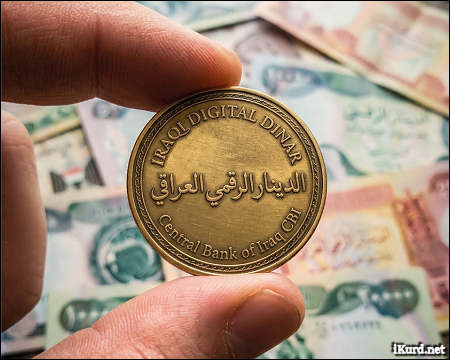
BAGHDAD,— Iraqi officials and economists are once again debating whether a digital dinar could help the government pay public employee salaries in the coming months, as state revenue falls and financial pressure builds.
Some economists caution the move could create new risks rather than solve the underlying problem.
Economic affairs expert Haider Al-Sheikh said Iraq’s current financial situation, marked by falling revenue and a shrinking economy, is not the right environment for introducing a digital currency to cover salary payments.
Speaking to Baghdad Today on Saturday, August 8, 2026, Al-Sheikh said domestic debt has climbed past 105 trillion Iraqi dinars.
He said that level of financial strain means any new monetary tool, including a digital currency, needs thorough study before being put into use.
He said the Central Bank of Iraq likely recognizes that adopting a digital currency could limit its ability to closely manage the money supply and liquidity in the country.
He also flagged concerns about cryptocurrencies broadly, calling them too unstable to serve as a lasting store of value.
A poorly planned rollout of digital currency, he added, could hurt the dinar’s value against the U.S. dollar and other foreign currencies, since Iraq’s market reacts sharply to shifts in exchange rates and cash supply.
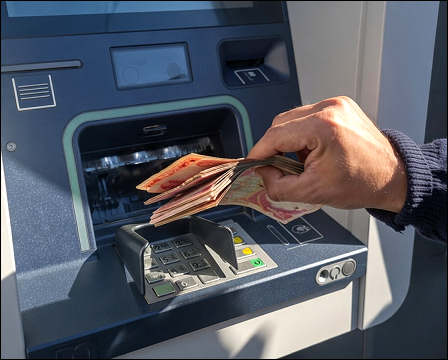
Al-Sheikh also raised concerns beyond monetary policy. He said a digital dinar could make it harder for the Central Bank to fight corruption, smuggling, money laundering and financing of illegal activity, and would require a full legal, regulatory and technical system to be built first.
The discussion comes as Iraq continues to struggle with unstable revenue, heavy reliance on oil income to fund its budget, and rising domestic debt.
Backers of digital currency argue it could modernize the financial system, cut transaction costs and expand access to banking.
Opponents say success depends on first building the banking, legal and regulatory systems needed to manage the risks.
A central bank digital currency differs from decentralized cryptocurrencies. If Iraq adopts a digital dinar, it would remain part of the official monetary system under the supervision of the monetary authority, meaning its risks and benefits would depend on how it is designed and run.

A political analyst told iKurd.net that a government-issued digital currency poses a threat to financial freedom, saying it would leave people dependent on government decisions and that citizens should retain the right to use cash.
The analyst said the government could freeze or seize funds at will, turning a wealthy person into someone with nothing within minutes.
Henase said Bitcoin BTC remains the only digital currency worldwide that is truly decentralized, independent and rooted in its founding principles, with no company or government anywhere in the world holding control over it.
She said it has come to be viewed as digital gold, a genuine store of value that stands apart from centralized ownership.
Bitcoin, she added, cannot be seized or confiscated, cementing its reputation as digital gold, and said it is even better than gold itself, since gold is difficult to move or transport.
Iraqi MP Proposes Digital Currency After Salary Payment Delays
Saad Al-Awadi, deputy head of the National Approach parliamentary bloc, proposed a plan Friday to secure salary payments for employees and retirees through a digital dinar, aiming to end what he called Iraq’s cash crisis.
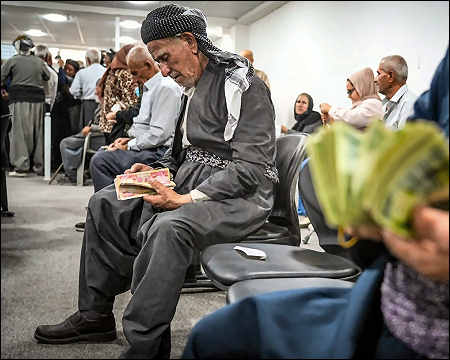
In a statement, Al-Awadi described the plan as a broad economic proposal to solve the cash liquidity shortage and guarantee steady salary payments by launching a digital Iraqi dinar, allowing employees to receive pay without relying on paper currency.
He said the plan would protect workers from delayed salaries and cash shortages at banks by depositing pay into secure digital wallets linked to bank accounts, letting people spend their salaries immediately on goods and electronic payments without waiting for physical cash.
Al-Awadi said the cash shortage stems not from a lack of resources but from paper currency being held outside the banking system in large amounts.
He said a Central Bank-approved digital dinar would end salary delays, lower the cost of printing and transporting cash, and protect people’s purchasing power without relying on domestic borrowing.
He said his plan also calls for requiring businesses and service providers to accept digital payments, along with incentives and government guarantees to rebuild trust in the banking sector.
Al-Awadi called on the government, the Central Bank and relevant parliamentary committees to hold an urgent joint meeting to set up the legal and technical rules needed to carry out the plan.
Iraq currently has no official digital payment platforms or electronic trading systems. Cryptocurrencies used elsewhere in the world, including Bitcoin, are still not officially accepted for purchases, sales or cash transactions in the country.
(With files from baghdadtoday.news | Agencies)
Copyright © 2026 iKurd.net. All rights reserved.
Related posts:
 The Dangers of Banning Cash: A Threat to Financial Freedom
 Iraqi Kurdistan – “Sold Out!” – Part II
 Saddam Hussein was a Friend to the West
 Iraq comes full circle: The rehabilitation of Abd al-Karim Qasim
 Saddam Hussein’s Enemies: Paving the Road to the Invasion of Iraq
 Why Iraqis and Kurdistan Citizens Don’t Trust Banks?
 Under the Pillow Economy: Iraq’s Crisis of Trust in Banks
 The Resurrection (Ba’ath) Party – Before the Iran-Iraq War
 Iraq: Revenge and Corruption
 Iraq – The Cynical Swindle