

Despoling the Goddess: Zenobia, the Empress of Palmyra (Tadmor) Symbolised a Waning Universality
Sheri Laizer | Exclusive to iKurd.net
Palmyra
Palmyra, so well-known for its near complete obliteration by ISIS in 2015 was once the seat of a 3rd century enlightened, if warlike empire. Its Empress bore the honorific name Septimia Zenobia Augusta, reflecting family loyalty to the Roman Severan dynasty.
Her Palmyrene name was Bat Zabbai or daughter of Zabbai in Aramaic. Historical opinion is divided over many aspects of her genealogy but reach a general consensus in that Zenobia probably had both Aramean and Arab ancestry. 1
When her husband, Ras (Lord) Odaenathus, a Romanized Arab, was murdered in 267 AD she automatically became regent. Odaenathus had become lord of the Palmyrene empire just seven years before after retaking the hub in 226 AD from the Sassanian Persians whose capital was situated in Ctesiphon across the Euphrates south of contemporary Baghdad.
A great battle to retake Palmyra was waged between the two forces in 263 AD, with the Romans ultimately victorious. The Sassanid monarch, Shapur 1, retreated to Ctesiphon from where Odaenathus’s pursuing forces were forced back.
Palmyra lay on the caravan route through the desert and Zenobia – who claimed Egyptian descent from Cleopatra as well as from Dido, Queen of Carthage (in contemporary Tunisia), ostensibly for political reasons in extending her realm by annexing parts of the Roman Empire, Judaea and Petra and as far as northern Egypt.
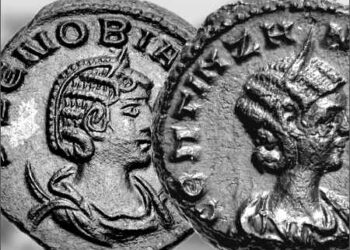
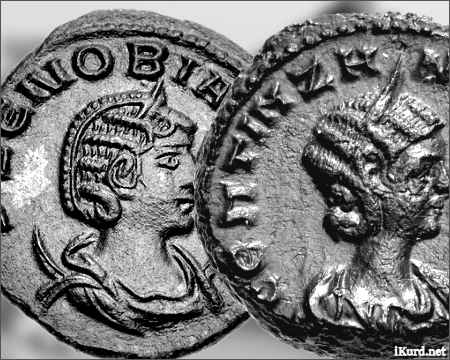
Palmyra remained the beating heart of her empire and was a site of culture, philosophy and learning. Her son, Vaballathus, at age ten was too young to rule. Thus, to consolidate her territory and his succession, Zenobia resumed minting coins with the Roman Emperor Aurelian’s profile and the title imperator on the obverse with her son Vaballathus’ face and the title of rex on the reverse.
This act is viewed by historians as her attempt to signify loyalty to Rome despite her military campaigns against various Roman provinces. “The numismatic evidence and papyri documents are all that remain of Aurelian’s response to Zenobia’s invasion of Egypt.” 2
However, sensing Roman weakness, in 272 AD, Zenobia changed the coin to omit Aurelian’s profile. Her son became ‘august’ and herself ‘augusta’ – Roman honorifics of the period.
Aurelian at last reacted to her machinations, defeating the Goths and then moving his army via Byzantium to pursue an invasion southward, fielding a second front from Egypt that Zenobia was unable to match. The two armies collided near Antioch, subject to Turkish annexation in 1939 as part of the province of Hatay, the city itself now known as Antakya.
Zenobia was then taken captive in 272 AD and conveyed as a trophy to Rome. Some sources claim she remarried a Roman senator and lived with him in a fine villa as would any high-born Roman woman. Other sourced claim she was executed by Aurelian after the victory parade more in keeping with Imperial Roman military and political character.
The Hatay Dispute
Hatay had been part of the the Ottoman sanjak of Alexandretta. It had fallen under the French mandate of Syria and Lebanon after the collapse of the Turkish Empire. Hatay was still included as part of Syria in the Treaty of Lausanne of 1923.
The Hatay Dispute became part of a wider French-Turkish dispute. Syrian Arabs still hold France responsible for giving way to Turkey fearing an invasion of the region by Mustafa Kemal Ataturk.
The Hatay State became the Hatay Republic and joined Turkey after a referendum claimed to have been rigged by the Turks given that 46% of the population was Arab, 39% were Turks/Turkmen, 11% Armenian and the remaining 4% Circassian, Kurdish and Jewish. 3
Zenobia Women’s Gathering
A mixed ethnic women’s group called The Zenobia Women’s gathering was founded in 2021 as part of the women’s movement in Raqqa, Tabqa, Manbij, Deir ez-Zor and flashpoints that were retaken from ISIS after much bloodshed, including that of female fighters.
After the conquest of the Assad government by Hay’at Tahir al-Sham (HTS) on December 7, 2024, women who had come together against ISIS felt the ground shifting afresh beneath their feet. Using the symbolism of Zenobia and her enlightened reign in Palmyra they released a statement a year after the transitional or interim government had been in power and massacres of minorities were undermining trust.
It read, “Syria will not be built by force or exclusion, but through dialogue, justice, and respect for the will of its people, and that women will remain the voice of wisdom and guardians of the country’s unity and peace.”4
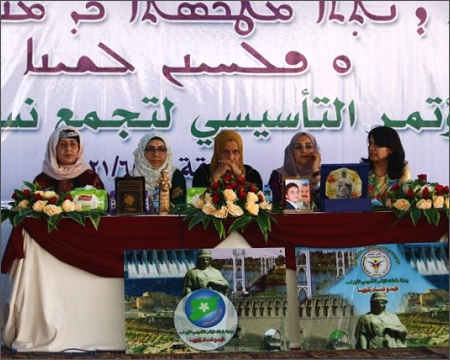
Gathered under its banner were Kurdish, Circassian, Turkmen and Arab women recognising the shared goal of protecting women’s gains following from the defeat of ISIS and of the wider extremist Salafist jihad. They organised women’s centres to combat ‘honour’ killing, domestic violence, polygamy, and address challenging issues over divorce, inheritance rights and child marriage.
Ahmed al-Sharaa’s regime then retook control of Raqqa, Taqba and areas from where ISIS had been driven out.
Opponents of the Zenobia Women’s Organisation claim it is linked to the PKK. At the conference where the group had first announced itself early in June 2021, some 150 women representatives took part from the four SDF-controlled areas at that time, Tabqa, Raqqa, Deir ez-Zor and Manbij.
The Future Syria Party leader, general secretary, Siham Daoud, was present and the party was believed to be a sister of the JPG and the PKK female forces. PKK veteran general secretary, Abdullah Öcalan’s image was visible along with various banners of the PKK’s sister organisations. The Arabic, Kurdish and Syriac languages were all used in reports written for the media.
Ahmed al-Sharaa’s female appointees
The Zanobia group has since come to loggerheads with Ahmed al-Sharaa’a new regime. In the appointment of the new People’s Assembly members on Jul 1, 2026, Ahmed al-Sharaa included 22 women of a total of 210 members, 70 of whom were directly appointed by al-Sharaa himself citing presidential privilege and the right to name one third of his cabinet. The women included Fasla Yusuf from the Kurdish Democratic Unity Party who appeared in subtle Kurdish dress not exhibiting the Kurdish national colours of red, yellow and green.
Fasla Yusef had been her party’s secretary and was the past president of the Kurdish National Council (ENKS) that opposed the PYD (Democratic Union Party linked to the current ideology of Abdullah Öcalan). Yusuf had briefly been detained by the PYD for three weeks in 2017. 5
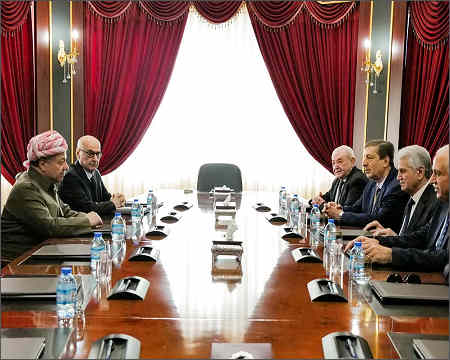
ENKS is in fact aligned with the KDP of Iraq led by the Barzanis. ENKS was first established on October 26, 2011, with the support of the KDP – and Turkey and in perpetuation of the shared goals of each in Syria.
The pro-SDF media organisation, ANHA, Hawar News Agency, accused ENKS of direct collaboration with the Turkish Intelligence Agency (MIT) and with KDP Intelligence (Parastin) claiming there had been meetings with MIT 16 times since 2016. 6 ENKS representatives continue to meet with Massoud Barzani, who claims to be stressing ‘Kurdish unity.’
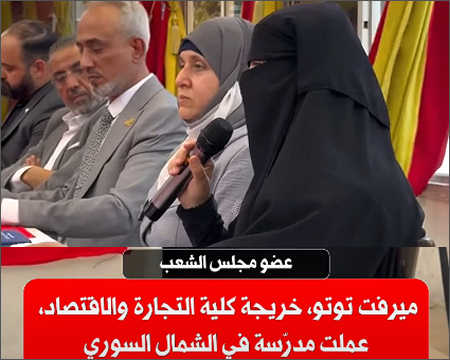
Ahmed al-Sharaa also appointed Mervat (also spelled Marfat and Mirvet) Muhammed Subhi Toto (Toutou) who adopted niqab at the event. She comes from Idlib that was held under former HTS control. She had been married to the (deceased) leader/commander of Jaysh al-Fatah (Army of Conquest) code-named Abu Omar Saraqib and also Abu Hajar al-Homsi and Abou Khaled Lubnani (whose real name, is Osama Namoura). He had fought alongside Abu Musab al-Zarqawi in Iraq. 7 His wife taught in Idlib for thirteen years. 8
Osama Namoura was a co-founder of al-Sharaa’s Jabhat al-Nusra, the AQ brand first operating in Syria. He became general commander of its successor, Jabhat Fateh al-Sham and was killed in an air strike in September 2016 during a meeting of (regional) leaders in the village of Kafr Nahr, 15 km west of Aleppo. Jabhat al-Nusra had changed its name to Jabhat Fateh al-Sham in July 2016 when it split from Al Qaeda but perpetuated a similar ideology with a Syria-centric focus.
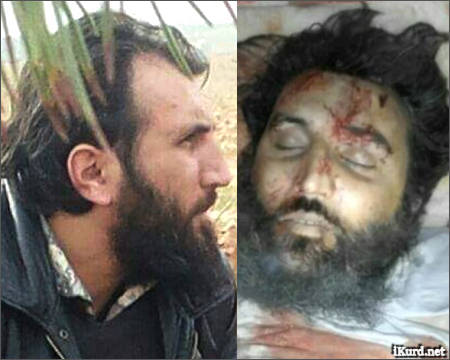
Several other senior jihadists were killed in the blast that targeted the hidden compound, with Namoura’s deputy commander, Abu Muslim al-Shami being wounded. The US denied involvement leading to speculation the strike was carried out either by Russian or Syrian government aircraft. Sources later stated it was unknown if al-Sharaa then going by his codename Abu Mohamed al-Jolani had been present. 9
The appointment of an Al Nusra former commander’s widow to his new cabinet sends a clear message. She was also the first women to ever wear niqab in the parliament as the extreme covering had been banned under the former government.
Al Sharaa appointed 15 of the 22 women directly such that only seven women were elected from the committees first established in 2025.
Mazloum Abdi and female commander, Newroz Ahmed, had also been welcomed to the People’s Palace. Newroz Ahmed chose to remain in military uniform.
https://www.facebook.com/reel/919269314112941
MEMRI (Middle East Media Research Institute) published a report in September 2026, called Islamization And Religious Radicalization In Syria Under The Al Sharaa Regime, one of the first recent publications to sound any warning notes about the new regime. It opens by stating,

“The new Syrian regime headed by President Ahmed al-Sharaa – formerly the leader of the Islamist organization, Hayat Tahrir al-Sham (HTS) – is promoting religious radicalization and Islamization in Syria, despite its public statements about commitment to the rule of law, pluralism, and civil equality, and (sic) although it enjoys considerable foreign support, including from the U.S. and other Western countries…”11
MEMRI also observed that on August 24, 2026, the US removed Syria from the list of State Sponsors of Terrorism (SST) and announced the revocation of HTS’s status as a Specially Designed Global Terrorist (SDGT) along with its removal from the Specially Designated Nationals (SDN) list, which includes companies, organizations, and individuals identified as threats to the US, with the goal of promoting Syria’s national recovery. 12
MEMRI also noted: “Furthermore the US appears to be downplaying the severity of other extremist trends in Syria under the Al-Sharaa regime including the promotion of extremist ideology within the education system, which portrays jihadists and leaders of terrorist organizations as “heroes”; jihadist calls for action against Israel; the repression of women and restrictions on their freedoms; 13 persecution and incitement against minority groups in the country, and clear measures aimed at consolidating a dictatorial regime…” 14
Women’s rights
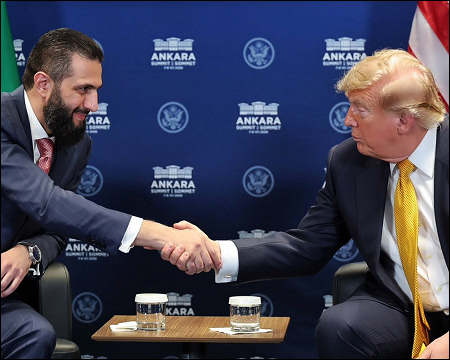
Syrian women – that include women from minority groups and religions – need to integrate their demands and vision to go beyond all-female groups, including sect-based groups and avowedly feminist organisations.
In my experience, separating women into self-representing groups like the Zenobia Women’s Organisation actually serve more than anything to keep women apart from men and achieving an integrated society. Such groups further divide society by gender instead of attaining a unified community in which persons are not primarily defined by their sex or sect.
Segregation ultimately serves Islamic fundamentalism and that is achieving great strides in Ahmed al-Sharaa’s Syria.
1 Hartmann, Udo (2001). Das palmyrenische Teilreich (in German). Franz Steiner Verlag. ISBN 978-3-515-07800-9.
2 https://www.historyhit.com/queen-zenobia-of-palmyra/
3 State Frontiers: Borders and Boundaries in the Middle East by Inga Brandell, I.B.Tauris, 2006.
4 https://womendefendrojava.net/en/2026/02/01/zenobia-womens-gathering-2/
5 https://www.instagram.com/reels/Dase5OvkTNL/
6 https://hawarnews.com/en/156724134011163
7 https://ledesk.ma/encontinu/un-des-fondateurs-de-jabhat-al-nosra-tue-pres-dalep/
8 https://today.lorientlejour.com/article/1543841/actress-engineer-jihadist-s-widow-among-new-women-mps.html
9 https://thearabweekly.com/jabhat-fateh-al-sham-dominates-aleppo-rebels-despite-losing-senior-commander
10 https://www.i24news.tv/en/news/middle-east/124925-160909-commander-of-former-nusra-front-in-syria-killed-by-airstrike-jihadists
11 https://www.memri.org/reports/islamization-and-religious-radicalization-syria-under-al-sharaa-regime
12 State.gov, treasury.gov, August 24, 2026
13 https://www.memri.org/reports/syrian-women-fear-their-status-and-rights-under-rule-hay%E2%80%99-tahrir-al-sham
14 https://www.memri.org/reports/us-rescinds-syrias-designation-state-sponsor-terrorism-despite-jihadist-extremist-actions#_ednref4
Sheri Laizer, a Middle East and North African expert specialist and well known commentator on the Kurdish issue. She is a senior contributing writer for iKurd.net. More about Sheri Laizer see below.
The opinions are those of the writer and do not necessarily represent the views of iKurd.net or its editors.
Copyright © 2026 Sheri Laizer, iKurd.net. All rights reserved.
Related posts:
 Syria: A ‘Caliphate’ by Any Other Name — Would Smell the Same
 Stealing Syria
 Business with ISIS – Updated
 The Resurrection (Ba’ath) Party – Before the Iran-Iraq War
 Syria: The Hijacking of the Arab Spring: From ISIS to Hayat Tahrir al-Sham
 Sabotaging Syria
 Hostages to Jihad – Austin Tice, The Long Missing American in Syria – Part One
 The Islamic State of Syria? (Al Dawla al-Islamiya fi al-Sham)
 Syria: Revisiting The Caesar Torture Victim Photographs
 Niqab makes a comeback in Syrian universities and beyond