


Michael Rubin | American Enterprise Institute
If the Parliament Nominates an Official Known for Corruption, the Entire System Could Collapse
Backroom machinations always create a long delay between Iraqi elections and the formation of the new government. While Iraqis went to the polls on November 11, 2025, no single candidate or party won a majority.
Incumbent Prime Minister Muhammad Shia’ al-Sudani, under whom Iraq has seen tremendous infrastructure development, won a plurality, but his ability to cobble together enough votes from other parties was always unlikely given a phone tapping scandal that exacerbated fears that he would use a second term to ensconce himself as a dictator.
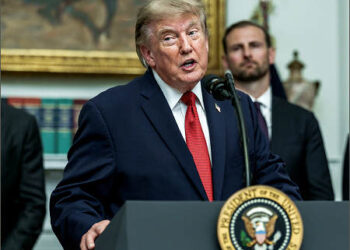
President Donald Trump might not care about a democratic deficit or Sudani’s corrupt channeling of business contracts through his brother Abbas, but Sudani’s decision to endorse Iranian-backed militias just after they launched an attack on the U.S. Embassy was too much for Trump to ignore.

Behind the scenes, it was time for Sudani to go. The open association of Nouri al-Maliki, former prime minister and the godfather of the Coordination Framework, with the Iranian-backed militias now targeting Americans and slaughtering Iranian protestors also negates his desire for a comeback.
The election of Nizar Amedi, a long-serving Patriotic Union of Kurdistan functionary, as Iraq’s new president sets the clock ticking on the parliament’s election of a new prime minister within fifteen days.
Some Iraqi officials are publicly pushing forward Basim al-Badri, a member of Khalid al-Asadi’s Islamic Dawa Party–Iraq organization, a faction close to Maliki. Al-Badri has always been somewhat of a chameleon, shifting with the political winds to pursue power and enrichment. He worked within the Arab Socialist Ba’ath Party under the late Iraqi President Saddam Hussein, before shifting toward the Dawa.
In his current role, he has used his leadership of the National Supreme Commission for Accountability and Justice to extort and often sideline competent national officials and technocrats who would not cut deals with him. The danger here is that if the parliament nominates an official known for corruption, the entire system could collapse given the generational change in Iraq and the growing intolerance of young Iraqis for corrupt business as usual.
Al-Badri would not be the first corrupt appointee—Maliki, Mustafa al-Kadhimi, and others used their tenures to prioritize their personal office over the nation—but other factors undermine his acceptance.
While the Grand Ayatollahs in Najaf do not formally endorse candidates, their imprimatur carries moral weight, and yet, not only has Grand Ayatollah Ali Sistani’s office not supported Al-Badri due to his history and public flaws, but the broader “religious authority” in Najaf appears to have explicitly rejected him.
The U.S. State Department and U.S. Embassy in Baghdad are uncomfortable with al-Badri. While Faiq Zaidan, the head of the Supreme Judicial Council, supports al-Badri, the problem arises less from his support than from that of Qais al-Khazali, the secretary-general of Asa’ib Ahl al-Haqq, an armed faction aligned with Iran’s Islamic Revolutionary Guard Corps.
To select al-Badri would be a disaster, as it would associate the new Iraqi premier with the most militant factions within Iran at a time when they are actively under fire. It also likely would lead to a complete severance of Washington’s diplomatic and economic ties to Baghdad.

Maliki and Khazali may still put al-Badri’s name forward, but while they may like to stick a Tehran-directed thumb in Trump’s eye, doing so would only harm Iraqi Shi’a by overplaying political cards and affirming the calumny that they are a fifth column whose loyalties lie in Tehran and who are antithetical to Iraqi sovereignty.
With the crisis in the Middle East raging all around Iraq, Iraqi power brokers should recognize that the power games and brinkmanship of the past will be corrosive to Iraq’s future. An Iraqi nationalist should rise to the premiership.
There are new candidates who have Najaf’s (and Kadhimiya’s) broad approval, maintain a track record of cleanliness and effectiveness, and who may not always agree with American policy but have demonstrated an ability to engage productively with Washington when necessary. Al-Badri is not that man.
Michael Rubin is a former Pentagon official whose major research areas are the Middle East, Turkey, Iran and diplomacy. He is author of “Dancing with the Devil: The Perils of Engaging Rogue Regimes” (Encounter, 2014). He is a resident scholar at the American Enterprise Institute AEI. His major research area is the Middle East, with special focus on Iran, Iraq, Turkey, and Kurdish society.
The article first published at aei.org
The opinions are those of the writer and do not necessarily represent the views of iKurd.net or its editors.
Copyright © 2026, respective author or news agency, American Enterprise Institute | aei.org
Related posts:
 The Terror Instructor – Nouri al-Maliki
 LOSING IRAQ — to Iran
 The Resurrection (Ba’ath) Party – Before the Iran-Iraq War
 Iraq’s PM Sudani Is No Longer Acceptable to Washington
 Saddam Hussein was a Friend to the West
 Iraq: Revenge and Corruption
 The Suffocation of Iraq Kurdistan
 Iraq – The Cynical Swindle
 Saddam Hussein’s Enemies: Paving the Road to the Invasion of Iraq
 Iraqi Kurdistan – “Sold Out!” – Part II