

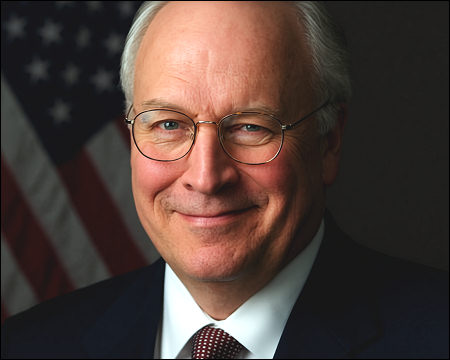
Dick Cheney, powerful U.S. vice president who drove Iraq invasion, dies at 84
WASHINGTON,— Former Vice President Dick Cheney, one of the most influential figures in American politics and a key architect of the 2003 U.S. invasion of Iraq, died Monday at age 84, his family said in a statement released Tuesday. The cause was complications of pneumonia along with cardiac and vascular disease.
A dominant force in Washington for decades, Cheney was often described by historians as one of the most powerful vice presidents in U.S. history.
Before joining the White House under President George W. Bush, he had served as defense secretary and as a congressman from Wyoming, his home state.
A Vice President With Unprecedented Influence
When Bush, then the governor of Texas, selected Cheney as his running mate in 2000, the Republican was already deeply experienced in national affairs. After the Bush-Cheney ticket won the election, Cheney became known for his assertive approach to executive power and national security.
During his two terms from 2001 to 2009, Cheney worked to expand presidential authority, arguing that it had been weakened since the Watergate scandal. Within the administration, he built a formidable national security team that became a center of influence separate from the State Department and Pentagon.
Cheney was a central advocate for the 2003 invasion of Iraq. He frequently warned about Iraq’s alleged weapons of mass destruction, though such weapons were never found.
He later said the invasion was justified by the intelligence available at the time and by the removal of Saddam Hussein.
He often clashed with key figures in the Bush administration, including Secretaries of State Colin Powell and Condoleezza Rice.
Cheney also defended the use of harsh interrogation methods on terrorism suspects—techniques such as waterboarding and sleep deprivation—which critics and international bodies labeled as torture.
Family and Politics
His daughter, Liz Cheney, followed him into politics, representing Wyoming in the U.S. House. She lost her seat after denouncing former President Donald Trump and voting to impeach him following the Jan. 6, 2021, attack on the U.S. Capitol.
The elder Cheney publicly supported her decision and later said he intended to vote for Democratic candidate Kamala Harris in the 2024 election.
“In our nation’s 248-year history, there has never been an individual who poses a greater threat to our republic than Donald Trump,” Cheney said in a 2022 campaign video for his daughter.
Persistent Health Battles
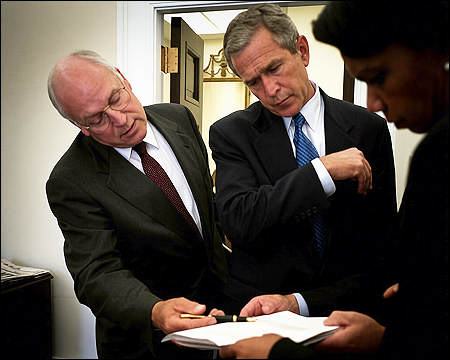
Cheney’s career was shadowed by heart problems beginning with a heart attack at age 37. He suffered several more over the years and underwent a heart transplant in 2012.
Despite his health struggles, he remained active in politics and commentary long after leaving office.
From Wyoming to Washington
Richard Bruce Cheney was born Jan. 30, 1941, in Lincoln, Nebraska. His parents, Marjorie Lorraine Dickey and Richard Herbert Cheney, later moved the family to Wyoming, where Cheney grew up. He attended Yale University but dropped out, later earning degrees in political science from the University of Wyoming.
After working on power line construction and energy projects in the early 1960s, Cheney entered politics. He came to Washington in 1969 as a congressional intern during the Nixon administration, beginning a career that would span more than four decades.
Mentored by Donald Rumsfeld, Cheney served in several White House roles under Presidents Richard Nixon and Gerald Ford, eventually becoming Ford’s chief of staff.
He represented Wyoming in Congress from 1979 to 1989, where he earned a reputation as a staunch conservative. He opposed abortion rights, gun control, and sanctions on apartheid-era South Africa.
Defense Secretary and Gulf War Leader
As defense secretary under President George H.W. Bush, Cheney oversaw the 1991 U.S.-led military campaign to drive Iraqi forces out of Kuwait. Although he advocated for a firm stance against Saddam Hussein, he opposed advancing into Iraq, warning that it would lead to a prolonged occupation.
A decade later, Cheney’s view had shifted. Alongside Rumsfeld, again serving as defense secretary, Cheney pressed for the invasion of Iraq after the September 11, 2001, terrorist attacks.
He suggested that Iraq had ties to al-Qaida, a theory later rejected by the 9/11 Commission. He predicted that U.S. troops would be greeted as liberators and the war would be short. The conflict instead stretched for years.
Corporate and Controversial Years
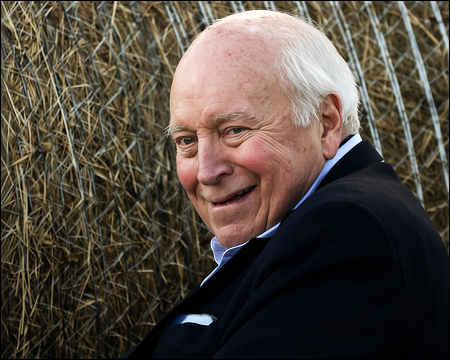
Before becoming vice president, Cheney led the oil services company Halliburton from 1995 to 2000, leaving with a $35 million retirement package. During the Iraq war, Halliburton secured major government contracts, fueling criticism from opponents who saw conflicts of interest.
Cheney’s time in office was marked by controversy, from his firm defense of the Iraq war to his approval of surveillance programs after 9/11. His 2006 hunting accident in Texas, where he accidentally shot a companion, added to his public notoriety.
Public Image and Later Life
Comedians nicknamed him “Darth Vader” for his stern demeanor and secrecy. Cheney himself embraced the comparison, even jokingly dressing as the character during a television appearance.
His family—wife Lynne and daughters Liz and Mary—were with him when he died, according to the family statement. Mary Cheney, who is openly gay, became a political consultant and fundraiser.
Cheney publicly supported her right to marry, a position that set him apart from many in his party.
In 2018, actor Christian Bale portrayed him in the film “Vice,” a dark biographical satire that drew both praise and criticism. Bale thanked “Satan for inspiration” in his Golden Globe acceptance speech, a comment that drew renewed attention to Cheney’s polarizing legacy.
Even after retirement, Cheney continued to speak out, often defending his record and dismissing critics. His 2011 memoir, “In My Time,” revisited his years in government and reignited old debates over the war in Iraq and the limits of presidential power.
(With files from Reuters)
Copyright © 2025 iKurd.net. All rights reserved.
Related posts:
 Saddam Hussein was a Friend to the West
 The Resurrection (Ba’ath) Party – Before the Iran-Iraq War
 Saddam Hussein’s Enemies: Paving the Road to the Invasion of Iraq
 The Double Cross of Iraq And The Discordant Death of WMD Inspector, Dr David Kelly – The 17th Anniversary
 Iraqi Kurdistan – “Sold Out!” – Part II
 Iraq: Revenge and Corruption
 The Truth About The Saddam Hussein Affair
 Iraq – The Cynical Swindle
 Business with ISIS – Updated
 Saddam Hussein – Hunted, Hidden, Betrayed – And Hanged