



PARIS,— A French court on Friday sentenced a jihadist linked to the Islamic State group to life in prison for crimes committed against Iraq’s Yazidi minority, marking the first such case heard in France.
The Paris Assizes Court convicted Sabri Essid in absentia of genocide, crimes against humanity and complicity in those acts tied to events between 2014 and 2016, when Islamic State controlled large parts of northern Syria and Iraq.
Presiding judge Marc Sommerer said in court that Essid had taken part in what he described as a genocide carried out by the militant group.
He added that Essid was involved in a network that repeatedly bought and sold Yazidi victims. The court concluded the group had deliberately targeted the Yazidi community because of their religion.
Islamic State viewed the Yazidis, who follow a pre-Islamic belief system, as heretics.
Essid, born in France in 1984, traveled to Syria in 2014 and joined the militant group. He is believed to have died in 2018, but without confirmed proof of his death, French authorities proceeded with a trial in his absence.
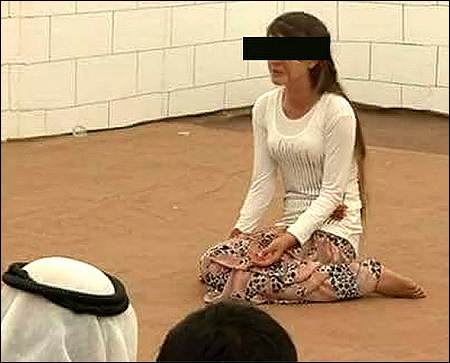
Prosecutors said Essid purchased Yazidi women in slave markets, subjected them to repeated rape, and deprived them of food and water.
Islamic State declared a self-styled caliphate in 2014 after capturing large areas across Syria and neighboring Iraq.
In August that year, fighters killed thousands of Yazidi men in Iraq’s Sinjar province and transported thousands of women and girls into Syria, where they were sold as sex slaves to militants.
United Nations investigators have classified these actions as genocide.
A Yazidi woman testified before the court on Thursday, describing the conditions she faced while held in Syria. She said she was raped almost daily by her first two captors, identified as a Saudi man and later Essid.
She told the court she was sold to six additional men before escaping with her daughter and reaching a Kurdish-controlled position after walking through the night.
Judge Sommerer said he had presided over several cases involving crimes against humanity but had not previously heard such accounts. The woman’s identity was withheld to protect her privacy, as reported by AFP.
Essid, also known in Syria as Abu Dojanah al-Faransi, was believed to have ties to Jean-Michel Clain and Fabien Clain, who claimed responsibility on behalf of Islamic State for the 2015 attacks in Paris.
Lawyers involved in the case stressed the importance of holding such trials even when suspects are presumed dead.
Patrick Baudouin of the Human Rights League said it was necessary to proceed because some fighters previously thought dead have reappeared.
Clemence Bectarte, representing Yazidi survivors and their children, said the case helped document serious abuses and the organized campaign against the Yazidis.
After traveling to Syria, Essid was joined by his wife, their three children, and her son from an earlier relationship. In a 2015 propaganda video released by Islamic State, Essid appeared encouraging his 12-year-old stepson to shoot a Palestinian hostage.
His wife has been imprisoned since returning to France.
Similar legal cases have taken place across Europe. A German court in 2021 became the first in the world to recognize crimes against the Yazidi community as genocide.
It sentenced an Iraqi man to life in prison after finding him responsible for the death of a five-year-old Yazidi girl who had been chained outdoors in extreme heat.
A Swedish court last month convicted a 52-year-old woman of genocide for enslaving Yazidi women and children in Syria in 2015.
U.S.-backed forces defeated the territorial control of Islamic State in 2019, although small cells remain active in parts of the Syrian desert.
Hussein Qaidi, head of the Kidnapped Yazidi Rescue Office, told AFP that 6,416 Yazidis were abducted by Islamic State, with more than half later rescued.
The events that led to these crimes began in August 2014, when Islamic State militants attacked the Sinjar district in northwest Iraq, an area home to a large Yazidi population.

The assault followed the withdrawal of Kurdish militia forces loyal to tribal leader and former Iraqi Kurdistan president Massoud Barzani and his KDP Peshmerga, who withdrew from the area without resistance, exposing civilians to the attack.
Thousands of Yazidi families fled to Mount Sinjar, where many became trapped without sufficient food or water. During this period, large numbers of Yazidis were killed or abducted, and many women were subjected to rape and captivity.
Thousands of women were sold into sexual slavery and transported across Iraq, Syria, and beyond. Men and boys were killed, forced into labor, or recruited as child soldiers.
An unpublished report by the Kurdistan Regional Government stated that about 18,000 Peshmerga fighters were present but retreated on Barzani’s orders without mounting a defense when Islamic State attacked Sinjar on August 3, 2014.
During the attack, nearly 10,000 Yazidis were killed and more than 6,800 women and children were taken captive.
While thousands have since been freed, nearly 3,000 remain missing, according to official figures.

The failure of KDP Peshmerga forces to protect the population led many Yazidis to lose trust in the leadership of Massoud Barzani. Critics, including Yazidi figures and Kurdish political observers, have held Barzani responsible for the events that led to the massacre.
International recognition of the killings as genocide has grown over time. The United Nations described the attacks as a possible genocide in 2015.
In 2016, the European Union, the United States, the United Nations and the British Parliament formally recognized the killings as genocide.
Armenia followed in 2018, while the Netherlands and Belgium issued recognition in 2021. Luxembourg’s parliament did so in November 2022, and Germany’s parliament in January 2023. The British government acknowledged the acts as genocide in August 2023, and Switzerland followed in December 2024.
The Yazidis are a Kurdish-speaking religious minority with beliefs linked to Zoroastrianism and Sufism, with roots in ancient Mesopotamia.
Before the 2014 attack, around 600,000 Yazidis lived in Iraqi Kurdistan and nearby areas in Nineveh province. As Islamic State advanced, about 360,000 managed to flee, according to the Yazidi Rescue Office.
(With files from AFP | Agencies)
Copyright © 2026 iKurd.net. All rights reserved.
Related posts:
 Business with ISIS – Updated
 The Resurrection (Ba’ath) Party – Before the Iran-Iraq War
 Iraqi court issues warrant for Yazidi commander Qassim Shasho for Islam remarks
 Iraqi Kurdistan – “Sold Out!” – Part II
 Yazidi woman kidnapped by IS rescued in Gaza by joint Israeli-US operation
 IS woman charged in Sweden for enslaving Yazidis in Syria
 The Iraqi-KDP agreement overrides Yazidi interests
 Swiss parliament recognizes Islamic State crimes against Yazidis as genocide
 Iraqi Kurdistan: The Emperors’ New Clothes
 French IS suspect to face trial for enslaving Yazidi teenager in Syria