The Kurds in Iran ought to form an alliance with the non‑Kurdish opposition and not merely trust the U.S.
Serwan Zangana | Exclusive to iKurd.net
The killing of the Iranian supreme leader, Ali Khamenei, by the U.S. and Israel has shaken the world and revealed the ability of both countries to reach and destroy their target. However, the differing views among American politicians, as the nation is already experiencing political polarization in general, and regarding the attack on Iran specifically, have created another division among Americans and impacted the public’s view as well.
Confronting the Iranian regime by the U.S. was inevitable as Iran has always been engineering terrorist operations in the Middle East and threatening the U.S. interests in the region.
The Islamic government of Iran has been fueling the militias in the region to perpetrate attacks and cause chaos in neighboring countries. Since the Islamic regime captured control of Iran in 1979, its clerics and leaders have been promoting radicalism and attempting to export such ideology to the world, in addition to threatening Israel and its allies.
The Islamic Republic of Iran has been committing the most vicious acts against freedom of religion and abridging the rights of minorities in Iran by persecuting thousands of people. According to the U.S. Commission on International Religious Freedom (USCIRF), Iranian authorities in 2024 ordered over 900 executions and death sentences for religious reasons and charges based on beliefs that are opposing the Iranian form of Islam.
Also, the Iranian regime has organized groups to target and harass religious dissidents outside Iran and attack Jewish sites in Denmark and Sweden, according to USCIRF. Apparently, the Islamic Republic of Iran does not believe in the existence of minorities, and the Iranian religious clerics control the system.

According to Freedom House, the ultimate power is in the country’s supreme leader Ali Khamenei’s hand, and all the unelected institutions, including the security forces and the judiciary, as they play a major role in suppressing dissidents and abridging civil liberties in Iran, are under his control.
For decades, Iranians have been living under the oppressive Islamic Republic in fear, as such a regime perceives itself as a divine power not only in the country but in the region as well.
This regime has brought disaster to a country that embraces a rich culture, and since day one of establishing its Islamic Republic, the bloodshed and murders by the rulers have been part of the Iranian community.
Iranian people are only allowed to view the world from the Islamic style of Iran, and people are prosecuted for embracing different beliefs. Mai Sat, the special United Nations (U.N.) rapporteur on human rights, has clearly expressed her concern to the U.N. about the persecution of Christians in Iran. The Islamic Republic’s discrimination of Christians in general, and the Christian converts, has been a major issue in Iran.
U.N. rapporteur on Freedom of Religion Nazila Ghanea reported that Christian converts face harsh punishments and severe sentences. In 2024, 96 Christians faced 263 years in prison, and the Justice System in Iran is only serving the regime and empowering the Islamic Republic, and indeed opposing the system will bring death upon people.
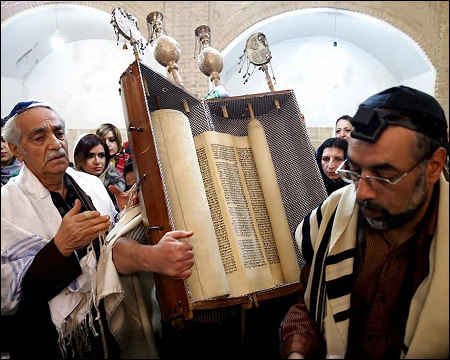
Furthermore, the persecution of religious and ethnic minorities is part of the Islamic Republic, which bases its revolution on such unjust philosophy. According to the Foundation for Defense of Democracies, before the regime took control of the country, the Jewish population was 120,000. However, after seizing power, the Islamic regime of Iran began executing prominent Jewish figures in Iran, and thus many Jewish people were exiled.
It is noteworthy that on many occasions, the Iranian authorities have denied the Holocaust, which resulted in murdering approximately 6 million Jews, perpetrated by the Nazis between 1941-1945. Such an oppressive regime of Iran is definitely aligning itself with other oppressive regimes, including the Nazis.
In addition to Christians and Jews, other religious minorities are not immune from the persecution of the Iranian government. For example, the Bahá’í faith, which was established in the 19th century in Iran (Persia), has been suffering under the rules of the Islamic Republic of Iran.
According to Human Rights Watch, between June and November 2025, more than 750 Bahá’í followers were persecuted.
After all, learning about the atrocious acts of the Islamic Republic of Iran can be a factor in realizing that eliminating their supreme leader, Ali Khamenei, was indeed necessary for human rights and freedom of religion, as it was also a relief for many Iranians.
The Kurds, the U.S., and the Islamic Republic of Iran
The Kurds have been the most loyal ally to the U.S., despite the latter’s betrayal and abandonment throughout history. President Donald Trump is no different from his predecessors in using the Kurds for U.S. interests. Regardless of the Democratic or Republican president, U.S. foreign policy has already been sketched for the president to implement and enforce in the region.
While abandoning the Kurds in Syria, as the U.S. Special Envoy for Syria Tom Barrack said, the purpose of the U.S.’s alliance with the Syrian Democratic Forces (SDF) has “largely expired,” and Ahmad al Sharaa was embraced as a new U.S. partner, Trump is taking a turn toward the Kurds in Iran and utilizing the Kurdish opposition to reach the American goal and serve U.S. political and economic interests in the region.

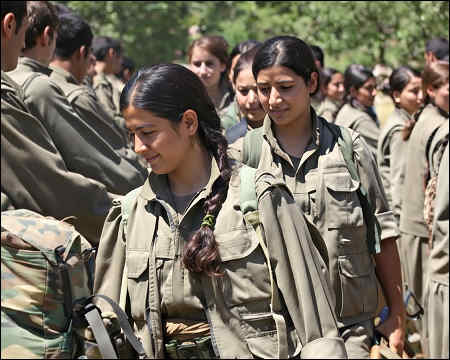
Mustafa Hijri, the President of the Kurdistan Democratic Party-Iran (PDKI), was contacted by President Trump to discuss the Kurdish ground fighting against the Islamic regime of Iran with the support of the U.S. and Israel.
However, the Kurdish struggle in Iran and the human rights violations against the Kurds have been ignored by the U.S. in the past. But as the situation intensifies with Iran, the Trump administration is using the same strategy in utilizing the Kurds against the U.S. enemy, which is the Iranian regime.
Although the Islamic Republic of Iran is the main enemy of the Kurds, it is important to realize that the U.S. has a time limit for allies in the region, and the Kurds are conversant with the U.S.’s view toward allies, as its relationship is merely based on the degree of benefits.
Therefore, the Kurds ought to establish an alliance with diverse Iranian groups and create a strong relationship with the non-Kurdish opposition in Iran, and not trust the U.S. merely.
Serwan Zangana, a contributing writer for iKurd.net, lives in Virginia, U.S. He serves as a correction officer.
The views expressed are solely those of the author and do not necessarily reflect the opinions of iKurd.net or its editorial team.
Copyright © 2026 iKurd.net. All rights reserved.
Related posts:
 The Resurrection (Ba’ath) Party – Before the Iran-Iraq War
 The Assassination of Abdurrahman Ghassemlou: No Friends but the Mullahs?
 The Sun Also Rises in Western Iran
 Iran Regime Change Vs. Map Change
 Business with ISIS – Updated
 A Root Cause Review of the Israeli-Hamas Conflict
 The 12-Day War: A Tactical Failure, Yet a Strategic Win for Israel
 Iran, a Failed Country by Enemies Within
 The Suffocation of Iraq Kurdistan
 Iraq: Revenge and Corruption