


LONDON,— A UK Home Office guidance note paints a mixed picture of political freedom in the semi-autonomous Kurdistan Region of Iraq, recording allegations of pressure on opposition figures, protesters and journalists, while stopping short of calling the problems widespread.
The report, used to help British officials decide asylum cases, reviews evidence from human rights groups, news outlets and researchers.
It does not take sides, but it lists a series of criticisms made about the Kurdistan Regional Government (KRG) and its dominant parties, the Kurdistan Democratic Party (KDP) and the Patriotic Union of Kurdistan (PUK).
Here are the main concerns it documents.
Opposition figures face pressure

The report says opposition parties do operate and win seats, but opposition politicians and activists have “at times” faced harassment, detention and, in some reported cases, physical abuse by security forces.
It notes that several prominent opposition figures were arrested or prosecuted in 2025, including Lahur Sheikh Jangi Talabani, Shaswar Abdulwahid and Aram Qadr. Authorities said the cases were criminal or security matters. Supporters called them politically motivated and part of a “broader pattern of repression.” Arrests continued into 2026, the report says, and it flags concerns about due process and the independence of the courts.
Protests sometimes broken up
While freedom of assembly is formally recognized, the report says protests, especially those criticizing authorities or demanding unpaid salaries, have at times been restricted, with arrests and security crackdowns.
It cites reports of beatings, tear gas, arbitrary detention and, in some cases, injuries or deaths. One source said protests in KDP-controlled areas are often suppressed unless the party approves them in advance, while the PUK more often allows protests but may break them up if they drag on.
The report does add a caveat: of 510 protests recorded between August 2024 and August 2026, 498 were peaceful, 9 saw intervention and 3 involved excessive force. So crackdowns happened, but in a minority of cases.
Journalists under pressure
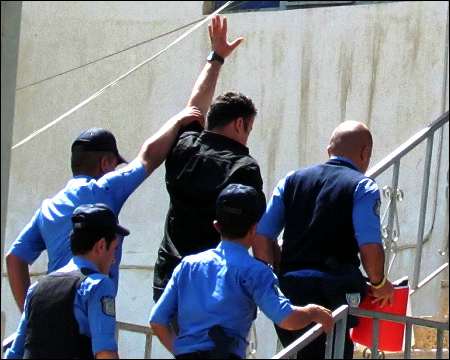
Reporters covering corruption, governance, human rights or protests may face intimidation, threats, harassment, arbitrary detention, physical assault and prosecution, according to the report.
It says security forces, courts and politically connected individuals have used defamation laws, national security rules and telecommunications legislation against journalists. Some outlets were raided or closed and equipment seized.
Journalists were detained while covering protests, and some faced extra charges used to prolong detention. The report names cases involving Sherwan Sherwani and Qareman Shukri that drew criticism from international rights groups.
An uneven political playing field
The report cites analysts who say the KDP and PUK dominate the media, security forces and regional finances, giving them a major advantage over weaker, divided opposition parties.
It records claims that public servants are pressured to vote for the ruling parties, and that many citizens believe change at the ballot box is impossible. Still, it notes that the October 2024 elections were described by most accounts as largely fair and transparent.
Media tilted toward parties
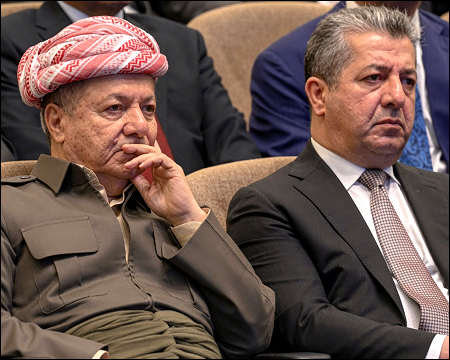
Most major outlets in the region are tied to political parties, the report says. Independent outlets have limited reach because of funding problems and harassment by authorities, it adds.
Government still not formed
The report notes that more than 18 months after the October 2024 elections, no new regional government had been formed. Relations between the KDP and PUK broke down over power-sharing, leaving the region under a caretaker cabinet.
What the report concludes
Despite these concerns, the report says the evidence does not show that mistreatment is “sufficiently serious, widespread or systematic” to prove that all opposition supporters face a general risk. Low-level party members are generally unlikely to be targeted, it says.
But high-profile critics, journalists and activists may draw attention from authorities, and each asylum claim must be judged on its own facts, the report says. It also warns that people fearing the state are unlikely to get protection or to be safe by moving elsewhere in the region.
Copyright © 2026 iKurd.net. All rights reserved.
Related posts:
 The Mustashar and the Jash – A View from the Position of ‘Iraqi National Unity’ on the ‘Descendants of Treason’
 The Suffocation of Iraq Kurdistan
 Facial Recognition Technology, Monitoring and Infiltration of the opposition in Iraq
 The Resurrection (Ba’ath) Party – Before the Iran-Iraq War
 Iraq: A State of Surveillance – Databases, Tracking And Corruption
 Syria: Revisiting The Caesar Torture Victim Photographs
 Iraqi Kurdistan: The Emperors’ New Clothes
 Iraqi Kurdistan – “Sold Out!” – Part II
 Peshmerga Unification, A Show That Fools No One
 Anfal – The Black Stain on Iraqi History Spreads