

Iraq Is Not Broken. It’s Working Exactly As Designed.
Sara Hussein | Exclusive to iKurd.net
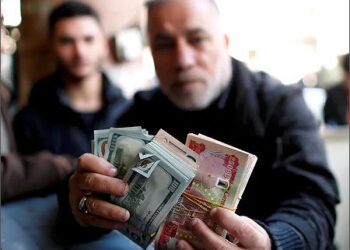
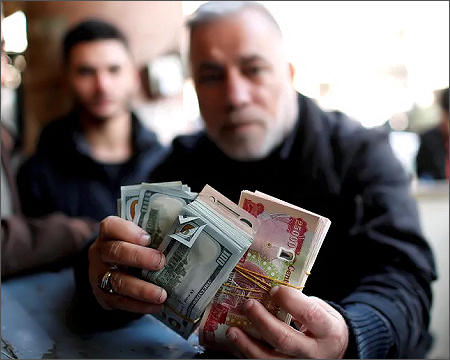
BAGHDAD,— Oil money enters. The political parties take their cut. The rest gets divided up. Then everyone waits for the next batch.
That is the story of modern Iraq in three sentences.
There is no great national project. No shared dream. No functioning state in the way most people understand the word. There is a distribution system. It has a flag. It holds elections sometimes. And it has a cash register.
The Quota System

Since 2003, Iraq has been governed by an informal system called muhasasa. The word means “quota” in Arabic. The idea is simple: political parties get a share of power and money based on their sect and their size.
The presidency goes to a Kurd. The speaker of parliament goes to a Sunni. The prime minister goes to a Shiite. Every ministry, every government contract, every state job gets divided among the parties that won seats in parliament.
On paper, this looks like power-sharing. In practice, it is something else. It is a system that rewards loyalty to a party, not competence. It puts people in charge of ministries they know nothing about because their party claimed that seat. A health minister might be chosen because he is a good negotiator for his bloc, not because he ever ran a hospital.
The result is a government that cannot do much of anything except keep itself alive.
The Cash Register Logic
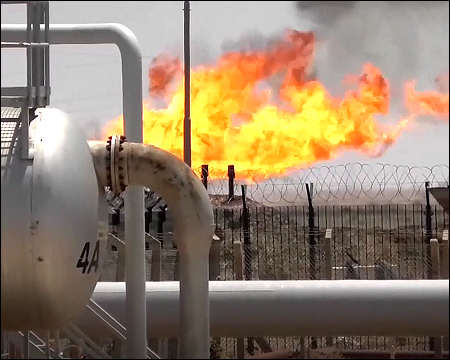
Here is how the money works. Iraq sells oil. That oil money goes to the federal government. The government pays salaries, pensions, and the basic costs of running the country. Whatever is left gets fought over by the parties.
And there is not much left.
Public sector salaries and pensions eat up a huge share of the budget . Iraq has one of the largest public payrolls in the world relative to its population. The government is the biggest employer because the private sector barely exists outside of oil. So the parties use government jobs as a way to buy loyalty. You vote for us, your cousin gets a job. You stay loyal, you keep it.
This is not a state. It is a patronage machine dressed up in a flag.
A Cabinet That Cannot Even Fill Its Own Seats
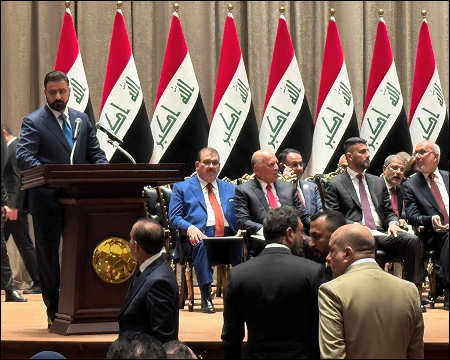
The dysfunction is visible even at the top. In May 2026, Iraq swore in a new prime minister, Ali al-Zaidi. But he could only present 14 ministers to parliament. The rest, including the critical interior and defense ministries, could not be agreed upon .
Nine ministries sat empty. No interior minister. No defense minister. Just empty chairs because the parties could not agree on who gets what.
This is not a temporary glitch. It is the system working exactly as designed. The point is not to govern. The point is to distribute. When the distribution is contested, everything stops.
What the System Produces
When you build a political system around dividing money instead of solving problems, you get predictable outcomes.
Corruption becomes normal. Not the kind of corruption where one official takes a bribe. The kind where the entire system is a bribe. Parties control government contracts. They place loyalists in civil service jobs. They use state resources to fund their own networks .
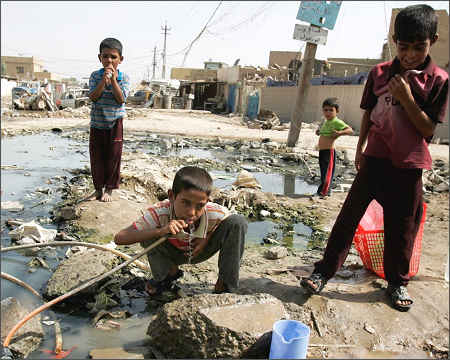
Public services stay broken. Electricity is unreliable. Water is often undrinkable. Roads are bad. Hospitals lack equipment. Schools lack teachers. Why? Because fixing these things is not the point. The point is to keep the money flowing to the right people.
Young people see no future. Youth unemployment is high. Most young Iraqis say they are not satisfied with government efforts to create jobs . They look at the system and see that it was never built for them. It was built for the parties and the men who run them.
The 2019 Warning

In October 2019, young Iraqis took to the streets. They were not demanding a new sectarian quota. They were demanding jobs, services, and an end to the system itself . They understood something that many outside observers miss: the problem is not which party is in charge. The problem is the machine itself.
The protests were met with force. Hundreds died. The system survived. It always does. It has oil money. It has guns. It has the power to wait people out.
A State That Cannot Stand on Its Own
A real state has a monopoly on the legitimate use of force. It can enforce laws. It can protect its borders. It can make decisions and carry them out.
Iraq cannot do these things.
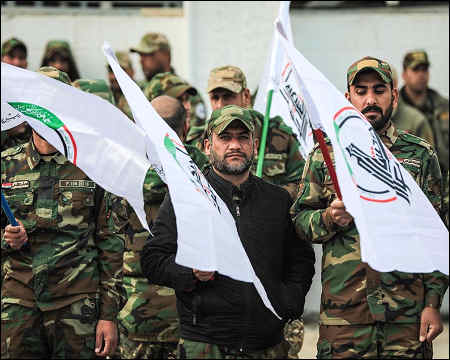
Armed Shiite groups operate outside the control of the government. Some are tied to political parties. Many are tied to Iran. Some are tied to local power brokers. The state does not disarm them because the state cannot. The parties that benefit from these armed groups are the same parties that run the government .
This is what happens when a country becomes a cash register. The flag is still there. The anthem still plays. But the thing that makes a state a state, the ability to make decisions and enforce them, is gone. It has been sold off, piece by piece, to whoever could afford it.
What Comes Next
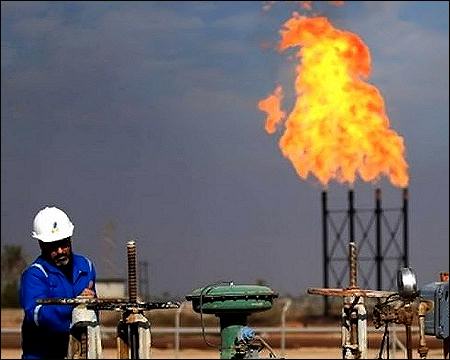
Iraq will not collapse tomorrow. The oil money keeps coming. The salaries get paid. The parties keep fighting over their shares. The system grinds along.
But a cash register is not a country. It cannot inspire loyalty. It cannot ask for sacrifice. It cannot build anything that lasts. It can only take in money and spit it back out to the people who control it.
The young Iraqis who marched in 2019 understood this. They were not protesting a bad government. They were protesting a system that was never designed to be good.
Until that changes, Iraq will remain what it has become: a distribution mechanism with a flag, a parliament, and a line of people waiting for their cut.
Sara Hussein, a Kurdish writer living abroad, she focuses on politics, culture, and religion. She is a contributing writer for iKurd.net.
The opinions are those of the writer and do not necessarily represent the views of iKurd.net or its editors.
Copyright © 2026 iKurd.net. All rights reserved.
Related posts:
 Iraqi Kurdistan – “Sold Out!” – Part II
 Iraq – The Cynical Swindle
 Business with ISIS – Updated
 The Resurrection (Ba’ath) Party – Before the Iran-Iraq War
 Saddam Hussein’s Enemies: Paving the Road to the Invasion of Iraq
 Iraq: Revenge and Corruption
 Saddam Hussein was a Friend to the West
 The Dangers of Banning Cash: A Threat to Financial Freedom
 Iraqi Kurdistan – “Sold Out!” – Part III
 Iraq: A State of Surveillance – Databases, Tracking And Corruption