
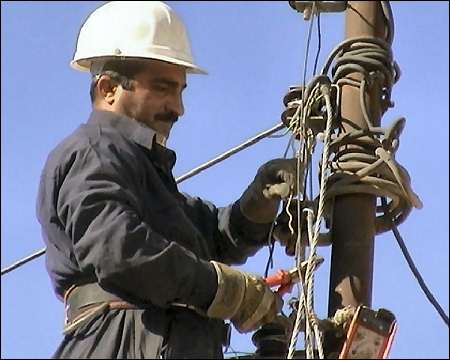
ERBIL,— Iraq’s Kurdistan Region continues to face a severe electricity shortage, with demand significantly outpacing supply, according to a spokesperson for the region’s Ministry of Electricity.
Omed Ahmed, the Ministry’s spokesperson, confirmed Wednesday that the region’s electricity demand currently stands at 7,500 megawatts, while only 3,700 megawatts are being produced. This leaves a gap of 3,800 megawatts, causing frequent power shortages across the region.
In response to the situation, the Ministry is working to boost power generation, with plans to add 500 megawatts to the grid by the end of February. However, Ahmed stressed that this increase will only be possible if citizens use electricity responsibly and efficiently.
“We aim to add 500 megawatts to the grid by the end of February to help alleviate the shortfall. But this depends on citizens adopting more responsible consumption patterns,” Ahmed said.
At present, the average daily electricity supply in the region is between 7 to 10 hours, divided into two separate intervals. Ahmed explained that the Ministry plans to extend these hours if consumption stabilizes and remains under control.
Despite the Kurdistan Region’s autonomy and self-rule for more than three decades, the ongoing electricity crisis remains unresolved. The region’s leadership, particularly the Barzani and Talabani families, have faced criticism for not addressing the electricity problem, while some accuse them of mismanaging the region’s resources.
Corruption remains a key issue, with critics alleging that the ruling families have accumulated significant wealth through the oil industry, leaving the region’s infrastructure underdeveloped. Kurdistan has long been considered one of the most corrupt parts of Iraq, with billions of dollars in oil revenue reportedly unaccounted for, according to leaked documents and statements from Kurdish lawmakers.
In addition to the power shortages, the Kurdistan Region, along with the rest of Iraq, relies heavily on private generators to maintain electricity supply during outages. According to the Iraqi Ministry of Planning, approximately 50,000 private generators are currently in operation across Iraq and the Kurdistan Region to fill the gap caused by frequent power cuts, as reported in 2023.
Kurdistan’s oil wealth could be used to solve its electricity crisis, but corruption is holding back the region’s potential. According to experts If properly managed, the substantial oil revenues could fund major infrastructure projects like nuclear power plants to meet the region’s growing energy needs. This investment in nuclear energy could reduce reliance on imported electricity and costly private generators, providing a sustainable and reliable power source while boosting the economy.
Currently, Kurdistan is facing a serious energy shortfall, producing only 3,700 MW of electricity, far below the 7,500 MW it needs. If Kurdistan were to rely solely on nuclear power to close this gap, the region would need to build nine nuclear reactors, with an estimated cost of $63 billion. But overcoming corruption and ensuring effective use of oil revenues are key challenges in making this vision a reality.
As the electricity shortage persists, many in the Kurdistan Region are left questioning whether promises of progress will ever materialize into lasting solutions.
Copyright © 2025 iKurd.net. All rights reserved
Related posts:
 Iraqi Kurdistan – “Sold Out!” – Part II
 Iraq – The Cynical Swindle
 Full-day electricity reaches 30% of Iraqi Kurdistan, officials say
 Saddam Hussein’s Enemies: Paving the Road to the Invasion of Iraq
 Business with ISIS – Updated
 The Resurrection (Ba’ath) Party – Before the Iran-Iraq War
 The Misleaders: Corrupt, Filthy Rich, and Proud of it
 The Capture of The State of Iraq
 Iraqi Kurdistan – “Sold Out!” – Part III
 The Double Cross of Iraq And The Discordant Death of WMD Inspector, Dr David Kelly – The 17th Anniversary