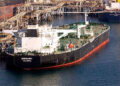



ERBIL, Iraqi Kurdistan region,— Every day, hundreds of oil tankers traverse the highways leading north to Turkey and east to Iran from near Erbil, the capital of Iraq’s semi-autonomous Kurdistan region.
These tankers represent the most visible aspect of a vast, off-the-books operation transporting oil to neighboring countries. According to a Reuters report, this trade has surged since the closure of an official export pipeline last year.
Through interviews with over 20 individuals, including Iraqi and Kurdish oil engineers, traders, government officials, politicians, diplomats, and industry insiders, Reuters has uncovered the details of this burgeoning trade.
The operation sees over 1,000 tankers carrying at least 200,000 barrels of discounted oil daily to Iran and, to a lesser extent, Turkey, generating about $200 million monthly.
The scale of these unofficial exports has largely remained unreported. However, Iraqi officials acknowledge that this unregulated trade is a significant reason why Iraq has struggled to adhere to output reductions agreed upon with OPEC this year. Iranian and Turkish authorities have not commented on these transactions.
Iraqi Oil Ministry spokesperson Assim Jihad stated that the Kurdistan oil trade is unauthorized by the Iraqi government. The State Organization for Marketing of Oil (SOMO) is the sole entity permitted to sell Iraqi crude, according to Jihad, who added that the government lacks precise figures on the volume of oil smuggled into Iran and Turkey.
Jim Krane of Rice University’s Baker Institute in Houston noted that while OPEC has historically imposed punitive measures on members involved in smuggling, Baghdad might avoid repercussions due to the autonomous nature of the Kurdish region.
The thriving oil trade could strain relations between Kurdistan and its ally, the United States, as Washington evaluates whether these activities violate U.S. economic sanctions on Iran. An official from the U.S. government confirmed that the matter is under review.
Until last year, Kurdistan exported most of its crude through the official Iraq-Turkey Pipeline (ITP), which runs from Kirkuk to the Turkish port of Ceyhan. However, these exports ceased in March 2023 following an international tribunal ruling in favor of the Iraqi federal government, which argued that Turkey’s arrangements with the Kurdistan regional government breached a 1973 treaty.
In response, tankers began transporting Kurdish oil to neighboring countries. The trade accelerated this year as negotiations to reopen the pipeline stalled, according to industry sources and diplomats. Local officials revealed that none of the proceeds are recorded in the Kurdistan Regional Government’s (KRG) accounts, which has been grappling with financial difficulties.
“There is no trace of the oil revenues,” said Ali Huma Saleh, a former chair of the oil committee in Kurdistan’s parliament. He estimated the trade at over 300,000 barrels per day, higher than most other estimates. Hiwa Mohammed, a senior official in the Patriotic Union of Kurdistan (PUK), stated that the oil crosses borders with the knowledge of both regional and federal governments.
The KRG Treasury and the Ministry of Natural Resources did not respond to requests for comment. A U.S. official mentioned that Washington is assessing the oil trade for compliance with sanctions on Iran.
Kurdistan’s oil companies sell crude locally at significantly reduced prices—between $30 to $40 per barrel—generating at least $200 million in monthly revenue, according to industry and political sources. The region’s oil production is dominated by eight international firms, including DNO ASA, Genel Energy, and Gulf Keystone Petroleum.
While most oil production halted following the pipeline closure, some companies, such as DNO and ShaMaran, have resumed production for local buyers. These buyers then sell the crude through intermediaries for export, often without the producers’ knowledge.
Most of the oil is transported to Iran via official Iraqi border crossings like Haji Omaran or Penjwen, where it is then shipped from Iranian ports or transported by road to Afghanistan and Pakistan. The exact benefits Iran derives from this trade remain unclear, though it likely involves refining the oil into gasoline.
The black-market trade benefits political elites linked to business interests, according to multiple sources. Officials from Kurdistan’s two ruling parties, the Kurdistan Democratic Party (KDP) and the PUK, are reportedly the main beneficiaries. An industry source described a complex network of salespeople and officials profiting from the trade.
A senior diplomat in Baghdad indicated that political interests are so entrenched in the trade that resuming official exports via the pipeline is no longer a diplomatic priority. Kurdish officials argue that the trade is a necessity imposed by the pipeline closure, which they view as part of a broader effort by Iran-backed Shi’ite parties in Baghdad to reduce their autonomy.
The volume of tankers clogging highways and causing accidents has angered residents. “It’s very painful,” said Rashid Dalak, whose brother was killed in a crash with a tanker. The damage to roads and loss of life have not been compensated, leaving locals disillusioned.

Iraqi Kurdistan is widely considered one of the most corrupt regions in Iraq. Watchdogs, lawmakers, and leaked documents indicate billions of dollars are missing from oil revenues. Analysts and watchdogs highlight the lack of control mechanisms, making the region a haven for illegal financial activities by Kurdish leaders.
The Barzani clan, often referred to as “Kurdish oligarchs,” faces accusations of nepotism and amassing wealth from the oil trade rather than serving the public. Massoud Barzani remains influential, with his son Masrour serving as the prime minister and his nephew Nechirvan as the president of Kurdistan.
Iraqi Kurdistan is politically and geographically divided between the KDP, led by the Barzani clan, and the PUK, led by the Talabani family. The Barzanis control Erbil and Duhok, while the Talabanis dominate Sulaimani.
The ongoing oil trade and the resulting economic and political complexities underscore the challenges facing Iraqi Kurdistan. As the region navigates its relationship with Baghdad and the international community, the shadow economy of oil smuggling continues to play a pivotal role.
Copyright © 2024 iKurd.net. All rights reserved
Related posts:
 Iraqi Kurdistan – “Sold Out!” – Part II
 Business with ISIS – Updated
 Iraq – The Cynical Swindle
 The Misleaders: Corrupt, Filthy Rich, and Proud of it
 The Resurrection (Ba’ath) Party – Before the Iran-Iraq War
 Saddam Hussein was a Friend to the West
 Saddam Hussein’s Enemies: Paving the Road to the Invasion of Iraq
 Iraq: Revenge and Corruption
 The Suffocation of Iraq Kurdistan
 “ISLAMBUL”