

Iraq population reaches 46.1 million
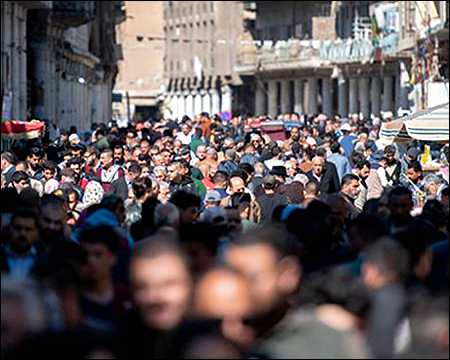
BAGHDAD,— Iraq’s planning ministry unveiled the results of the country’s first national census since 1987 on Monday, providing a comprehensive overview of the country’s demographic landscape.
The census, conducted in November 2024, reported that Iraq’s population has reached 46.118 million people.
According to the results, the gender distribution in Iraq is nearly equal, with 23,161,604 men and 22,957,189 women, yielding a sex ratio of 50.22% male and 49.78% female.
Urban areas continue to dominate the country’s population, with 70.17% of Iraqis living in cities and 29.83% residing in rural areas. In contrast, the Kurdistan Region has a higher rate of urbanization, with 84.57% of its population living in cities.
The working-age population, between the ages of 15 and 64, accounts for 60.44% of Iraq’s total population, signaling a potential for economic growth. The proportion of those under the age of five is 11.16%, while 24.74% of the population is between the ages of five and 14.
People aged 65 and older make up 3.66% of the population. In the Kurdistan Region, the working-age population is slightly higher at 63.92%, with 4.4% of the population being over 65. This represents a 22% increase in the proportion of elderly individuals in Kurdistan compared to the rest of Iraq.
In terms of housing, 71.14% of households across Iraq and the Kurdistan Region are homeowners. Private renters make up 19.41%, while 2.12% of people rent from the government, and 6.33% live in free housing.
The data also reveals that the majority of homes in Iraq are standalone houses, accounting for 91.57% of residences, while 7.08% are apartments and 0.70% are mud houses.
The census also provided details on household dynamics. The report showed that 54% of Iraqi households are headed by married couples, while 41.6% of households consist of cohabiting individuals without formal marriage.
A smaller proportion, 1.28%, are separated households. The overall birth rate for Iraq is 3.9%, while in the Kurdistan Region, the rate is slightly lower at 3.5%.
Regarding employment, the census found that 38.25% of Iraq’s workforce is employed in government and public sector jobs. The results also highlighted an illiteracy rate of 15.31% in Iraq, with the Kurdistan Region reporting a slightly higher rate of 16.23%.
Housing data in the Kurdistan Region was also specified. In Erbil, for example, 67.03% of the population are homeowners, while 25.87% rent privately, 0.74% rent from the government, and 6.37% live in free housing.
The majority of homes in Erbil are houses, accounting for 92.54%, with 6.91% being apartments and 0.37% being mud houses.
(With files from Agencies)
Copyright © 2025 iKurd.net. All rights reserved
Related posts:
 The Resurrection (Ba’ath) Party – Before the Iran-Iraq War
 Iraq: Revenge and Corruption
 Saddam Hussein’s Enemies: Paving the Road to the Invasion of Iraq
 Iraq holds its first nationwide census since 1987
 Iraqi Kurdistan’s population reaches 6.37 million, census shows
 Iraq’s population reaches 45.4 million, census shows
 The Truth About The Saddam Hussein Affair
 Iraqi Kurdistan – “Sold Out!” – Part II
 Iraq – The Cynical Swindle
 The Suffocation of Iraq Kurdistan