

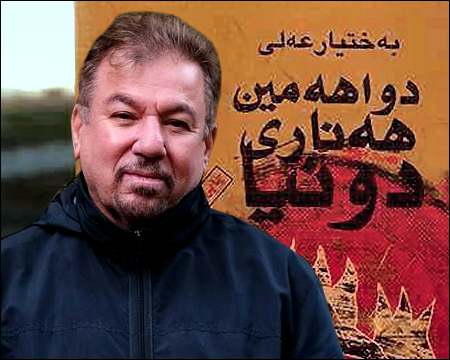
BERLIN,— Renowned Iraqi Kurdish writer Bakhtyar Ali has achieved a significant literary milestone as his novel “The Last Pomegranate of the World” “Duwahêmîn Hênarî Dunîya” has been named among the top 100 books of the 21st century by Switzerland’s respected daily newspaper, Neue Zürcher Zeitung (NZZ).
The book secured the 80th spot on the prestigious list, which highlights some of the most influential literary works from the past 25 years.
This recognition has sparked pride and excitement in Ali’s supporters. In a statement shared on social media, the author expressed his gratitude and described the inclusion of his novel as a “historic pride” for both the present and the enduring legacy of Kurdish literature.
He also noted that the NZZ’s list is often compared to the New York Times best-sellers list, making this acknowledgment even more significant in the global literary landscape.
The Last Pomegranate of the World is a gripping novel set against the backdrop of Saddam Hussein’s regime in Iraq. It delves into the harrowing experiences of the Kurdish people, focusing on a father-son relationship forged amidst the violence and oppression of the 20th century.
The book’s deeply emotional narrative and exploration of war, family, and survival have resonated with readers worldwide, leading to translations in multiple languages, including German, English, French, Italian, and Persian.
Bakhtyar Ali, born in 1960, is one of the most prominent literary figures in Iraqi Kurdistan. Over the course of his illustrious career, spanning more than five decades, he has authored numerous novels, essays, and plays, establishing himself as both an influential intellectual and a storyteller.
Though he initially gained recognition as a poet and essayist, Ali’s transition to fiction writing in the mid-1990s cemented his place in global literature.
Currently residing in Germany, Ali continues to contribute to intellectual discussions on various issues, including the Kurdish struggle, the Anfal genocide of 1988, and the relationship between power and intellectuals.
His academic work often incorporates Western philosophical concepts, which he adapts to the unique cultural and political context of his native Kurdistan.
Ali’s inclusion on the NZZ list further underscores his impact on both Kurdish and world literature, solidifying his place as a powerful voice in contemporary fiction.
(With files from Rudaw)
Copyright © 2024 iKurd.net. All rights reserved
Related posts:
 The Resurrection (Ba’ath) Party – Before the Iran-Iraq War
 Iraq: Revenge and Corruption
 The Mustashar and the Jash – A View from the Position of ‘Iraqi National Unity’ on the ‘Descendants of Treason’
 The Truth About The Saddam Hussein Affair
 The Suffocation of Iraq Kurdistan
 Business with ISIS – Updated
 The Hit List: Killing pro-Kurds on the orders of the Turkish State – then and now
 The Terror Instructor – Nouri al-Maliki
 The Double Cross of Iraq And The Discordant Death of WMD Inspector, Dr David Kelly – The 17th Anniversary
 The Assassination of Abdurrahman Ghassemlou: No Friends but the Mullahs?