

Shakhawan Shorash | Exclusive to iKurd.net
Before 2003, Iraqi Kurdistan was not a democracy and was divided into two regions. The Kurdistan Democratic Party (KDP), led by the Barzani family, controlled the yellow zone, and the Patriotic Union of Kurdistan (PUK), led by Talabani, controlled the green zone; they both took hold of every aspect of society with a high degree of corruption and abuse of power.
After the years following the internal war between PDK and PUK, there had been some measure of stability since 1998, and the next step toward building a true democracy would have been the most rational move forward.
Iraqi Kurdistan could have used the Iraq state building and democratization processes in 2003 as a model for starting on its own path to democratization.
Kurdistan needed unification, national consensus, and the general acceptance of the principles of democracy. There was no doubt that democratization was the best cure for the long internal conflict and division. Disarmament of the party-militias, a new democratic constitution, and an election for a new united government were therefore vital first steps that needed to be taken in order to move on from the period of a ruling party-militia and the division of the Kurdish community.
On the contrary, without any required changes, the PUK and KDP agreed to keep their military power and political authority in their regions, and opted share the wealth of Kurdistan between a weakly united government, where key ministries and departments were still separated. Therefore, the democratization was never implemented, and the power of the party-militia continued just as before.
In 2005, however, a new election was held, but it was riddled with fraud and corruption and thus secured the continuation of the dominance of the KDP and the PUK. The new parliament was weak, and the most important decisions were made by the ruling family and the political bureaus of the KDP and the PUK.
This political situation continued until 2009, when the Movement for Change (Gorran) broke out from the clutches of the PUK and constituted an opposition for the first time in Iraqi Kurdistan’s parliament. Unfortunately, the Goran could not change the political decisions that were made because they were simply a minority in the already weak parliament.
The election in the summer of 2013 went as usual, and was marked by sanctions and election fraud, especially in the yellow zone, even though the votes were dispersed as follows: the KDP earned 38%, the PUK earned 18%, the Goran earned 24% and the Kurdistan Islamic Union earned 10%.
Despite the weakening of both the KDP and the PUK in the parliament, they still maintained control of decision making in the yellow and green zones due to the enforcement of the party-militia. After several month of stalemate, the political parties finally agreed on a common government that included all the political parties without opposition.
At this time, the disappearance of the opposition was a backward step for the already weak political system of Iraqi Kurdistan. Another backward step was the extension of Massoud Barzani’s presidential period for an additional two years, which was arranged by a deal between the KDP and the PUK.
Nevertheless, the domination of the KDP and the concentration of wealth and power in the hands of the Barzani family, as well as the weakening of the PUK on the other side, affected the political atmosphere in general and the influenced the specific thoughts and objectives of the political parties.
In June of 2015, the other political parties, including the Goran, the PUK, the Islamic Union, and the Islamic Group, proposed a change of the political system to a parliamentary system and a weakening of the power of the president. The Barzani family and the KDP were against the proposed changes and claimed that the proposal was an attempted coup d’état against Massoud Barzani.
The KDP and Massoud Barzani pushed for a compromise outside of the parliament, and argued that the KDP would not accept any regulations of the political and presidential system proposed by the parliament. The KDP boycotted the meetings of the parliament and, not surprisingly, pushed the already weak parliament completely out of the sphere of political influence.
In the past, the parliament had never had the power to contradict the interests of the Barzani or Talabani families, and now, they were hopeless in their attempts to challenge the Barzani family’s interests. Nevertheless the political deal outside of the parliament, is a “solution” that is simply a postponement of the crisis for a few more years. This is a classic political strategy of the main Kurdish political parties, and this can also end in chaos and division as has happened before.
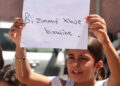
The demonstrations and protests against the Kurdish regional government in September of 2015 due to the increasing amount of corruption and the growing economic problems made the political crisis even worse. The KDP accused the Goran of perpetuating the crisis and consequently decided to send the Goran´s ministers home, further removing Yousef Mohamad (a Goran member) as the chairman of the parliament.
The KDP´s security forces prevented him from entering the yellow zone, and all other active members of the Goran were under observation in the zone. Furthermore, the KDP’s security arrested the staff of NRT (an “independent” TV channel) and KNN (Gorran’s TV channel), confiscated various items and materials from the facilities of the TV channels, and expelled the staff out of the yellow zone.
Now Barzani is acting as president of Kurdistan and Yousef Muhammad as the chairman of the parliament. The accusations between the KDP and the Goran continue to persist. On the other hand, the parallel political moves of the green and yellow zones on behalf of the KDP and the PUK are also continuing.
In any event, it is clear that the Barzani family is looking to secure their control of political power as they have in the past, and the marginalization of the Goran now and in the future is a part of this process.
The political chaos proves that Iraqi Kurdistan had not effectively managed to go through a transition period and implement a democratic system in 2003.
The main political leaders were never interested in the democratic attitudes and openness that such a system would require. They never abandoned their objectives for occupation and possession, and the community has suffered under their arbitrary rule.
There are still non-democratic institutions in Iraqi Kurdistan that either require radical changes or complete elimination, such as the party-militia, the military, and the security and intelligent forces, which all still belong to the KDP and the PUK. There is a need for comprehensive reorganization, reconstruction, and modernization of the system.
Democracy can indeed solve the internal conflict in Iraqi Kurdistan, but democracy cannot exist while the people suffer under the control of the party-militia institutions. Democratization cannot be realized without the liberation of the people from the clutches of the ruling political party.
Consequently, the disarmament of the ruling political parties and elimination of the party-militia forces would be both vital and decisive. When the people are finally free and not arbitrarily bound to the institutions of a political party that they themselves do not support, then the final steps of reconstruction and modernization may actually be realized.
Finally, it should be noted that this process must begin at the national level. In other words, the national interests of the Kurdish people come before their individual interests, and therefore the conflicting political parties have to reach a national consensus and establish a transitional government, and then begin the process toward democratization based on a modern constitution. This is the best way out for the Kurds.
Shakhawan Shorash, BA and Master of political science from Southern University of Denmark and University of Copenhagen. A freelance writer concerning human right, genocide, ethnic conflicts, democratization and similar subjects. Shorash is an occasional contributing senior writer for iKurd.net, See below.
The opinions are those of the writer and do not necessarily represent the views of iKurd.net or its editors.
Copyright © 2015 iKurd.net. All rights reserved
Related posts:
 Iraqi Kurdistan: The Emperors’ New Clothes
 The Mustashar and the Jash – A View from the Position of ‘Iraqi National Unity’ on the ‘Descendants of Treason’
 The Suffocation of Iraq Kurdistan
 The Resurrection (Ba’ath) Party – Before the Iran-Iraq War
 Iraqi Kurdistan – “Sold Out!” – Part II
 Why corrupt Kurdish politicians don’t land in jail in Iraqi Kurdistan
 Massoud Barzani between corruption, political crisis, and psychology behind his actions
 Iraqi Kurdistan has better individuals than Massoud Barzani to lead
 The Controversial Kurdistan Referendum: The Dirty Game in the Name of National Interest
 Business with ISIS – Updated