


Nemat Sharif | Exclusive to iKurd.net
History is the systematic study and understanding of the past of peoples, relying on analysis and documentation from available sources to provide a deep understanding of continuity across ages and times. In other words, it is the study of change along the timeline of any people through documentation and understanding what it covers is crucial.
There is no nation without a history, however, mostly written by the victors to diminish others. The best history is that which is written with complete objectivity, whether by the people themselves or by others. Generally speaking, there are oppressed peoples and oppressing nations.
Briefly, there are two opposing factors: firstly, the oppressed peoples have their own view of the world and of their oppressors, and there is that of the oppressors with the constant fear of what will happen to them if the oppressed peoples prevail with their relentless struggle for equality to achieve their legitimate rights from their perspective.
For example, the Kurdish nation has a rich history whose roots extend back to before the Common Era and many researchers today believe that their history is connected to the ancient Sumerian civilization in terms of language and ethnicity.
In comparison to the Arab and Western civilizations, which are primarily rooted in the Abrahamic religions. The Kurds have contributed strongly and clearly to both. Throughout the ages, they have had various empires, states, and principalities, and we are not going into details here so as not to stray from the topic.
As the Ottomans dismantled the last Kurdish principality, the province of Kurdistan was created within the Ottoman administration. When World War I broke out (1914-1918), the Ottoman war fronts were teeming with Kurdish fighters. Earlier the Kurds had played a significant role in consolidating Ottoman rule, as the Ottoman records attest.
The victors then divided Kurdistan for the second time (1), without any regard for the will of the people, and placed the territories of the “sick man of Europe, (the Ottoman Empire), under their influence, many under mandates, such as Iraq. The armistice and the end of WWI took place south of Mosul, and since then, the so-called Mosul problem (2) began, which the Turks still claim whenever the opportunity arises.

After lengthy negotiations between the Ottomans and Britain and at the League of Nations at the time, they failed to reach a mutually satisfactory solution; the borders of Iraq and Turkey were drawn. By then, Mustafa Kemal Atatürk had abolished the Ottoman Kalifate and convened a conference to present what was called the National Pact, after reneging on his promises regarding founding a Turkish-Kurdish republic.
The story of Hassan Khairi (3) is a case in point. Atatürk used him to demonstrate to the Allies that the Kurds desire to join the modern Turkish state. Since then, Kurdish uprisings began in all four parts of Kurdistan, all of which were met with repression and persecution in attempt to erase the Kurdish nation from existence.
The 1937 Treaty of Saadabad stipulated cooperation between Iraq, Turkey, and Iran to suppress any movement in the border regions, and this continues to this day. In Iraq, it began with the revolt of Sheikh Mahmoud al-Hafid and his declaration as the King of Kurdistan, followed by Barzani’s uprisings in the 1930s, and then the September and May revolutions, culminating in what we see today as the Kurdistan Region.
In Iran, uprising lead to the Republic of Mahabad, which lasted less than a year before being crushed by the Iranian army with the support of world powers. In Turkey, from the revolts of Nehri, Ararat, Sheikh Said, and Bedir Khan, to the ongoing conflict led by the Kurdistan Workers’ Party (PKK), the struggle continues.
In Syria, fear has been a constant presence, and Hilal Talab’s book (4) provided a comprehensive plan for the Ba’ath Party on how to eradicate the Kurds once and for all. Following that infamous book, the implementation of the racist Arab Belt project began, and the author was promoted to minister for his racist plan.
The Kurdish nation is a nation with a strong heritage, resistant to dissolution and assimilation into other nations, a fact that countries partitioning Kurdistan know, but the West, still doesn’t understand. Even the fifth part, known as the Red Republic, was abolished by Stalin, and the Kurdish refugees there were dispersed to areas far from their original homeland.

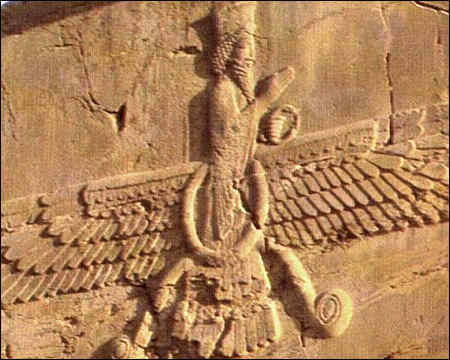
Let us delve a little deeper into history, when Zoroastrianism was the first monotheistic religion in history, originating and flourishing in the mountains of Kurdistan. Its teachings spread to vast territories extending from the borders of China to the fringes of Europe, where Nietzsche wrote his famous book, “Thus Spoke Zarathustra.”
Judaism grew and flourished in the embrace of Zoroastrianism and Mithraism after the Babylonian captivity, where the Prophet Daniel spread and defended his religion in the Babylonian court and then the Medo-Achaemenid court, until their return to their lands (5).
This was achieved through various means, from the Median Empire to the Achaemenid state, in which the Medes played a significant role even after the Achaemenids rose to power. The Kurds possess this immense historical legacy and their contributions to human civilization, yet today they are persecuted and suppressed by various brutal means in their historical homeland.
Undoubtedly, the Kurdish collective consciousness retains both their negative and positive experiences. Thus, their resistance to assimilation into neighboring societies that employ the harshest methods to suppress them nationally and to suppress their heritage, language, and culture. The occupiers know that the Kurds will endure despite the persecution and despite their domestic problems.
These accumulations in their collective mind have become an integral part of the Kurdish identity. Thus, the more Kurdish awareness rises, the more intense the struggle for survival becomes, despite the immense sacrifices. There is no need to elaborate further here, as Modern Kurdish history is clear to anyone who follows or wishes to learn more about the Kurds and their history.

After the advent of Islam, many scholars and leaders emerged among them, whose contributions no one can deny, from Ibn Taymiyyah to Saladin. Many others contributed to building Islamic civilization. We regret to say that the twentieth century, the era of culture and scientific progress was the harshest century for the Kurdish nation, and its repercussions continue into the twenty-first century, in the age of globalization and superpowers.
We believe that recognizing the Kurds and rectifying the historical injustices against them is long overdue. Haven’t the tragedies of the twentieth century and the tragedies of the different parts of the Kurdish nation, and the division of their historical homeland for purely self-serving interests, are enough?
Therefore, it is essential for major countries especially democracies, to establish a dedicated structure within their ministries to address the Kurdish issue across all parts of Kurdistan. This would allow them to view the Kurdish cause as a single issue and their struggle as a unified struggle, rather than perceiving the Kurds as a fragmented and scattered nation, each part with its own characteristics.
On the contrary, the 1937 Sa’dabad Pact is a stark example of how the states that divide Kurdistan viewed the Kurds as a single nation whose struggle concerned them all, and therefore they cooperated in suppressing any Kurdish movement wherever it arose.
Unifying this perspective through a single structure to monitor Kurdish events and formulate a unified policy towards this oppressed nation of 40 million, and extending a helping hand to them, is crucial to ascend the moral high grounds.
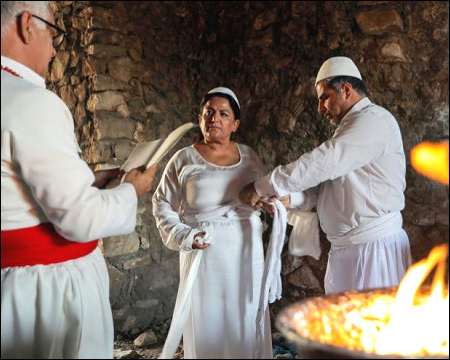
Kurdistan is rich in natural resources, and the Kurds are skilled in defending themselves and will utilize all necessary means to do so. For them, it is a matter of life or death, and their freedom is their most precious possession. Although Muslims constitute the majority among the Kurds, with their various sects, when Muslims failed to accept them as partners, the Kurds turned to their literary, artistic, and spiritual heritage to preserve their historical legacy and their existence as a single nation.
In the new global order whose signs are emerging on the horizon, the Kurdish issue will emerge as a single issue that will be at the forefront of global issues that must be addressed. Instead of being a destabilizing factor, they have chosen to be a factor of stability in any country where they reside. In Iraq, there is the Kurdistan Region, which represents the most prominent factor of stability in Iraq and the region since the 1990s.
Abdullah Öcalan’s call from his prison in Imralı is a step in this direction, as the Turkish state still insists that the PKK are terrorists, however, Turkey yet to take a single step to build trust and achieve lasting peace. And as for Syria, the situation is beyond description. The president was a terrorist wanted by most countries, especially Western ones, and today he is welcomed and supported by both Arab and Western countries. It’s truly astonishing to see how things changed.
Sources and Notes
1) The first division was between the Ottoman and Safavid empires in 1514.
2) For more on the Mosul Problem, see the book “The Mosul Problem” by Dr. Fadhel Hussein, Baghdad, 1967.
3) Hassan Khairi was the Kurd whom Atatürk recruited to appear before the Allies in Kurdish attire and testify to them that the Kurds desired Turkish-Kurdish brotherhood by joining the new republic. He later regretted what he had done, and Atatürk executed him. This is the fate of traitors.
4) Hilal, Muhammad Talab commissioned a study on Al-Jazira Governorate from national, social, and political perspectives. The study was distributed as an internal bulletin of the Ba’ath Party until it was discovered by Dr. Ismet Sherif Vanly in 1968.
5) Grosson, Christopher, Children of the Magi, the Sacred History of the Kurds and the Persians
Nemat Sharif, a political analyst, a senior contributing writer and columnist for iKurd.net.
The opinions are those of the writer and do not necessarily represent the views of iKurd.net or its editors.
Copyright © 2026 iKurd.net. All rights reserved
Related posts:
 The Resurrection (Ba’ath) Party – Before the Iran-Iraq War
 What makes a good NATO ally? The Case of Turkey
 Business with ISIS – Updated
 Behind the Veil of Turkey’s ‘Zero Problem’ Policy – A Kurdish Perspective
 Iraqi Kurdistan – “Sold Out!” – Part II
 Saddam Hussein’s Enemies: Paving the Road to the Invasion of Iraq
 The Kurdish Diplomacy: Historical, Political, and Legal Explanation – Book Review
 Iraq – The Cynical Swindle
 The Truth About The Saddam Hussein Affair
 Iraq: Revenge and Corruption