

Dr. Kamal Sido | Exclusive to iKurd.net
A commentary by Dr. Kamal Sido, Middle East expert at the Society for Threatened Peoples (GfbV).
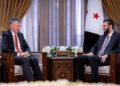
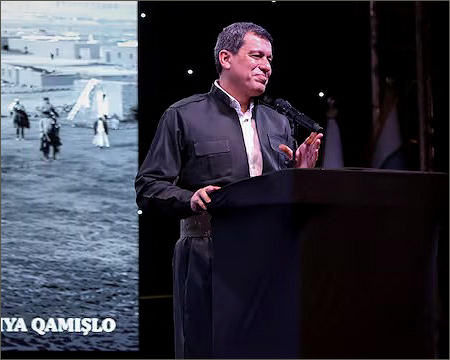
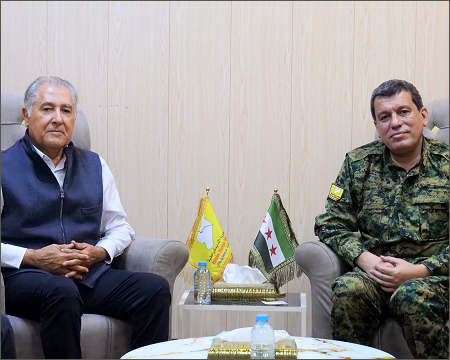
In mid-August 2026, the Kurdish-dominated Syrian Democratic Forces (SDF) announced its dissolution. Their leader, General Mazlum Abdi—with whom I spoke at length during my last visit to Syria—reportedly became an advisor to the Islamist leader Al-Golani and the current Syrian ruler Al Sharaa.
Below, Dr. Kamal Sido of the GfbV comments on these and other developments.
The Disbandment of the SDF
The SDF had two options: Either they put up a fight, which would result in the complete destruction of the remaining Kurdish areas in Syria and the elimination of the Kurdish presence, or they surrender and the Kurds would be forced to lead a humiliating life without dignity, without freedom, and without full recognition of their language and culture. A life under Islamists offers no guarantees of freedom.
From a geopolitical perspective, Russia, the U.S., and Israel—which had or still have a presence in Syria—were not willing to protect the Kurds from the Syrian Islamists and their supporter, Turkey.
The SDF and other Kurds have made mistakes, which we have always pointed out in a timely manner. You can read all about it. The problem with the Kurds was, is, and will likely remain their inability and unwillingness to work together.

In particular, many blind followers of Barzani and Öcalan would rather fight each other in the service of Turkey than work together for the rights of the Kurds.
This was and remains the case in the dispute between the Barzanis and the Talabanis. Had the Kurds worked together, they would have had a better chance of improving their situation.
Öcalan is the founder of the now-dissolved Kurdistan Workers’ Party and has been imprisoned in Turkey since 1999.
The Barzanis and the Talabanis are two Kurdish families in Iraq who have been dividing the Kurdistan region among themselves for decades. All three groups have waged war against one another at various times, and their supporters in the Diaspora are also deeply at odds with one another.
Israel’s Stance
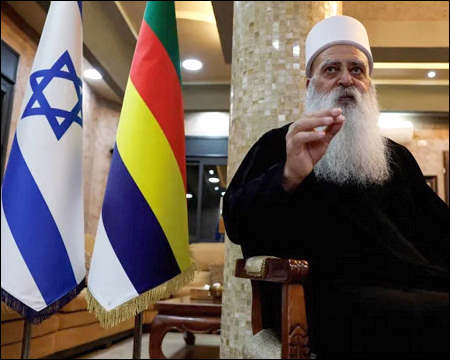
I am well aware of Israel’s stance. I have been visiting Israel regularly since 2013 and have met with many officials there. They said, “We can’t do anything for the Kurds. All we can do is talk to the U.S. and say, ‘Don’t let the Kurds down!'” To that, I replied to the Israelis: “I understand. Then don’t let the Druze down.”
I hope that the Druze will not be subjected to new campaigns of genocide. For every defeat of the Druze means new catastrophes for the Alawites, Kurds, and other groups. I am pinning my hopes on the Druze and on Hikmat Hijri, leader of the Druze in Syria.
Will Israel let the Druze down? Anything is possible. The Sunni Qatari lobby in Israel is very strong. Even many Jews from Syria are on Al-Golani’s side. They say: “Al-Golani is our man; he is Israel’s man. Why should we defend the Druze?” The role of the Druze in Israel—especially that of Sheikh Mowafaq Tarif, the head of the Druze community there—is crucial.
Alawites
The situation of the Alawites in Syria is far more dire than that of the Kurds and Druze. They are abducted almost daily; women, in particular, are raped and killed. The Assad family, which ruled Syria from 1970 to 2024, belonged to the Alawite minority and committed numerous crimes and mass murders.
One of the worst crimes committed by this family was the destruction of the ancient, traditional structures of Alawite society. When the Alawites urgently needed an organization in December 2024 to resist Islamist barbarism, the Assad family simply fled, leaving Alawite society defenseless against the Islamist barbarians who had seized power in Syria.
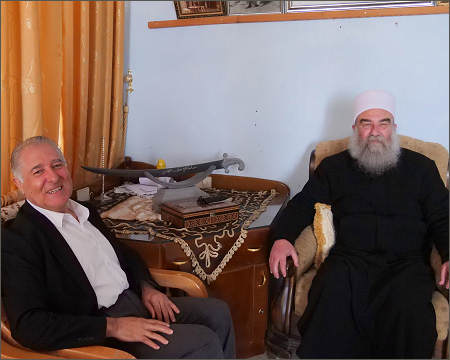
They urgently need a functioning, unified organization. Sheikh Ghazal, with whom I recently conducted a long interview, can play an important role in this regard. For a community in distress needs an organization and leadership to mount resistance; otherwise, it is lost.
The West’s Stance
Regarding the stance of the United States, Germany and other Western countries, I can only reiterate what I have been saying since 2011 — from the very beginning, in fact: Germany, for example — specifically the federal government and, above all, the Foreign Office — has consistently supported Islamists in Syria diplomatically, politically and financially.
There are many historical and geopolitical reasons for this. One important reason is that Germany views developments regarding the Kurdish issue in Turkey, Syria, Iraq and Iran through Turkey’s lens. Regarding the Druze issue, Germany would also prefer Israel to abandon the Druze and support Al-Golani instead.
What can we do?
We must continue to criticize the Islamist regime in Syria, expose its crimes, and document them. Otherwise, it will normalize its actions and view its crimes as collateral damage. That must not happen. We must explain to the Western and German public the role their governments—especially their foreign ministries—play in supporting Sunni political Islam.
People in the West, including Germans, need to know what their foreign ministries have been doing for decades and continue to do.
An Urgent Request
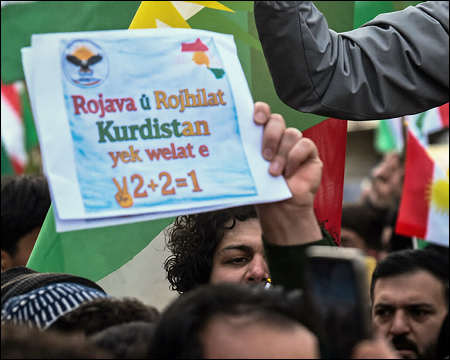
I would like to address the Kurdish solidarity movement in Western countries, especially in Germany, and particularly those in left-wing circles. If you support the Kurds, don’t just support a single party or leader; stand up for the rights of the Kurdish people. Solidarity with the Kurds and other communities must always be critical; otherwise, they will repeat their mistakes and the solidarity will have no effect.
Dr. Kamal Sido, a prominent Syrian Kurdish intellectual. He is a Middle East Consultant for ethnic, religious and linguistic minorities at the German Society for Threatened Peoples (STP).
The opinions are those of the writer and do not necessarily represent the views of iKurd.net or its editors.
Copyright © 2026 iKurd.net. All rights reserved.
Related posts:
 Business with ISIS – Updated
 What makes a good NATO ally? The Case of Turkey
 The Resurrection (Ba’ath) Party – Before the Iran-Iraq War
 The fate of the Christian community in Afrin, Syrian Kurdistan
 Turkey: Nato’s Islamic State Member
 Syria: A ‘Caliphate’ by Any Other Name — Would Smell the Same
 One year after Assad’s fall, genocide risk for Alawites and Druze
 Martyrs for Millionaires: The Black-Market Politics behind the Theft of Syria’s Oil
 Turkey: The Psychological War Against the Kurds Through the PKK – Part I
 Syria: The Hijacking of the Arab Spring: From ISIS to Hayat Tahrir al-Sham