


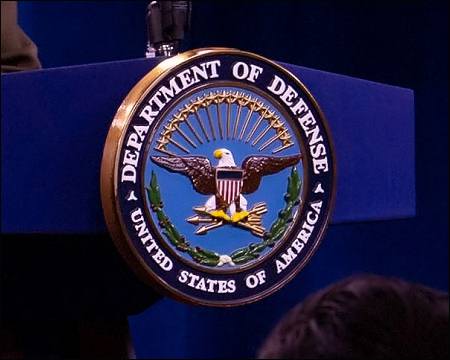
WASHINGTON,— President Donald Trump on Friday signed an executive order renaming the Department of Defense as the Department of War, reviving the label that was in use until the years after World War II.
The order marks the latest in Trump’s efforts to reshape the identity of the U.S. military. In recent years he has pushed for highly visible demonstrations of military power, including parades in Washington, D.C., and the restoration of original names for bases that were changed following racial justice protests in 2020.
Trump has also taken steps that broke with past practice on domestic use of troops. His administration created federally controlled military zones along the U.S.-Mexico border during a push to limit immigration.
He also sent active-duty forces into major cities, including Los Angeles and Washington, to respond to unrest.
Pentagon responds quickly
Within hours of the signing, staff at the Pentagon headquarters in Arlington, Virginia, began updating signage. The title plate outside the office of Defense Secretary Pete Hegseth was replaced to read “Secretary of War.” His deputy, Steve Feinberg, was given the title “Deputy Secretary of War.”
“It’s a very important change, because it’s an attitude,” Trump said at the Oval Office signing. “It’s really about winning.”
The executive order directs Hegseth to develop recommendations on legislative or additional executive actions needed to cement the change.
Rare action on department names
Changing the name of a Cabinet-level department is uncommon and has historically required congressional approval. Trump, however, suggested he may not need lawmakers’ consent.
Still, legislation was introduced on Friday by Republican Senators Mike Lee of Utah and Rick Scott of Florida, along with Representative Greg Steube of Florida, to authorize the new name.
Hegseth, who was introduced by Trump as “Secretary of War,” welcomed the order. “We’re going to go on the offense, not just on defense. Maximum lethality, not tepid legality,” he said.
The department was last known as the War Department until 1949, when Congress merged the Army, Navy and newly established Air Force under the Department of Defense.
Historians note that the shift in name at the time reflected a desire to emphasize deterrence during the nuclear era.
Costs and opposition
Changing the name back is expected to carry heavy costs, as signage, documents and letterheads across the Pentagon and global U.S. military installations will require updates.
A similar renaming effort under President Joe Biden, which targeted nine Army bases named after Confederate leaders, was estimated at $39 million before Hegseth reversed it earlier this year.
Critics argue the new move is unnecessary and distracts from the Pentagon’s core duties. Hegseth has dismissed that criticism, saying the shift is “not just about words — it’s about the warrior ethos.”
Political momentum
Trump’s allies in Congress have been laying groundwork to ease future reorganizations. House Oversight Committee Chairman James Comer, a Republican and close Trump supporter, introduced a bill earlier this year that would allow presidents greater flexibility to rename and restructure federal agencies.
Trump had publicly floated the renaming idea in June, claiming the Department of Defense label was introduced to be “politically correct.”
Some aides say the push goes back to Trump’s first term. Kash Patel, now the FBI director, briefly served at the Pentagon then and used an email sign-off that read “Chief of Staff to the Secretary of Defense & the War Department.” Patel described it in 2021 as a tribute to the agency’s history.
(With files from Reuters)
Copyright © 2025 iKurd.net. All rights reserved
Related posts:
 The Resurrection (Ba’ath) Party – Before the Iran-Iraq War
 Saddam Hussein was a Friend to the West
 Business with ISIS – Updated
 Saddam Hussein’s Enemies: Paving the Road to the Invasion of Iraq
 Iraqi Kurdistan – “Sold Out!” – Part II
 What makes a good NATO ally? The Case of Turkey
 Iraq: Revenge and Corruption
 The Double Cross of Iraq And The Discordant Death of WMD Inspector, Dr David Kelly – The 17th Anniversary
 Syria: Revisiting The Caesar Torture Victim Photographs
 The Truth About The Saddam Hussein Affair