

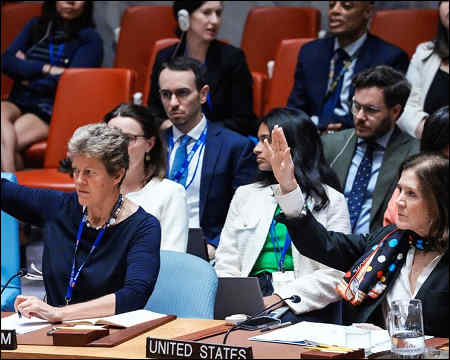
UNITED NATIONS,— The United Nations on Saturday restored an arms embargo and sweeping sanctions on Iran after European powers triggered a mechanism under the 2015 nuclear agreement, a move that Tehran warned would not go unanswered.
The measures, which had been lifted under the landmark nuclear deal, came back into force at 8 p.m. EDT (0000 GMT Sunday). They include restrictions on arms sales, uranium enrichment, and missile activities, along with financial and travel bans targeting dozens of individuals and entities.
Britain, France and Germany notified the Security Council earlier this month that Iran had failed to comply with its commitments under the 2015 accord, known formally as the Joint Comprehensive Plan of Action.
The deal was originally signed by Iran, the United States, Russia, China, France, Germany and Britain to limit Tehran’s nuclear program in exchange for relief from U.N. and Western sanctions.
Iran has repeatedly denied that it seeks to build nuclear weapons. But the European governments said the decision followed years of violations, including stockpiling enriched uranium beyond agreed limits.
Following the sanctions’ reinstatement, the foreign ministers of Britain, France and Germany released a joint statement urging Iran and all other nations “to fully respect these Security Council resolutions.”
Tehran quickly condemned the move. President Masoud Pezeshkian said Friday that Iran remained committed to the Nuclear Non-Proliferation Treaty but would respond to what he described as unlawful pressure.
On Saturday, Iran recalled its ambassadors to London, Paris and Berlin for consultations.
Russia, a signatory to the 2015 pact, rejected the decision. Foreign Minister Sergei Lavrov told reporters in New York that the restoration of sanctions was “illegal” and warned Secretary-General Antonio Guterres in writing that recognizing the measures would be “a major mistake.”
The United Nations’ website was updated Saturday evening to reflect the return of sanctions.
European officials stressed that the decision does not mean the end of talks. They said sanctions could have been delayed for up to six months if Iran had agreed to restore access for U.N. nuclear inspectors, reduce its uranium stockpiles and return to direct talks with the United States.
“Our countries will continue to pursue diplomatic paths,” the foreign ministers said, urging Iran to avoid escalation and comply with safeguards obligations.
U.S. Secretary of State Marco Rubio echoed the call, saying diplomacy remains “the best outcome” for both the Iranian people and international security.
But he added that any talks must be direct and held “in good faith,” warning that until a new deal is reached, sanctions should be enforced immediately.
The administration of President Donald Trump withdrew from the nuclear agreement in 2018, reimposing U.S. sanctions. Iran’s economy has since been hit hard, with its currency, the rial, reaching record lows.
On Saturday, it fell to 1,123,000 per dollar, compared with about 1,085,000 the day before, according to exchange monitoring sites including Bon-bast.com.
The reinstated U.N. measures restore a ban on Iran’s arms trade, prohibit uranium enrichment and reprocessing, and bar activities linked to ballistic missiles capable of carrying nuclear warheads.
The sanctions also freeze assets and impose travel bans on numerous individuals and organizations.
In addition, countries worldwide are authorized to seize banned materials tied to Iran’s nuclear program. Tehran is also prohibited from gaining stakes in foreign businesses involved in uranium mining or nuclear technology.
The renewal of sanctions comes just months after strikes by Israel and the United States against Iranian nuclear sites, raising the prospect of further instability in the Middle East.
(With files from Reuters)
Copyright © 2025 iKurd.net. All rights reserved
Related posts:
 The Resurrection (Ba’ath) Party – Before the Iran-Iraq War
 What makes a good NATO ally? The Case of Turkey
 Saddam Hussein’s Enemies: Paving the Road to the Invasion of Iraq
 Business with ISIS – Updated
 The Double Cross of Iraq And The Discordant Death of WMD Inspector, Dr David Kelly – The 17th Anniversary
 The Assassination of Abdurrahman Ghassemlou: No Friends but the Mullahs?
 Iran – Toxic Theocracy – Part I
 Saddam Hussein was a Friend to the West
 If all emblems are correct? US & Iran tilting nuclear deal reach
 Iraq: Revenge and Corruption