


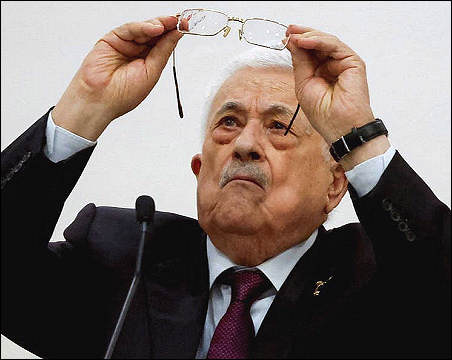
WASHINGTON,— The United States will block Palestinian Authority President Mahmoud Abbas from attending the United Nations General Assembly in New York next month, U.S. officials said Friday.
The move will also affect dozens of Palestinian officials scheduled to travel for the high-level event.
A State Department spokesperson confirmed the decision, saying visas will be denied or revoked for Abbas and about 80 individuals linked to the Palestinian Authority (PA) and the Palestine Liberation Organization (PLO).
The annual U.N. gathering is expected to include several U.S. allies prepared to formally recognize “Palestine” as a state.
Abbas had planned to join world leaders in Manhattan for the opening session and a summit where Britain, France, Australia, and Canada were set to announce recognition of Palestinian statehood.
His office called the U.S. action “astonishing” and argued that it violates the U.N. headquarters agreement, which generally requires the United States to allow foreign diplomats access to U.N. meetings in New York.
Under the 1947 headquarters agreement, Washington is obligated to grant entry to U.N. representatives. However, U.S. law allows exceptions on grounds of security, extremism, or foreign policy, officials said.
Several European foreign ministers criticized the move Saturday as they arrived for an EU meeting in Copenhagen.
French Foreign Minister Jean-Noel Barrot told reporters the General Assembly “cannot be subject to restrictions.” Spain’s Jose Manuel Albares labeled the decision “unacceptable,” while Irish Foreign Minister Simon Harris urged the EU to protest “in the strongest possible terms.”
The State Department defended its position, citing U.S. and Israeli concerns that the PA and PLO have not fully rejected extremism and continue to seek “unilateral recognition” of statehood.
“It is in our national security interests to hold the PLO and PA accountable for not meeting their commitments and for undermining prospects for peace,” the department said in a statement.
Officials added that the PA’s permanent mission to the U.N., which includes diplomats already based in New York, will not be affected by the visa ban.
U.N. spokesperson Stephane Dujarric said the organization would raise the issue with U.S. authorities. A similar dispute occurred in 1988 when the U.S. refused a visa to PLO leader Yasser Arafat, prompting the General Assembly to move its meeting to Geneva.
Washington reiterated its demand that the PA and PLO “consistently repudiate terrorism,” including the Hamas attack on Israel in October 2023 that triggered the Gaza war. In June, Abbas wrote to France’s president condemning the Hamas assault and calling for the release of hostages held by the group.
Israel’s Foreign Minister Gideon Saar welcomed the U.S. move. Both Israel and Washington oppose European plans to recognize Palestine at the upcoming U.N. session.
Those initiatives follow widespread frustration over Israel’s Gaza campaign, which has caused mass casualties and a humanitarian crisis, as well as continued settlement construction in the West Bank.
Arabs seek a state comprising West Bank and Gaza, with East Jerusalem as the capital. They currently hold U.N. observer status, similar to the Vatican. At least 147 of the 193 U.N. members already recognize Palestine as a state. The U.S. insists that recognition should come only through direct negotiations with Israel.
Palestinians are ethnic Arabs, tracing their roots to a mix of Arab tribes, Canaanites and other local groups that have lived in the area for centuries. They are not the same as the ancient people once called Philistines, though many identify as Palestinians and often claim historic ties to the land as its earliest inhabitants.
(With files from Reuters | Agencies)
Copyright © 2025 iKurd.net. All rights reserved
Related posts:
 The Resurrection (Ba’ath) Party – Before the Iran-Iraq War
 Israel must disband the Palestinian Authority for diplomacy’s sake
 Internal Revolt Against Hamas in Gaza Was Already Underway
 Saddam Hussein was a Friend to the West
 France’s recognition of ‘Palestine’ encourages terrorism, anti-French separatism
 Mahmoud Abbas calls Hamas ‘sons of dogs’, demands release of Israeli hostages
 UK, Canada and Australia recognize “Palestinian state”
 France recognizes the “state of Palestine” at UN summit
 Iraqi Kurdistan – “Sold Out!” – Part II
 ‘Palestinian’ kills Israeli woman on the way to hospital to give birth