

DAMASCUS,— Washington took Syria off its list of state sponsors of terrorism on Monday, clearing away what Syrian officials call the biggest remaining barrier to foreign investment as the United States builds closer ties with the country’s new leadership.
The change appeared on the U.S. Treasury Department’s website and became official after a 45-day review period in Congress.
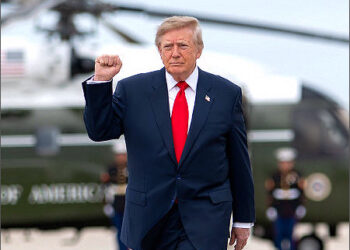
That review started when President Trump formally told lawmakers on July 8 that he planned to cancel the designation.
Secretary of State Marco Rubio said the move reflected steps taken by the Syrian government under President Ahmed al-Sharaa to cut ties with international terrorism and to build on commitments made so far.
Syrian Foreign Minister Asaad al-Shibani told Reuters on Saturday that the decision removes what he described as the final hurdle keeping Syria out of the global financial and economic system.
He said nothing now stands in the way of investing, doing business or rebuilding the country’s economy.
Syria first landed on the list in 1979, when the U.S. accused the government of then-President Hafez al-Assad of backing militant groups.
The label stayed in place through the rule of his son, Bashar al-Assad, who was removed from power in December 2024 by rebel forces led by al-Sharaa.
Three Countries Remain Listed
Monday’s announcement also dropped the Nusrah Front from Washington’s list of Specially Designated Global Terrorist groups. That leaves Cuba, Iran and North Korea as the only nations still carrying the state sponsor of terrorism label.
The designation had limited U.S. foreign aid, defense sales and certain financial dealings with Syria, and continued to scare off banks and investors even after Washington ended its wider sanctions program on the country.
The Trump administration lifted broad U.S. sanctions on Syria in July 2025 but kept targeted sanctions on Assad, his inner circle, human rights violators, drug traffickers, and groups linked to Islamic State, al Qaeda and Iran.
Treasury officials have since said U.S. banks can work with Syrian financial institutions, handle payments and set up banking relationships, as long as sanctioned individuals or entities are not involved.
Even so, the terrorism label had kept legal and compliance risks high for companies weighing a move into Syria, where the government is seeking billions of dollars to rebuild after nearly 14 years of civil war.
Interest from major firms picked up ahead of Monday’s decision. Syria’s finance ministry said Finance Minister Mohammad Yisr Barnieh met this month with Bank of America executives to discuss cooperation and Syria’s return to the global financial system. The ministry said bank representatives were open to visiting Syria for further talks.
Mastercard went a step further in May, saying it was working with QNB Group and Syria’s central bank to build the groundwork for international card payments there. The company has called itself an early investor in Syria and said it wants to link Syrian consumers and businesses with global payment networks.
Talks Continue
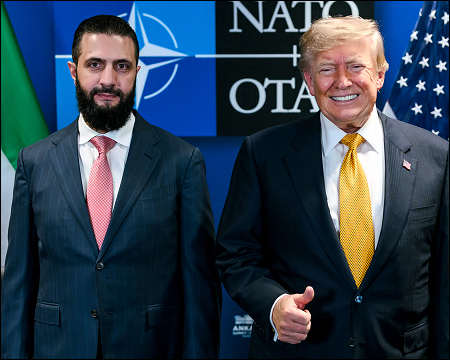
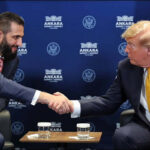
Trump notified Congress of the decision after meeting al-Sharaa in Ankara in July. In a letter reviewed by Reuters, Trump told the Syrian leader he had pledged to clear away all barriers blocking Syria’s recovery.
The delisting followed months of talks between Damascus and Washington on economic and foreign policy matters.
Reuters reported this month that Syria agreed to sharply cut its imports of Russian oil during those discussions, according to three people familiar with the negotiations.
Trump has drawn closer to al-Sharaa, also known as Golani, who once led al Qaeda’s Nusra Front before splitting from the group in 2016 and later leading the rebel alliance that ousted Assad.
U.S. officials have credited al-Sharaa’s government with cooperating against Islamic State and said easing restrictions is meant to help Syria stabilize, draw investment and rebuild.
(With files from Reuters)
Copyright © 2026 iKurd.net. All rights reserved.
Related posts:
 The Resurrection (Ba’ath) Party – Before the Iran-Iraq War
 Stealing Syria
 Business with ISIS – Updated
 Syria: A ‘Caliphate’ by Any Other Name — Would Smell the Same
 The Islamic State of Syria? (Al Dawla al-Islamiya fi al-Sham)
 Syria: Revisiting The Caesar Torture Victim Photographs
 Syria: The Hijacking of the Arab Spring: From ISIS to Hayat Tahrir al-Sham
 Hostages to Jihad – Austin Tice, The Long Missing American in Syria – Part One
 Syria: The Truth Lies Buried beneath an Edifice of Lies
 US to remove Syria from terrorism sponsor list