


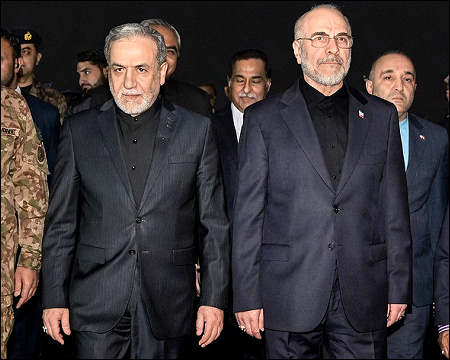
It is imperative that the U.S. ends the threat from Iran’s Islamic regime
Serwan Zangana | Exclusive to iKurd.net
The U.S. President Donald Trump is touting his national and global role in implementing policies to tackle the corruption in America, reducing wasteful spending, and lead the world by striking the nations that are known for being a threat to the U.S. The reality has shown a different picture from what Trump illustrated.
The U.S.–Iran war is continuing, despite an intermittent ceasefire, but the U.S. has not achieved a significant goal in dismantling the Islamic regime of Iran as it remains a high threat primarily to the region and Israel. However, involving the nations of the Arab peninsula in this war has served Trump’s strategy in battling Iran as it became a regional conflict, which resulted in more outrage against Iran.
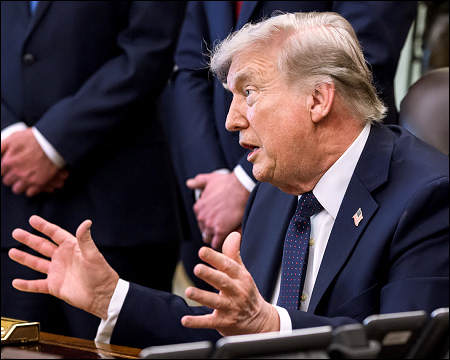
At home, the gap is widening between President Trump and the public as his rhetoric, misinformation, and false promises caused more chaos and mistrust among the voters, including his allies. The U.S. operation against Iran is appearing to be on the wrong path as the Islamic regime, regardless of the impact of the war on the country, is still in control.
What the public sees is that President Trump miscalculated the situation in Iran and stepped into a predicament. Or perhaps his ego drove him to implement a critical policy with a wrong strategy to end the threat of Iran. It is without doubt that the Islamic regime of Iran has been ravaging the entire region.
But can the U.S. under the Trump administration end this regime or at least weaken it?

Remembering that the U.S. under George H. W. Bush in the 1990s has created a disaster for Iraq, afterward, weakening the Iraqi regime was overall in the interest of the Iraqis and the Kurds.
In fact, President Trump was pushing for regime change by the Iranian people at the beginning of the war and during the massive protests back in January and February of 2026. “Take over your government,” President Trump told the Iranian people.
But he seemingly realized that such a change is far from possible for now. This is also reminiscent of former President George H. W. Bush during the Gulf war in 1990, as he encouraged the Iraqis to rise up and change the regime.
Initially the U.S. created a disaster in Iraq, but subsequently led to Saddam Hussein’s weakness, and over a decade later, the U.S. accomplished its mission in overthrowing the Baathist regime.
Trump’s administration is in a negotiation process as apparently the strikes and the destruction of the Iranian air force and military facilities did not oust the regime nor has the war ended as Trump said back in March it will take “2 or 3 weeks.”
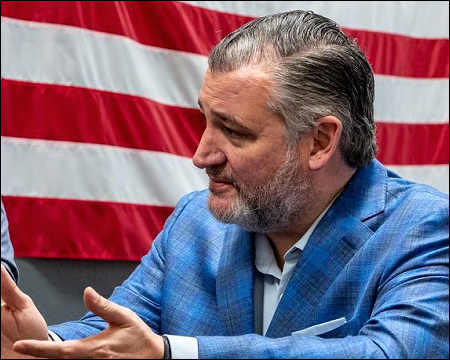
The Republicans are also frustrated with Trump as some of his strong allies begin questioning his plan. Senator Ted Cruz (R. Texas) posted on X (social media platform): “If the result of all that is to be an Iranian regime — still run by Islamists who chant ‘death to America’ — now receiving billions of dollars, being able to enrich uranium & develop nuclear weapons,… then that outcome would be a disastrous mistake.”
But to view the U.S.–Iran war from a broader perspective, President Trump perhaps deserves acknowledgement for entering a conflict that might seem like a troubled situation for the U.S., but facing Iran was inevitable. And now, it is expected from the U.S. under Trump’s Presidency to step further and complete the mission, which is ending the Iranian regime.

However, the American public does not perceive the Islamic regime of Iran as a serious threat, which regardless of its threat to the neighboring countries, it is a threat to Israel, the U.S. inseparable ally. Also, the wave of the progressive and socialist movement in the Democratic Party has influenced the spread of anti-Semitism in the U.S., which became an obstacle for the establishment members of the Democratic Party as the Israeli supporters to publicly give Trump support in the war against Iran.
Also, realizing that Trump’s second term compared to his first is completely opposite as from “Make America Great” and boosting the American economy to dedicating himself to focus on Iran’s threat and assisting the Israeli military in combating such a threat. This is another point that causes some of Trump’s supporters to step away as they are experiencing voter remorse.

The majority of the Republicans are indeed perceiving the U.S.–Iran war as being a necessary action to end the Iranian regime’s power and threat. But Trump’s ceasefire with Iran became a question that worries his Republican allies. The chairman of the Senate Armed Services Committee, Sen. Roger Wicker, questioned the advantage of the proposed 60-day ceasefire as he thinks it would be a disaster. “Everything accomplished by Operation Epic Fury would be for naught,” Sen. Wicker (R-Miss) said.
The threat of the Iranian regime is indeed undeniable as the region’s nations have been experiencing the impact of Iranian intervention. However, the Arab nations have been avoiding engaging in a direct conflict with Iran until the U.S. began its operation. Downplaying such a threat did not last long, the U.S. was running out of time in pushing for a diplomatic solution with Iran without a positive result.
The U.S. negotiations with the Iranian leaders in the past have benefited the latter as it used it to its advantage. Obviously, John Bolton, a national security adviser in Trump’s first term, understands the Iranian threat. “If news reports about the impending Iran deal are correct, the ayatollahs will have won a significant victory,” Bolton posted on X.
Bolton further posted, “They will be back on the road to nuclear weapons, supporting global terrorism and repressing their own people.”
Indeed, the leaders of the region’s nations are understanding the threat of the Iranian leaders and their intent in spreading sectarian belief across the region and supporting terrorist groups. However, silence was the best option in avoiding conflict with Iran to prevent a regional crisis. And overall, the Arab nations are aware of Iran’s military capabilities and its proxies and armed groups in the region and it is not as simple as battling such a country.
While President Trump’s popularity is overall declining, his approval by the public in handling Iran is even sinking deeper. According to PBS News, NPR, and a Marist poll, 6 in 10 Americans disapprove of Trump handling the war.
But since U.S. foreign policy is not shaped by public opinion, it is imperative that the U.S. ends the threat of the Islamic regime of Iran by any means.
Serwan Zangana, a contributing writer for iKurd.net, lives in Virginia, U.S. He serves as a correction officer.
The views expressed are solely those of the author and do not necessarily reflect the opinions of iKurd.net or its editorial team.
Copyright © 2026 iKurd.net. All rights reserved.
Related posts:
 The Resurrection (Ba’ath) Party – Before the Iran-Iraq War
 The Assassination of Abdurrahman Ghassemlou: No Friends but the Mullahs?
 The 12-Day War: A Tactical Failure, Yet a Strategic Win for Israel
 Iraq: Revenge and Corruption
 Saddam Hussein was a Friend to the West
 Business with ISIS – Updated
 The Suffocation of Iraq Kurdistan
 Iran, a Failed Country by Enemies Within
 The Truth About The Saddam Hussein Affair
 Iran – Toxic Theocracy – Part I