

An Interview: Sheri Laizer talks with Arthur Cairn
Sheri Laizer | Exclusive to iKurd.net
Introduction
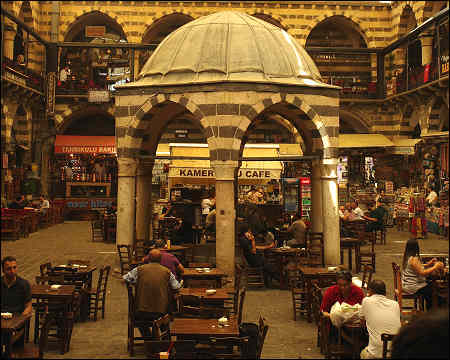
I spoke to Arthur Cairn, a young Western professional, who spent several weeks traveling through North Kurdistan. His recent visit to the region included Hakkari, Van, Diyarbakır, Mardin, Midyat and some of the surrounding areas.
During the trip, he related how he encountered an extensive Turkish military presence with an embedded infrastructure that continues to shape and, at times, dominate everyday life for the region’s majority Kurds.
Throughout the journey, he said that he experienced remarkable hospitality from the Kurds who shared their perspectives on Kurdish identity, language, conflict and any prospects for peace with him. I asked Arthur the following questions:
What was your first notable experience when traveling in North Kurdistan?
When I first arrived at the airport, I went to pick up my luggage. Whilst waiting for my bag to come out on the conveyer belt I felt a tap on my shoulder. I turned around and saw a young Kurdish man in his twenties stood there. He asked if I was European and what I was doing there.
He was very friendly and genuinely interested in my answers because he couldn’t understand why I’d be in Kurdistan. Before I left the airport, he told me that I should be extremely careful because people will be highly suspicious of me and would very likely think that I was a spy. He gave me his number and told me that if I get into any difficulties or need any help I should call him right away.
This ended up being a common theme during the trip. I visited many cities and everywhere I went I met Kurdish people who wanted to give me their number in case I ran into trouble with the authorities and needed their help. I went home with a phone full of contacts from across Kurdistan.
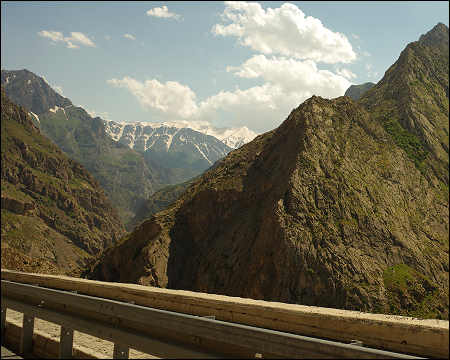
When I told one Kurd that I was planning to visit Hakkari he strongly advised me not to go: the region was under strict surveillance due to ‘terror’ threats and the ongoing regional conflict.
He believed I would draw a lot of adverse attention as a Westerner in the Kurdistan region and that I would be suspected of planning to join the YPG. In his words, “Turkey takes these things very seriously and the justice system you are used to is very different to the Turkish one. Even if you are innocent it takes a long time to prove it.”
On one of the days I spoke a little Kurmanji when checking into the accommodation, which really surprised the person working behind the desk. Later that evening we enjoyed a few drinks together and he was asking more about why I had been speaking Kurmanji to him.
I explained that I was in Kurdistan so I wanted to try and speak some Kurmanji to Kurdish people wherever I could. He appreciated this and then went on to tell me that there had been another time where some people from France had stayed there and they had spoken excellent Kurmanji. They had been asking a lot of questions about Kurdish politics, and it made him nervous, suspecting that they were in fact with the YPG.
Did people want to speak with you as a Western traveller?
People constantly wanted to speak to me. In urban and rural areas locals would invite me to their homes to rest and meet their families. In the cities, shop owners would proudly invite me in to sit for a cup of tea, refusing to accept a single lira. Out and about in the streets, people would walk over to me to strike up a conversation wanting to know where I was from and what I was doing there. I spoke to random people throughout the day every day I was there.
After very brief interactions, locals would insist that I take down their number in case I needed any help from them further down the line or if I just wanted to hang out with them.
I remember one day I was at a madrassa, and I got talking with one gentleman. I spoke a few words in Kurmanji and he was overcome with joy. He asked if he could take me on a drive to see a few spots and meet some of his friends so he could show them a Westerner that knew a few words of their mother tongue.
I am generally a most cautious traveller when it comes to interacting with strangers abroad, but all of these interactions were pure and genuine. People were delighted to meet a Western traveller in their area and to have the opportunity to share their culture and proudly say “Welcome to Kurdistan”.
Would you describe the region as militarised, and if so, for what purpose, given the PKK’s (unilateral) ceasefire?
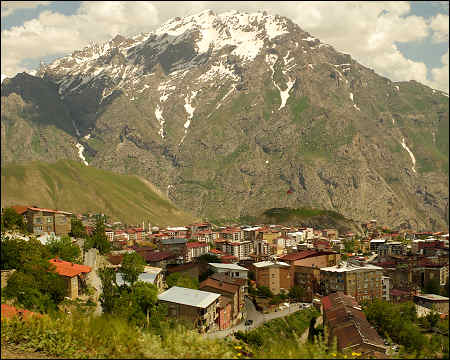
It was the most militarised area I have yet visited. The impression that I was left with was that the militarisation created a sense of fear and control.
The most poignant moment illustrating this was when I was sat outside a café in the city of Hakkari drinking tea with the new friends I had made.
We spent several hours sat outside this seemingly idyllic café. Birds were chirping as they flew between the trees above our heads whilst a stream gently flowed through the lands below.
Little Kurdish boys and girls were giggling and laughing as they stumbled around the playground near to us. But this was all against a steady background sound of gunfire echoing through the mountains throughout the afternoon. It was such a ludicrous juxtaposition that seemed to bother only me…
Eventually, I asked the guys I was with what the shooting was. They simply shrugged. ‘Maybe they are fighting. Maybe they are practicing. Probably, it’s just to scare us. This is how life here is. It happens all the time. This is all we know.’
I remember looking back over at the little boys and girls, playing against the backdrop sound of gunfire, feeling a real sadness in my heart. They were so used to the sounds of war that it meant nothing to them. I remember thinking this is not how children should have to grow up.
Roughly how many stop and search points did you encounter?
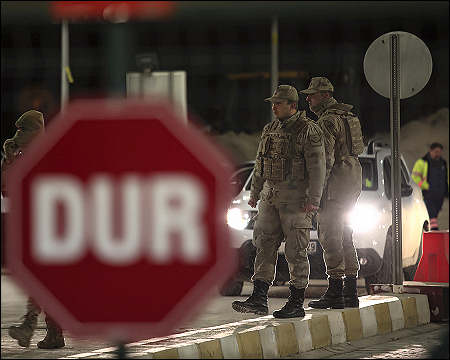
I cannot remember how many stop and search points there were between the various places I visited because I passed through so many. I would estimate that I passed through dozens between Diyarbakır, Mardin, Van, Hakkari and Midyat.
I travelled by a combination of shared taxi (dolmuş), coach and car. I was probably stopped 15 times in total by the military. Some checkpoints we passed through without getting searched.
I saw people being taken out from their vans so that the back of the vehicle could be opened and then searched. The luggage section of the coaches I was traveling on were also opened on some occasions and dogs were used to search there.
The most intensely controlled section of the route was that which lay between Hakkari and Kızıltepe. I was stopped five times on a single journey: Each time a soldier, sometimes several soldiers, and always armed, boarded the coach and carried a handheld device to either scan or take a photo of the passengers’ Turkish ID cards.
Some soldiers just inspected my ID because I was traveling with a passport. But at other times they took photos of the passport. I was questioned about where I was going and why I was traveling in the region.
I made friends with Kurds on most journeys. They were very quick to reassure me or give me notice of upcoming checkpoints so I could prepare myself. At these checkpoints, they would translate for me or explain to the soldiers on my behalf that I was just a tourist.
I got the impression that they expected me to face scrutiny at the checkpoints. I remember one time a young guy, much to my protest, got off the coach with me significantly earlier than his own stop because he wanted to make sure I had no issues getting to my connecting bus without problems. He wouldn’t take no for an answer
What was the body language of the checkpoint operators like?
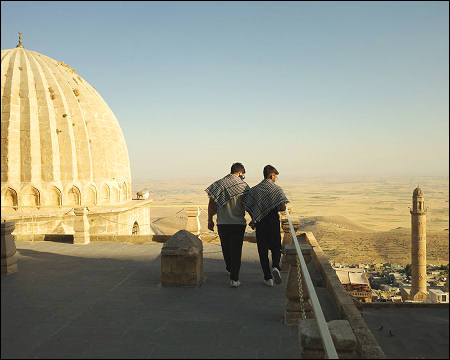
No smiles. No small talk. Disdain. Figuratively and literally, they were looking down their noses at the people travelling when examining their ID cards. Some of the soldiers at the checkpoints took a particular interest in me.
In Van and Hakkari I didn’t encounter any other foreign travellers, whether in the cities or on public transport. The checkpoint operators took photos of my ID and questioned me: Where I was from? Why I was here? Where was I going? Had I visited Iraqi Kurdistan? All my passport stamps were individually checked. They were aggressive when they believed I was missing certain stamps.
I remember one soldier told me that I was an incredibly brave person for traveling alone in the region. However, the irony of this was that I had not felt scared at all in Kurdistan. I was greeted with intense kindness and hospitality from the Kurds I met. The only time I truly felt scared was when I was faced with armed troops interrogating me when I was only going about my business.
Can you describe the structure of the checkpoints?
Most of the checkpoints appeared to be permanent features of the landscape. At a minimum there would normally be a booth but often there was also a sizable building for the soldiers. Most checkpoints had armoured vehicles which appeared to have heavy machine guns or rockets mounted on the back.
The checkpoints themselves were heavily fortified. There were tall and thick concrete slabs positioned on either side of where the vehicles stopped. The booths were also reinforced with concrete. Along the roads you could also see what appeared to be small outposts or observation towers which were maybe two stories high, also reinforced with thick concrete slabs. The entrance to the booths seemed to have what I would describe as stackable-looking metal shields that had slits for observation or shooting through.
Some of the checkpoints were completely impassable and necessitated getting searched. A single lane led up to the checkpoint where you were forced to stop. You would not be able to turn around or pass by if you were trying to avoid it.
There was also a large presence of military bases, particularly around Hakkari. I was driven past one where I was told that thousands of soldiers were stationed within.
I was also told that Kurdish people could, and did serve, in the Turkish military, but that Kurds would not serve as soldiers on the checkpoints in the Hakkari region.
Do any mobile checkpoints appear to be random?
There were some non-permanent checkpoints where heavily armed soldiers were stationed supported by armoured vehicles positioned or deployed at strategic points such as at bridges, ready to pull people over.
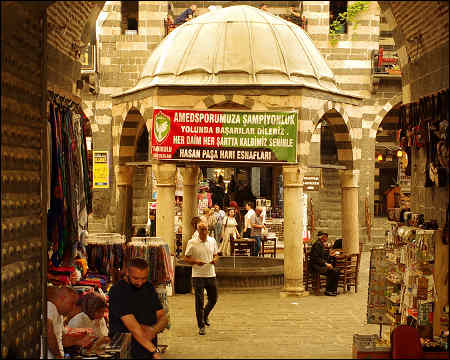
I also noticed that there was a significant presence of traffic police in the North Kurdistan region – much more than anywhere else I had visited before. When I was in Hakkari there would be random points in the city where the traffic police would pull cars over.
One time I was getting a lift from someone when they were pulled over. They had to provide their details to the traffic officer who then ran checks using a small handheld device before letting us go. I asked the driver about this, and he said it was a common occurrence.
In comparison with earlier trips you’ve made to this area did you see an increased or diminished military presence?
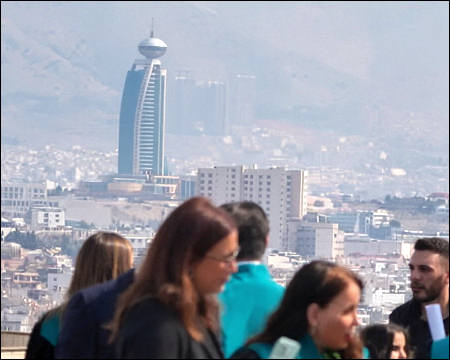
This trip was my first time visiting North Kurdistan. I have previously travelled in Iraqi Kurdistan where I passed through security checkpoints around Erbil, Sulaimani and Halabja. I am aware that the checkpoints in Iraqi Kurdistan are rather notorious for people who are trying to evade the authorities and can pose difficulties if you do not have the right identity documents.
Based on my recent experience, I would say the military checkpoints are considerably more significant in North Kurdistan than in Iraqi Kurdistan and far more frequent.
More soldiers are stationed at these checkpoints and they are heavily armed. Most checkpoints also have armoured vehicles stationed close by. Some even have dogs. The searches of vehicles, checking of ID cards and questioning is also significantly more intense. Some checkpoints are completely impassable without getting stopped.
Based on what I observed at the checkpoints, I found it difficult to imagine how someone wanted by the Turkish authorities could travel through the region undetected or anonymously.
The military bases were a constant feature scarring the beautiful natural landscape. One Kurd I was traveling with joked with me saying that the military take the most beautiful spots for the views.
I remember passing military bases set in really stunning parts of the countryside that completely defaced the landscape. They appeared to have rubbish pits down the side of hills on which the bases were built. Piles of burning, discarded, rubbish cascaded down into the valleys below.
Rocky roadsides and concrete fortifications would have large, crudely painted Turkish flags painted on the sides.
Did you see any protests when you were there?
One day, I was traveling between two major cities on a dolmus. The highway I was on passes through a small Kurdish village. As we approached the village a peaceful protest broke out on the highway bringing traffic to a standstill. An incident had occurred the week before where someone from the village was killed or seriously injured. (I cannot recall which it was now). The dolmuş I was on was maybe 10 vehicles down from the blockade.
We were stationary for around an hour whilst traffic police tried to disperse the people who were protesting for justice for the victims. I remember at one point I looked out of the window of the dolmuş and I saw around a dozen soldiers on the other side of the road marching down towards the protesters with automatic rifles in their hands.
The protesters cleared off as the soldiers approached. We then carried on with the journey. As we passed, I could see armoured vehicles parked near the protestors. I did not see if any arrests were made but I later discussed the incident with Kurds I met and they had heard about the protest and the events behind it.
Did Kurdish civilians seem scared to discuss politics?

Once when I was staying in a Kurdish guest house I was told by the owner, who was himself Kurdish, that I should be careful around the other person staying in the same room. He told me that I should not discuss Kurdish politics or speak any Kurmanji in front of him because the owner did not trust him and was scared that he might report us if he heard us speaking about such things. Later in the evening the owner told me that he wanted to upgrade my room for free because he was still suspicious of the other person and did not want me to have to stay with him because of the views he suspected he held.
On another occasion I was out on a drive with a Kurdish man and when we were coming back to Hakkari he asked me to hide my cameras. He was worried about me being seen with cameras by the military as he thought it would lead to questioning and potential searches.
Did you encounter many expressions of Kurdish identity?
On the surface, it initially felt like nothing was Kurdish and everything was Turkish in most places I visited. I remember visiting a famous landmark in Van. I was looking at the postcards for sale. There were postcards of people wearing traditional Turkish clothes – not Kurdish clothes, despite Van being one of the highest Kurdish majority cities.
When I turned the postcode over, the words ‘printed in Istanbul’ stared back at me. Very telling. It made me feel sad because it isn’t just a case of not allowing Kurdish culture to be celebrated at Kurdish heritage sites but almost it being replaced. It got me thinking…
I was curious then about what percentage of the city’s population was Kurdish. I knew it was very large. I asked someone I met and apparently Turkey does not collect ethnicity data in the census. Like I said previously, nothing is Kurdish, everything is Turkish. Obviously when you scratch below the surface and discuss things with people the reality is very different.
I regularly saw jamadanis (Kurdish headwear) for sale in Diyarbakır. At one point I saw the red, yellow and green national colours. I always associated this with Rojava and the YPG, so I was extremely surprised to see this on sale publicly. However, I didn’t see anyone wearing this openly and most shops did not sell anything with this design.
There were no Kurdish flags at all. When I was in Diyarbakır, I came across a shop that had “Kurdistan” football shirts. This was not for an official team of any kind, but it actually said “Kurdistan” on them which surprised me. This was not common and I only remember one shop selling it. I was chatting to the owners for a while and I asked, do you support Amedspor. The owner laughed and walked me back into the shop, tapped the shirt and said my team is Kurdistan.
The football team Amedspor was extremely popular. Many people walking around Diyarbakır wore Amedspor merchandise. It appeared that Kurds were using it as a vehicle of Kurdish expression and identity in the absence of being able to do this without persecution by the Turkish authorities.
One person I spoke to told me the name change was extremely controversial. Commentators will sometimes refuse to refer to Amedspor by its name and will instead call it “the team from Diyarbakır” when discussing it on television.
When I was walking through the city numerous shops were selling Amedspor merchandise. Banners and signs for the club were draped everywhere. The Amedspor football shirts that I saw for sale frequently incorporated the Kurdish colours of red, yellow, green and white into the designs. The kits also featured Kurmanji.
Did you see, hear, or sense any evidence of a ‘peaceful’ transition between the Kurds and the Turkish state?
It was mixed. A lot of people just didn’t seem to think it was going to happen. They thought it was all for show.
On one occasion I was in a very rural area, and I got talking to a group of Kurdish men who invited me to sit and have tea with them. This kind of invitation wasn’t out of the ordinary, so I joined them. We were chatting for quite a while and got along very well. After speaking for a time, one man pulled out his phone and turned it around to show me a photo. On the screen I saw two soldiers holding the PKK flag. He had a big cheeky grin on his face and said, “This is my flag, do you know what this flag is?” laughing with his friends.
It completely took me off guard and I looked over the phone at him and said, ‘Yes, that is the PKK flag’. The mood then changed very quickly and the smile fell from his face. He turned and started talking to his friends in Kurmanji and I could understand that they were talking about the PKK. I swiftly thanked them for the tea and made my excuses to leave. The incident threw me off. I was left wondering if he had expected me to recognise the flag or if he was just testing my awareness. I did not expect to come upon such an open expression of support for the PKK during my trip.
When I spoke to people in Hakkari, for example, I was told that there used to be a huge amount of support for the PKK in the area. One man told me that twenty years ago, the majority of people supported the PKK. However, this has since reduced significantly.
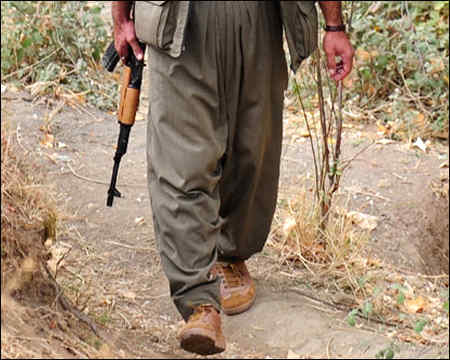
I spent an evening with another man who told me that when he was younger the PKK came to his father and demanded that he gave his son to fight for them. His father was told it is his duty to fight for Kurdistan. You either need to give us money or a son to fight.
The father initially built a secret room to hide his son. Eventually the father paid money so his son did not have to fight. This same man told me that when he was at university, he had to hide the fact that he was Kurdish from his course mates. He was beaten by Turkish people throughout his education from childhood through to adulthood just because he was Kurdish.
I remember another young Kurdish man told me, “Us Kurds have always been fighters. It is all we know. But we need to stop fighting. We need to become doctors, lawyers and teachers. We need to move on from this way of life. That is why I am training to be a teacher. We need to do more than fight. Before this I was a soldier for the Turkish state. Why would I want to fight my own people?”
One day I was on a coach journey where the other passengers were mostly Kurds with some Turkish soldiers that had been picked up from outside the military bases. We stopped a few times for rest breaks and food on this journey. At one point I was sat at a table with a Kurd who could speak English, so we shared a meal.
There was not much space at the rest stop so a Turkish man came over and sat with us. He couldn’t speak any English. After a while, whilst still sat at the table, the Kurd told me “You know that guy sat next to you is a soldier. They treat us like shit. They call us terrorists. They give us no respect. But look how I let him sit here with us and said nothing. Look how I smile and share things with him. Look at the respect we give to them.”
Did you encounter much pro-Turkish propaganda?
I have never seen so many flags in my life. They were everywhere. I came across streets completely adorned with flag bunting. Street signs had the Turkish flag on them. The majority of cities, villages and military posts, would have a flagpole flying the Turkish flag high above it. The sheer size of some of the flags was mind boggling.
What I found particularly interesting was that many Kurdish-owned businesses had the Turkish flag on display inside the premises hidden away from the public eye. For example, on their desk in the office. I could gauge the politics of some of these individuals, and it made no sense to me. I suspected that it might have been for show, or out of fear in case of a visit from the Turkish authorities.
In the hotels I stayed in the only English-speaking channel on TV was 24/7 Turkish news, which was fascinating to watch because it was very clear how Turkey was trying to position itself on the global stage and the nationalist agenda it was promoting.
Every time I passed a flag it felt like the Turkish state was trying to prove a point – that I was in Turkey. It had the opposite effect.
Every single blood-red flag I saw was a stark reminder to me that where I was, was Kurdistan.
Sheri Laizer, a Middle East and North African expert specialist and well known commentator on the Kurdish issue. She is a senior contributing writer for iKurd.net. More about Sheri Laizer see below.
Copyright © 2026 Sheri Laizer, iKurd.net. All rights reserved.
Related posts:
 Business with ISIS – Updated
 PKK’s Assassination of Kani Yilmaz and Serdar Kaya
 Turkey: The Psychological War Against the Kurds Through the PKK – Part I
 A Century Ago, Lynette Soane, Hailed the Kurds as “my friends” Rather Than “Kurdish Brigands”
 The Resurrection (Ba’ath) Party – Before the Iran-Iraq War
 No democracy in Turkey – ‘insulting Kurdishness’: Interview with Sheri Laizer
 The Mustashar and the Jash – A View from the Position of ‘Iraqi National Unity’ on the ‘Descendants of Treason’
 Turkey: Nato’s Islamic State Member
 Iraq: Revenge and Corruption
 The PKK’s Personality Cult: Changing Influences – Part II