

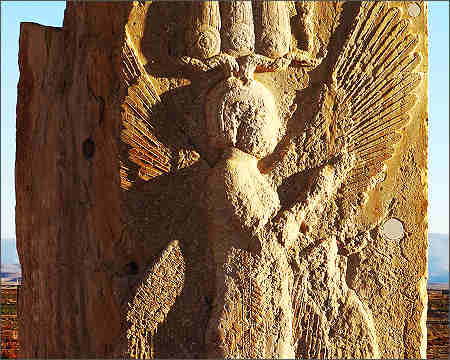
The Campaign to Breathe New Life into the Dead Persian King Cyrus: Myth, Nostalgia, and Politics
Ardishir Rashidi Kalhur | Exclusive to iKurd.net
Iran today stands on the precipice of political collapse, while its cultural and economic foundations are already in a steep decline. More significantly, as a country composed of diverse ethnic, linguistic, and religious communities, Iran is confronting a profound identity crisis, one that may prove impossible to resolve through either a unifying ideology or the charisma of a single leader.
For some monarchist-leaning Persian nationalists in the diaspora, particularly those who lost their social status, economic privileges, or political influence after the 1979 Islamic Revolution, the removal of the Islamic Republic remains a primary political objective. In their search for a unifying national narrative for a future Iran, many invoke the legacy of king Cyrus, portraying him as a symbol of the Persian-Controlled Iranian statehood and continuity of the Persian nationalism.
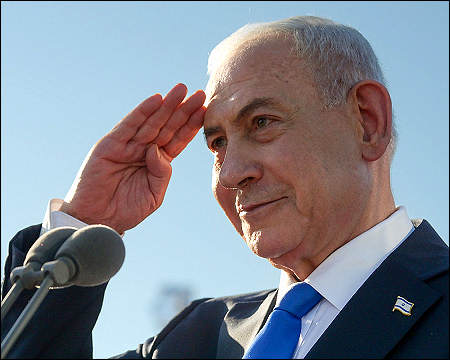
In pursuing this objective, these groups have found a staunch ally in Benjamin Netanyahu. They regard his unwavering opposition to the Islamic Republic as advancing their own political ambitions, believing that heightened external pressure, and even military confrontation with Iran’s ruling clerical establishment, could create conditions conducive to their return to political power.
Many among Iran’s non-Persian communities view this prospect with deep concern. They believe that the ultimate aim of these movements is to restore a Persian-centric political order that would prioritize Persian cultural and political dominance at the expense of the rights, aspirations, and representation of Iran’s diverse non-Persian populations, which together constitute well over two-thirds of the country’s population.
This agenda is championed by two distinct groups, both of which advocate regime change in Iran as the first step toward establishing a new government that will maintain a close and subordinate relationship with Israel. Despite sharing this objective, each group faces monumental political, social, and historical challenges in realizing its vision for a future Iran.
The first group consists of Persian-centric activists, intellectuals, and business elites in the diaspora. Many of its members either accumulated significant wealth under the pre-revolutionary order or benefited from social, economic, and professional networks established during that era or under the current regime. Through their financial resources, academic standing, media presence, and political engagement, they have attained considerable visibility and influence in Western societies, enabling them to promote their preferred vision of political change in Iran.
A review of “Iranian Studies” departments at universities around the world (1) reveals that many have historically focused on the Persian language, culture, literature, and history under the broad umbrella of “Iranian Studies.” In many cases, Persian-centered narratives have served as the primary lens through which Iran has been examined and interpreted.
Consequently, the histories, cultures, languages, and lived experiences of Iran’s numerous non-Persian communities have often received limited attention or been largely excluded from academic discourse. This approach does not adequately reflect Iran’s rich ethnic, linguistic, and cultural diversity and has contributed to a distorted understanding of the country’s population, frequently conflating Iranian identity with Persian identity.
The non-Persian populations of Iran increasingly view this Persian-centric interpretation of Iranian identity as a form of cultural identity theft. They argue that the cultural heritage, intellectual, and historical achievements of their respective peoples—in art, music, sports, science, cuisine, religious beliefs, national traditions, customs, social values, and human-rights movements—are routinely appropriated, presented to the international community, and promoted under a generalized Persian identity.
This practice effectively places a false Persian stamp on the diverse cultural contributions of Iran’s many peoples, obscuring their distinct identities, historical experiences, and rightful cultural ownership. It also perpetuates the misconception that there has existed a historical Persian civilization and that alone represents the entirety of Iran’s historical and cultural heritage.
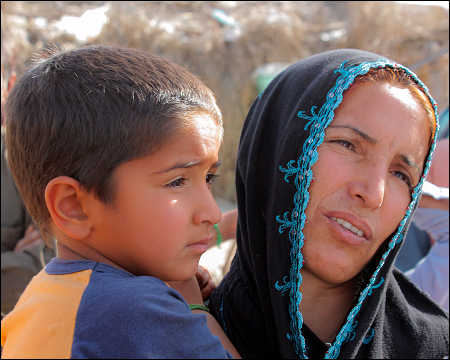
Iran is not synonymous with Persia, and its cultural identity cannot legitimately be reduced to a single ethnic or national narrative. Recognizing the distinct contributions and identities of Kurds, Azeris, Arabs, Baluch, Turkmen, and other peoples is essential to understanding Iran’s true cultural diversity and historical heritage.
Furthermore, the influence of Persian-centric intellectual and political narratives extends beyond academia into media, business, and political circles. Through traditional and social media platforms, some activists and political movements advocate a highly centralized vision of Iranian national identity, often emphasizing themes such as a fixed territorial boundary, a single national history, language, culture, or historical founder, frequently symbolized by figures such as king Cyrus as a historic but with controversial and boubous character as will be explained later in this essay.
Alternative perspectives that emphasize Iran’s multinational, multilingual, and multicultural character are simply portrayed as threats to national unity. In political discourse, advocates of greater cultural, linguistic, or regional autonomy may be labeled tajziyeh-talab (“separatist”), a characterization that has led to assassination of non-Persian leaders by the Persian regimes and clandestine Persian assassins (2)
The presence of the second group, which is promoted and supported by the first group and vice versa, is viewed by this article through a historical lens extending back to antiquity. Staring with 605 BC, when Nebuchadnezzar II, King of Babylon, conquered the Kingdom of Judah (3).
The invasion resulted in the destruction of the First Temple in Jerusalem and the deportation of thousands of Judeans to Babylon. This event, known as the Babylonian Exile (4), marked the beginning of a period during which the Jewish population lived under Babylonian rule, including during the reign of the later Babylonian king, Nabonidus.
In 539 BC, Cyrus, after defeating and killing his maternal grandfather, King Astyages years earlier, become the ruler of the Persian Guards, and as the first king of the Achaemenids, who conquered Babylon and brought an end to Neo-Babylonian rule in Mesopotamia. It is important to recognize that Cyrus did not invade Babylon solely to liberate the Jewish exiles.

Their return to Jerusalem was a mere consequence of his conquest of the Medes empire, and Babylon, and part of the broader Achaemenid expansionist policies rather than the primary objective of his military campaign to set free the Judeans from captivity.
From the perspective of this author, the conquest of Babylon should be understood within the broader geopolitical context of the time, particularly the complex relationships among the Median Kingdom, their vassal the Achaemenids, and the Babylonian Empire.
Although no single historical account provides a definitive and accurate description of these relationships, interpretations drawn from ancient Greek historians such as Herodotus, as well as modern writers including Will Durant (5), and Esther Singleton, author of The World’s Great Events (6) suggest that strategic, dynastic, and political considerations played a central role in Cyrus’s military expansion campaign.
One interpretation, derived from a synthesis of these historical traditions, maintains that familial and dynastic ties connected the royal houses of Media, with their vassal the Achaemenids, and Babylon. According to this view, Cambyses I, the father of Cyrus, was linked to the Median royal family through marriage to Mandana, the elder daughter of King Astyages, whose seat of power lay in what is now western Iran and parts of present-day Greater Kurdistan.
The King’s younger daughter, Amytis, had been given in a state marriage to King Nebuchadnezzar II of Babylon (7). Cambyses I had been appointed by the Median King from among the Achaemenids to stand at a guard post to protect the eastern frontier of the Kingdom of the Medes against the invading Scythian to the east of their kingdom. In the Median language, the word for a guardsman is Pars, with the plural Parsian, known today as Persians, with duty of Parstiin (to protect).
Cyrus II was born from the marriage of Cambyses I and Mandana, which made him the grandson of the King Astayges of the Medes. Furthermore, a version of history holds that Cambyses I had a political agenda of his own, to free his tribe the Achaemenids from the yoke of the Medes.
To fulfill his plan, he would need the help of his brother-in-law, Nebuchadnezzar II of Babylon, with whose help he plotted, that they would topple their father-in-law and divide the kingdom of the Medes between them, plus securing freedom for the Parsian guards and their tribe, the Achaemenids.
Purportedly, this plot was discovered by the King, and as a result, Cambyses I was killed by Astyages at the outpost (Pasargadae), who put in his place his grandson Cyrus. To avenge his father’s death, Cyrus managed to pursue and kill his own grandfather, take over the already established empire of the Medes, freed his paternal tribe the Achaemenids, and put them in charge of their newly formed nation, with the Parsian the Guards as their military force.
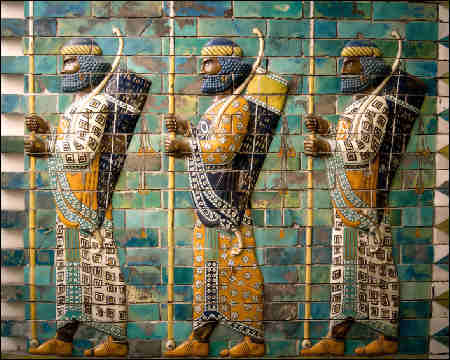
The Capital of the Medes Kingdom changed from Ecbatana (in Western Iran) to Pars-Gadae (Outpost), or Pasargadae in the current Fars province to be the Capital of the Achaemenides. Going onward, Cyrus invaded Babylon on the suspicion that it had been King Nebuchadnezzar II of Babylon who had reported his father’s overthrow plot to the King of Medes, and he held Babylon responsible for the death of his father.
Thus, in 539 BC, he toppled the empire of Babylon, and as a by-product of his victory came the emancipation of the Jewish population from the Babylonian captivity and many of the Judeans decided to return to Jerusalem after nearly seventy years in exile, while many remains within the various Middle Eastern communities. Among the were the Persian Jewish community, Kurdish Jewish community and others with the Arab countries and in Anatolia.
The Babylonian exile is recorded in several biblical books, including Ezra, Daniel, Jeremiah, and Ezekiel. These texts lament the destruction of Jerusalem and the Temple while portraying Cyrus as the liberator who enabled the return of the Jewish exiles. However, modern historians generally view Cyrus’s actions not as an altruistic effort directed specifically toward the Jews, but as part of a broader expansionist policy by the Achaemenid under their then Persians army, aka The Guards who have survived to the modern era as “Immortal Guards” under the Shah, and IRGC under the Islamic regime.
While Cyrus has often been celebrated as a champion of tolerance and human rights, the historical record suggests that the Cyrus Cylinder was primarily a royal Babylonian inscription confiscated by Cyrus, plagiarized it, attributed to himself, for self-aggrandization and political propaganda rather than a unique charter of universal human rights coming from the chief of the Persian guards! Another key important distinction to be made is that the word “Persian” is a job title which refers to a Militant Guard, whereas the Achaemenids refer to an ancient tribe turned into a nation after the Guard’ overthrew of the Kingdom of the Medes.
As historical evidence continues to be uncovered through archaeological and cultural research and the study of ancient sources, enough is already known about the past to raise an important question for the modern leaders of Israel: Why do they support efforts by groups that identify themselves primarily as Persians to revive and promote the political symbolism of the long-dead Persian king, Cyrus?
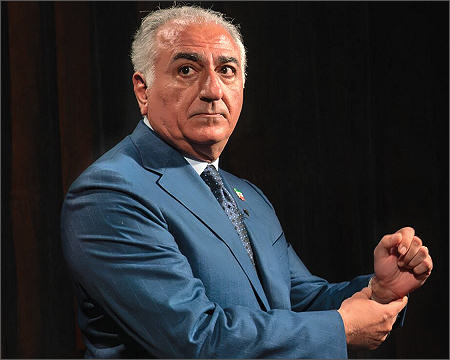
In my view, Benjamin Netanyahu’s political backing of Reza Pahlavi, son of Iran’s last Shah, is not aligned with the long-term interests of the Jewish people. Much of the support for this project is accompanied by efforts to elevate the legacy of Cyrus and to restore aspects of pre-1979 Persian nationalism. This raises an important question: absent this promotion of the Cyrus narrative, would organizations such as the Friedrich Naumann Foundation for Freedom have selected Reza Pahlavi as the recipient of the 2026 Freedom Prize for the Iranian People?
Political support for the son of Iran’s former Shah represents a disservice to the principles and historical traditions of Judaism. The Jewish faith and identity were established centuries before the Babylonian Exile and before the rise of Cyrus. While Cyrus is often remembered in Jewish tradition for given credit for permitting the return of exiled Judeans and the rebuilding of the Temple, it can be argued that modern political efforts to elevate him into a unifying symbol overlook the broader historical consequences of the Persian conquest of the Median and Babylonian kingdoms.

From this perspective, the effort to revive Cyrus as a contemporary political icon is not merely an exercise in historical nostalgia. Rather, it forms part of a broader project to promote a particular vision of Iranian identity centered on Persian nationalism. Iran’s modern political trajectory cannot be understood solely through appeals to ancient symbolism or emotional slogans in support of restoring another form of authoritarian rule.
The country’s diverse ethnic, linguistic, and cultural communities deserve far greater recognition than they often receive in narratives that focus exclusively on Persia (The Land of the Guards) and its ancient rulers. Such narratives frequently overlook the pluralistic character of Iranian society and the aspirations of its non-Persian populations. Ultimately, a political project that seeks legitimacy primarily through the glorification of a distant past is unlikely to serve the interests of either the peoples of Iran or the broader Middle East.
It is fundamentally important, both for the credibility of Israel as a political entity and for the biblical heritage to which many of its leaders appeal, that it remains mindful of the deeper spiritual foundations of Judaism. The enduring strength of the Jewish tradition lies not in the legacy of a political ruler such as Cyrus, but in the stories and teachings associated with Noah, Abraham, Isaac, Jacob, Rachel, Rebekah, and Joseph, whose lives and experiences have profoundly influenced humanity’s moral and spiritual development.

Israel should also remain mindful that many of these early biblical figures are traditionally associated with regions of Upper Mesopotamia that today is often described as Greater Kurdistan. From this perspective, it is questionable whether Israel’s political leadership should invest its reputation in exiled Iranian political figures whose support base remains weak and whose vision for Iran is often criticized as being centered primarily on Persian nationalism rather than the diverse realities of Iranian society.
The previous attempts to govern Iran through centralized and exclusionary political models have failed, and that any future political arrangement must recognize the country’s ethnic, linguistic, and cultural diversity.
Furthermore, given Iran’s long history of authoritarian rule, the country’s current political crisis cannot be resolved simply by replacing one ruling elite steeped in a dictatorial culture with another. Lasting stability will require a political framework that provides greater autonomy, self-determination, and self-governance for the country’s diverse national, ethnic, and regional communities.
Genuine emancipation and democratic development can emerge only when all of Iran’s peoples are able to participate freely and equally in shaping their political future, rather than having yet another ruler imposed upon them by internal power struggles or external forces. Empowering a new strongman to govern an increasingly diverse and politically fragmented society under the existing dysfunctional state structure is unlikely to address the underlying causes of Iran’s recurring political crises.
References:
1- The List of Iranian Studies Centers Worldwide | ASPIRANTUM
2- Murder at Mykonos: Anatomy of a Political Assassination – Iran Human Rights Documentation Center
3- Topical Bible: the First Temple: Pillaged and Burned by the Babylonians
4- Babylonian Captivity | History, Bible, Judaism, Prophets, Nebuchadnezzar, Cyrus, & Significance | Britannica
5- Will Durant, The Story of Civilization, Volume I, Our Oriental Heritage, Chapters 4 & 5,
6- The World’s Great Events of History, Volume I, by Esther Singleton.
7- Encyclopedia Britanica Volume 21, Macropodia, Iran, The Kingdom of the Medes
Ardishir Rashidi-Kalhur, the President of Kurdish American Education Society, Los Angeles, U.S.
The opinions are those of the writer and do not necessarily represent the views of iKurd.net or its editors.
Copyright © 2026 iKurd.net. All rights reserved.
Related posts:
 Who Are the Persians? – Part IV
 Who Are the Persian – Part III
 A Brief History of NuRoj, Kurdish New Year — Newroz
 Who Are the Persian – Part I
 Who Are the Persian – Part II
 A Root Cause Review of the Israeli-Hamas Conflict
 Saddam Hussein was a Friend to the West
 Iraq comes full circle: The rehabilitation of Abd al-Karim Qasim
 The 12-Day War: A Tactical Failure, Yet a Strategic Win for Israel
 Who Are the Persians? – Part VIII