
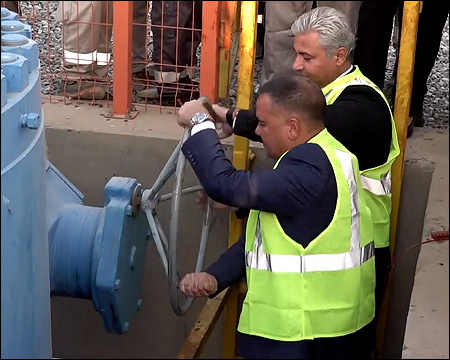
ERBIL,— Crude exports from Iraq’s Kurdistan region resumed Saturday after more than two years of suspension, under an interim agreement between Baghdad, the caretaker Kurdistan Regional Government and international producers, state-run Iraqi News Agency INA and Rudaw TV reported.
Oil began moving through the Kirkuk-Ceyhan pipeline at 6 a.m. local time, the federal oil ministry said in a statement.
Under the temporary deal, flows are expected to reach between 180,000 and 190,000 barrels per day bound for Turkey’s Mediterranean port of Ceyhan, Iraq’s oil minister told Rudaw on Friday.
Officials noted the arrangement is aimed at gradually restoring shipments to as much as 230,000 barrels per day, in coordination with global output increases by OPEC+.
The pipeline had been shut since March 2023, when an arbitration ruling by the International Chamber of Commerce required Turkey to pay Iraq $1.5 billion for crude exports carried out without Baghdad’s consent by Kurdish authorities.
That halt removed a key source of income for the Kurdistan Regional Government and significantly reduced Iraq’s northern crude exports.
According to Iraqi officials familiar with the accord, the KRG agreed to provide 230,000 barrels per day to Iraq’s state marketer SOMO, while reserving another 50,000 barrels daily for domestic consumption.
Crude sales through Ceyhan will be managed by an independent trader using SOMO’s pricing system.
For each exported barrel, $16 will be placed into an escrow account for distribution among producers, with remaining revenues directed to SOMO, the officials said.
Norwegian producer DNO stated it has no immediate plans to resume exports through the line, though its local buyers may ship crude using the pipeline.
DNO and its partner Genel Energy have said the region’s arrears of about $1 billion to producers, including roughly $300 million owed to DNO, still need to be resolved.
Eight oil companies and the Kurdish authorities agreed to meet within 30 days of exports resuming to negotiate a mechanism for clearing the outstanding debts.
According to watchdog groups, Kurdish lawmakers and leaked documents, billions of dollars from oil revenues in the Kurdistan region remain unaccounted for over the past decade.
Critics frequently describe the area as the most corruption-plagued part of Iraq. Observers and political opponents have accused the ruling Barzani family, often referred to as the “Kurdish oligarchs,” of using control over oil to build private wealth and maintain influence rather than directing revenues toward public services.
(With files from Reuters | Agencies)
Copyright © 2025 iKurd.net. All rights reserved
Related posts:
 Iraqi Kurdistan – “Sold Out!” – Part II
 Iraq – The Cynical Swindle
 Business with ISIS – Updated
 The Misleaders: Corrupt, Filthy Rich, and Proud of it
 Saddam Hussein’s Enemies: Paving the Road to the Invasion of Iraq
 Saddam Hussein was a Friend to the West
 Kirkuk – Wars of Deception And Elections
 Iraqi Kurdistan oil smuggling to Iran booming: Reuters
 Iraq says foreign firms in Kurdistan obliged to transfer oil under deal
 Iraqi Kurdistan – “Sold Out!” – Part III