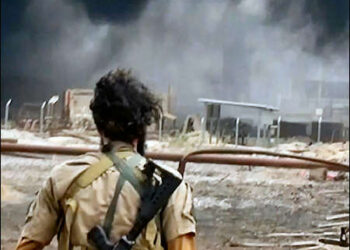


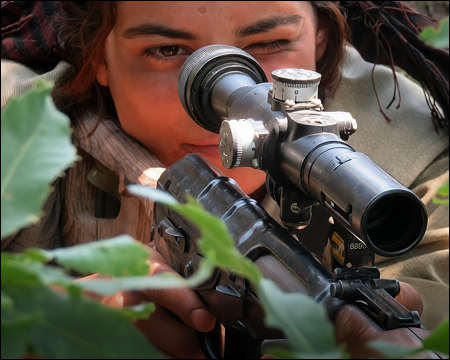
No one saves the Kurds who do not save themselves. The world respects strength, not innocence. Should we wait for the Jews, or should we act like them?
Saman Wasta Bakir | Exclusive to iKurd.net
Translated by iKurd.net from Kurdish Awene
It is clear that before the historic decision made by the Jews in 1946, Jews were humiliated, oppressed, and displaced, until it led to the Holocaust and the most brutal form of genocide in history.
If the Jews themselves had not taken action, and if they had not changed their way of dealing with others from defense to offense, it is unlikely that today any Jews would still be found anywhere.
After the Holocaust genocide between 1941–1945, the Jews regained awareness, and on May 14, 1948, the Zionist Jewish Council announced the establishment of the State of Israel. From that moment on, Jews no longer waited for enemy attacks, genocide, or massacres.
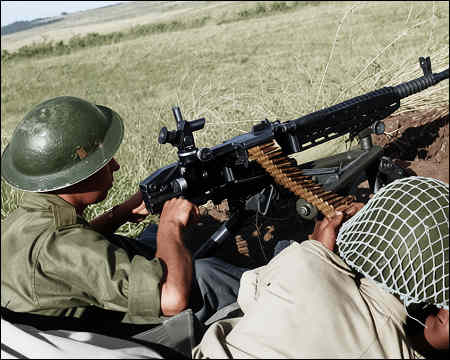
Instead, to protect themselves, they began attacking any person, group, or state that created even the smallest threat to their country and their existence. This led to Israel being counted as one of the strongest countries in the world, and today it presents itself as the largest and most dominant power in the Middle East, and this is widely recognized.
Of course, this is not simply because America stands behind it, but because Israel has proven to America and the Western world that it can defend itself and its allies and protect their interests. This point is essential and decisive in building long-term alliances.
In reality, no power, especially the great powers of the world, is willing to form alliances with weak groups, regions, or states. On the contrary, they always become friends and allies of those who are strong and who can effectively protect their shared interests.
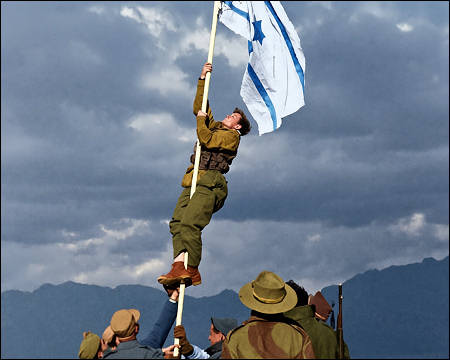
Now the question is: Is it better for the Kurds to wait for Israel and America, or to look to Israel as a model for self-defense and take steps toward building an independent entity on their own land?
There is no doubt that Kurds must look to Israel, because throughout thousands of years of Kurdish history, up to the present day, Kurds have always been in a defensive position and have never attacked the land of any neighbor, out of friendship and kindness.
This weakness became one of the main reasons for losing most of their land. As a result, throughout history, many areas were cut off from Kurdistan, and their demographics were changed, not by foreigners, but by Kurds themselves. Even some Kurdish intellectuals and historians no longer believe that one day those areas were part of Greater Kurdistan.

Examples include the city of Baghdad (“Baghi Dad”) and many other regions and lands that today are not considered occupied parts of Kurdistan. Even the original inhabitants of those areas no longer identify as Kurds and have adopted other national identities.
The whole world has changed, but Kurds have not. The nation-state has clearly become stronger in the West and in the most democratic countries of past centuries. Being “race-friendly” or anti-racist is no longer treated as a matter of honor or pride. On the contrary, day by day the borders of nation-states are becoming harder and sharper, and the lines of nationalism are becoming clearer. Nationalist parties are becoming stronger.
The time and strategy of politics in the world are no longer liberal or humanitarian. The international system is collapsing, and global agreements no longer function. The Middle East is undergoing a fundamental and historic transformation.
America under Donald Trump, despite being the world’s largest economic and military power, is not committed to any principle or agreement. Wherever there is economic interest, it becomes a friend and ally of those countries, and it no longer acts as a guardian of human rights or democracy. In short, survival now belongs to the strong, whether through military power or a strong economy.
Kurds in Kurdistan have not succeeded in building a strong, well-armed, unified military force. However, they possess many natural resources and significant potential that could turn Kurdistan into a strong economic power, place it on the global economic map, and through that create strategic friends and allies.
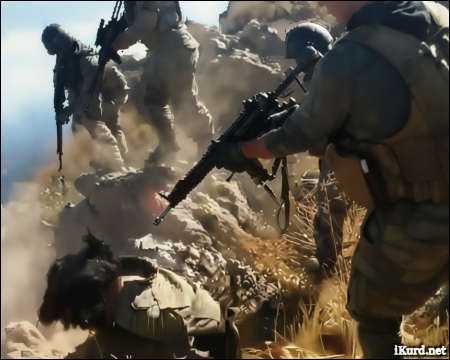
Arabs, Turks, and Persians have always, in every time and era, been fierce enemies of the Kurdish nation. They have consistently extended their hands of occupation and destruction over Kurdish land, homes, and history. Throughout history, they have taken valuable and important Kurdish resources and recorded them under their own names.
They have always sought to completely erase the name of Kurd and Kurdistan from the world map, attempting to destroy Kurdish history, culture, heritage, and language so that nothing of the Kurdish name remains and it becomes fragmented and scattered.
What is clear is that the Kurdish nation, just like its land, has been divided, and its language and culture have also been fragmented. There is no product or resource left that one of the occupying states of Kurdistan has not taken for its own benefit, selling it under Turkish, Arab, or Persian names in their markets, and sometimes even in global markets. One example is Kurdish Qazwani coffee, which Turks have introduced to the world as Turkish coffee and given access to the best markets.
This may seem simple and easy to some people, but in reality it is one of the core foundations of the survival of any nation. This is precisely why we have always been treated as insignificant and powerless, and why we have no product sold under the name of Kurd or Kurdistan, not even in local markets. Of course, I do not mean fruits and vegetables, although they are also important.
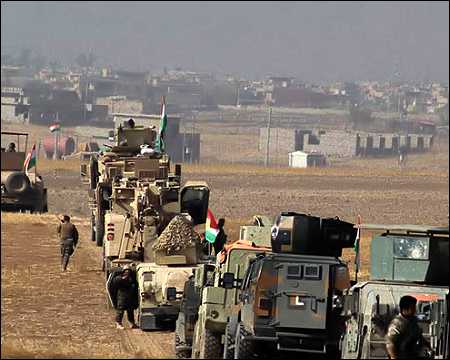
When your culture, heritage, and language are erased, your products and infrastructure are used against you, and your existence is under threat, then the best defense is attack. Attacking for survival and self-defense is not the same as the attacks of powerful states occupying Kurdistan to expand their geography and erase other nations. Rather, it is an attack meant to stop the enemies’ expansionist ambitions over Kurdish land.
No country was born peacefully, and no occupier has ever withdrawn willingly. The examples around the world are many, and they should have become the foundation of a strategic path toward Kurdish liberation and independence.
What is now happening in the West marks a new beginning aimed at eliminating the semi-autonomy that exists in that part of the country, followed by Southern [Iraqi] Kurdistan. History tells us that Kurds have always lost parts of their land while defending it.
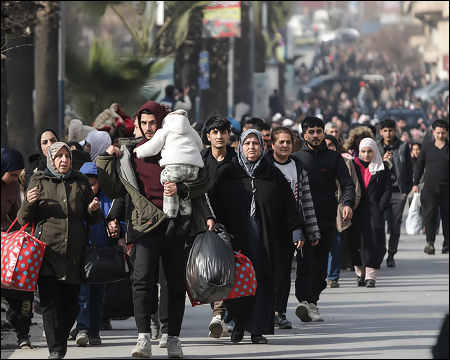
The closest example is October 17, 2017, when 51% of the geography of the Kurdistan Region was reoccupied, along with the seizure and displacement of Kurds from the historic and ancient neighborhoods of Sheikh Maqsud and Ashrafieh in Aleppo.
From the perspective of the occupiers of Kurdistan, Kurds are seen as heretics, traitors, atheists, infidels, outsiders, nomads, and Qandilis. Brotherhood exists only in the childish imagination of naive Kurdish thinking.
How can I be called a brother by a nation that considers my land, water, and air as its own, and then comes to either slaughter me or enslave me? Therefore, the best defense is attack, and the concept of “brotherhood” must be replaced with clear opposition to the occupiers of Kurdistan.
This article was originally published in the Kurdish language in Awene Newspaper on January 17, 2026.
The opinions are those of the writer and do not necessarily represent the views of iKurd.net or its editors.
Copyright © 2026 iKurd.net. All rights reserved.
Related posts:
 The Resurrection (Ba’ath) Party – Before the Iran-Iraq War
 A Root Cause Review of the Israeli-Hamas Conflict
 Business with ISIS – Updated
 The Kurds Between the Holocaust and the Arab Conscience
 The Arab Israeli Conflict, the Biblical right Vs. Birthright
 Iraqi Kurdistan – “Sold Out!” – Part II
 The 12-Day War: A Tactical Failure, Yet a Strategic Win for Israel
 Internal Revolt Against Hamas in Gaza Was Already Underway
 The Mustashar and the Jash – A View from the Position of ‘Iraqi National Unity’ on the ‘Descendants of Treason’
 Interview with Kurdish hostage, Huseyin Baybasin