

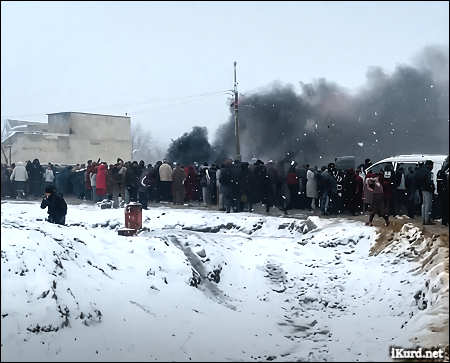
QAMISHLO,— Kobane, once a symbol of Kurdish resistance against Islamic State jihadists, is facing a growing humanitarian crisis as residents report shortages of food, water, and electricity, according to local sources.
The Kurdish city, located in the northern Aleppo Governorate and part of Syrian Kurdistan near the Turkish border, has seen a surge of people fleeing the advance of Syrian government Islamist forces.
The enclave lies approximately 200 kilometers (125 miles) from Syria’s northeastern Kurdish stronghold and is now surrounded by government troops on multiple sides. The influx of displaced families has put additional strain on the city’s already limited resources.
“Electricity and water have been cut off for three days,” said Seifeddine Khodr, 37, a Kobane resident, speaking to AFP by telephone. Internet access in the city remains inconsistent, limiting residents’ ability to communicate and obtain information.
Flour and other food supplies are reportedly not reaching the city, he said, as demand rises with the arrival of displaced people. “People are afraid. We beg the world to intervene,” Khodr added.
Kobane became internationally known after Kurdish forces expelled IS fighters in 2015, marking their first major victory in Syria.
Over the following four years, the Syrian Democratic Forces SDF, led by Kurdish fighters and supported by a US-led coalition, gradually pushed Islamic State from much of Syria.
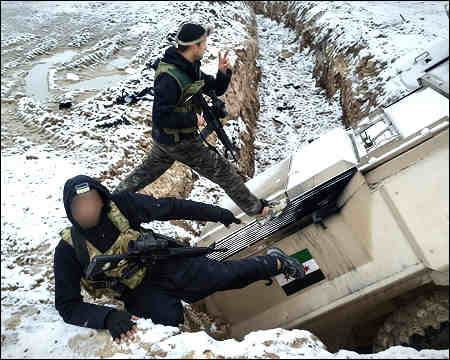
Now, Syria’s interim Islamist president Sharra have demanded the disbanding of the Kurdish-led forces, and Washington has said that its alliance with the SDF has largely fulfilled its purpose.
On Tuesday, the authorities announced a four-day ceasefire with the SDF, which largely held despite both sides reporting violations. Mustafa Ahmad, 55, fled to Kobane with his nine children from a nearby village.
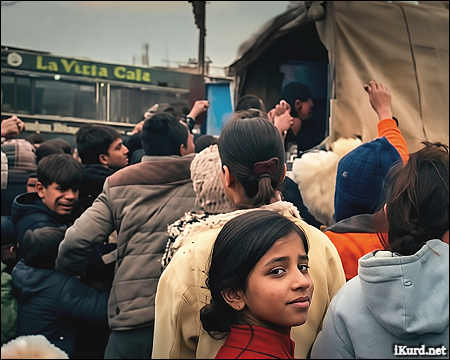
“We didn’t bring anything with us. I’m staying with relatives,” he told AFP. He described hours of searching for milk for his 18-month-old son and called the situation “catastrophic” due to the lack of heating, electricity, and food.
The Kurdish administration accused “armed factions allied with the government” of intensifying attacks, particularly targeting Kobane’s infrastructure.
A statement said the city is “without water, electricity, and basic services” and that ongoing internet cuts have left it “isolated from the rest of the world.”
Syria’s energy ministry denied intentionally cutting water supplies, citing a “technical fault” and claiming that security concerns have hindered repair teams.
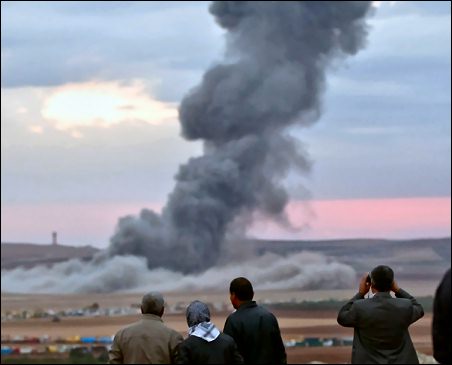
Gharib Hasso, head of the Kurdish administration’s Democratic Union Party, warned that Kobane is symbolic for the world but “attacked and surrounded” by hostile forces. He said that any government incursion could lead to mass killings.
Local journalist Nishtiman, who declined to give her full name, described seeing hundreds of families sleeping outdoors in freezing winter temperatures without electricity, water, or medicines.
“Kobane is besieged,” she said, urging the international community to intervene. “Kobane, which faced ISIS, is now alone.”
More than 21,000 Kurdish fighters, both men and women, died in battles against ISIS and pro-Turkey Syrian mercenary fighters, highlighting the heavy toll of conflict in the region.
(With files from AFP)
Copyright © 2026 iKurd.net. All rights reserved.
Related posts:
 Sabotaging Syria
 Business with ISIS – Updated
 Syria: Revisiting The Caesar Torture Victim Photographs
 Turkey: Nato’s Islamic State Member
 The Resurrection (Ba’ath) Party – Before the Iran-Iraq War
 Syria: A ‘Caliphate’ by Any Other Name — Would Smell the Same
 The SDF–Syrian Regime Agreement: Context, Gains, and Ongoing Risks
 Syria’s Sharra symbolically declares Kurdish a “national language”, seen as “political game”
 Syria: The Truth Lies Buried beneath an Edifice of Lies
 UN humanitarian convoy reaches Syria’s besieged Kurdish town of Kobane