

Shakhawan Shorash | Exclusive to iKurd.net
A coordinated alignment of Turkey, Syria, Saudi Arabia, and Qatar—operating through hardline Islamist factions grouped under the banner of the “Syrian Army”—targeted Kurdish-majority areas with nationalist and Islamist motivations, placing the population of Rojava (Western Kurdistan) under the direct threat of destruction.
This campaign unfolded with direct U.S. involvement through its representative, Tom Barrack. Despite Kurdish forces having served as the primary ground force against ISIS and acting as a protective shield for Rojava, they found themselves politically isolated. Under the Trump administration, Ankara was effectively given the green light to pursue its long-standing objective of dismantling Kurdish self-rule in northern Syria.
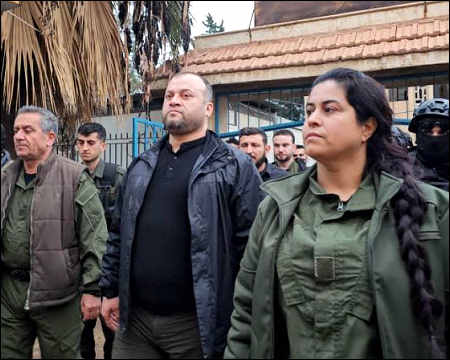
Prior to the agreement, joint attacks were launched against the Kurdish neighborhoods of Ashrafiyeh and Sheikh Maqsoud in Aleppo, and during the SDF’s withdrawal from certain areas, documented crimes and massacres were reportedly committed by armed factions affiliated with the Syrian Army.
A turning point came when SDF Commander-in-Chief General Mazloum Abdi rejected calls for surrender and publicly declared, “We will fight to the last bullet and defend Rojava.” This stance mobilized Kurdish communities across Kurdistan and the diaspora, prompting widespread demonstrations demanding protection for Rojava.
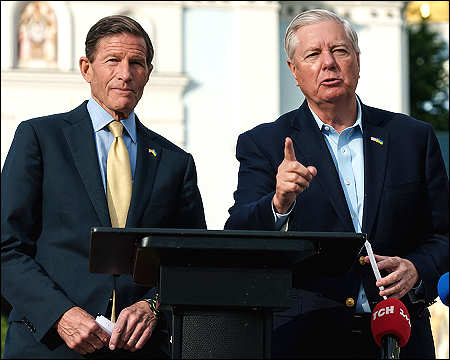
International concern grew as U.S. Senators Lindsey Graham and Richard Blumenthal expressed alarm and called for action to halt the escalation, while the French president and other European officials urged an immediate ceasefire and political settlement. Under mounting international pressure, negotiations advanced, culminating in an agreement on January 29, 2026.
The agreement will establish a phased framework. It will begin with a ceasefire across all fronts and the withdrawal of SDF forces from Hasaka and Qamishlo [Qamishli] to designated military bases, while Syrian Army forces will withdraw to al-Shaddadi south of Hasaka.
A Syrian Army division will be stationed in Hasaka incorporating three SDF brigades, and the Kobane force will become a brigade within the Aleppo Governorate division. In the security and administrative phase, Syrian security forces will enter Hasaka and Qamishlo symbolically, and SDF security forces will be integrated into the Ministry of Interior’s apparatus.
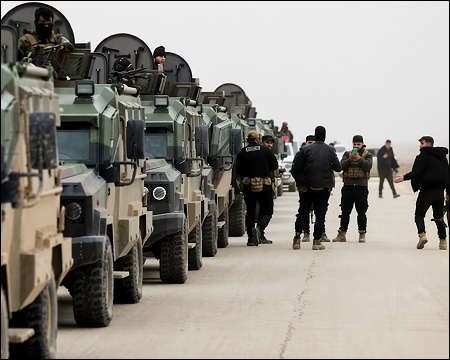
The governor of Hasaka will be appointed by the SDF, while the head of security will be appointed by Damascus, and a Deputy Minister of Defense position will be allocated to the SDF. In the strategic and economic sphere, the Ministry of Oil will assume control over the Rmeilan and al-Suwaidiyah oil fields, employees will be reinstated, and Qamishlo Airport will come under the Syrian Civil Aviation Authority. Border administration will transfer the Semalka and Nusaybin crossings to the General Authority of Border Crossings, with civilian staff managing them.
Additionally, all civil institutions in Hasaka province will be placed under Syrian state authority, and autonomous administration bodies will be merged into state ministries while employees retain their rights. Syrian military forces will be prohibited from entering Kurdish towns and villages.
Educational certificates issued by the Autonomous Administration will be recognized, and civil, cultural, and media institutions will be permitted to operate under the regulations of the relevant ministries.
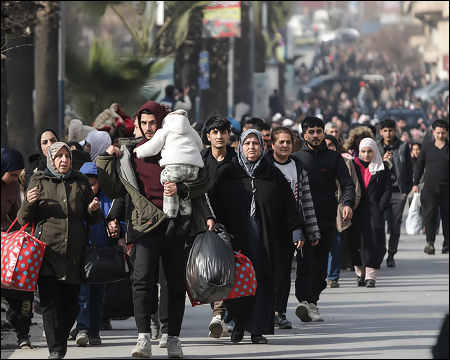
Educational affairs in Kurdish areas will be addressed in cooperation with the Ministry of Education, with consideration for local particularities. The return of displaced persons to Afrin, Sheikh Maqsoud, Serekaniye, and other areas will be guaranteed, alongside the formation of local administrative structures within the broader civil framework.
Although the agreement formally dissolves the Autonomous Administration as a distinct political entity and merges its institutions into the Syrian state, there are several outcomes as positive gains: preventing mass violence and large-scale destruction, securing time and political space for future developments, guaranteeing the return of displaced populations, preserving internal security and defense structures even if reorganized, preventing regime military deployment inside Kurdish towns and villages, and maintaining recognition of Kurdish cultural, civil, and educational institutions, including Kurdish-language education.
Turkey’s principal objective had been the complete eradication of Kurdish self-rule and the dismantling of all affiliated forces while denying recognition of Kurdish national rights. While autonomy in its previous form has ended, Kurdish armed and civil structures remain, albeit within modified institutional frameworks. However, the agreement does not fully align with the ideological orientation of Syria’s new nationalist-Islamist leadership, which traditionally rejects minority-based political arrangements and democratic principles.
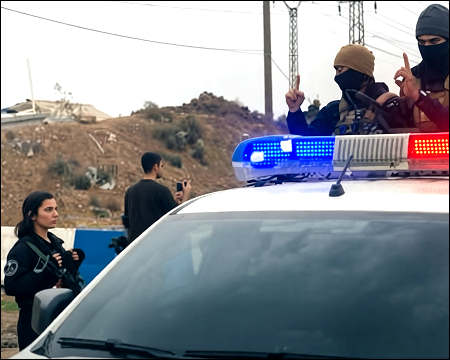
Significant challenges remain. Integrating forces that were until recently engaged in direct armed confrontation—while grounded in deeply divergent ideological frameworks—into a unified military structure will pose serious operational, institutional, and trust-building difficulties. Civil and cultural institutions, although formally recognized under the agreement, will function within the regulatory authority of central ministries.
The breadth and interpretation of these regulations may ultimately determine whether meaningful autonomy is preserved or gradually constrained in practice. The education file is particularly sensitive. Rojava’s educational philosophy—centered on gender equality, human rights, pluralism, democratic participation, and environmental awareness—stands in sharp contrast to the more nationalist and Islamist orientation traditionally associated with the Ministry of Education.
Whether space will exist for genuine curricular diversity, mother-tongue instruction, and the continuation of locally developed educational models remains uncertain and may become a defining test of the agreement’s long-term viability.

Despite the ceasefire, the strategic environment remains unstable. Turkey continues to view any Kurdish political or military presence near its borders as a national security threat, and Islamist factions within Syria’s ruling structure may regard Kurdish political movements with suspicion or hostility. Both actors may seek opportunities to weaken or undermine the agreement if circumstances permit.
External guarantees, especially continued diplomatic engagement from France, European states, and sympathetic U.S. lawmakers, may serve as restraining factors on Damascus and help preserve a degree of internal self-administration within the Syrian state framework.
The durability of the settlement therefore depends on sustained international oversight, internal Kurdish unity, careful management of military integration, and the evolving balance of power within Syria’s political order.
This agreement represents neither a full victory nor a defeat, but a tactical compromise shaped by military pressure, geopolitical bargaining, and international intervention.
For the Kurds of Rojava, it averts immediate catastrophe while preserving core social, cultural, and security structures within a new and uncertain framework, and its ultimate success will depend not only on formal provisions but on political will, regional dynamics, and sustained external engagement.
Shakhawan Shorash, BA and Master of political science from Southern University of Denmark and University of Copenhagen. A freelance writer concerning human right, genocide, ethnic conflicts, democratization and similar subjects. Shorash is a long-time contributing senior writer for iKurd.net, See below.
The opinions are those of the writer and do not necessarily represent the views of iKurd.net or its editors.
A Kurdish version of this article is available in Awene Newspaper.
Copyright © 2026 iKurd.net. All rights reserved
Related posts:
 The Resurrection (Ba’ath) Party – Before the Iran-Iraq War
 Business with ISIS – Updated
 The SDF–Damascus deal: A gamble over keys to Kurdish homeland
 Syria: A ‘Caliphate’ by Any Other Name — Would Smell the Same
 What makes a good NATO ally? The Case of Turkey
 Martyrs for Millionaires: The Black-Market Politics behind the Theft of Syria’s Oil
 Syria: Revisiting The Caesar Torture Victim Photographs
 Turkey: Nato’s Islamic State Member
 Sabotaging Syria
 Syrian gov’t Islamist militants massacre a Kurdish family: video