

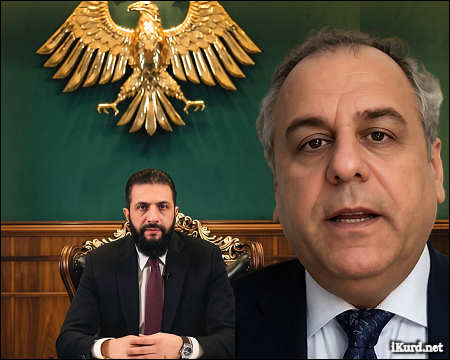
Bashar al-Assad did the same, on April 7, 2011, Former Syrian president Assad issued Decree No. 49 to grant citizenship to stateless Kurds. “This feels like a political game by Sharra rather than a serious step toward Kurdish rights,” a legal expert says.
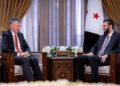
DAMASCUS,— Syrian interim President Ahmed al-Sharaa issued a decree on Friday declaring Kurdish a “national language,” a move analysts describe as largely symbolic and aimed at projecting goodwill toward the country’s Kurdish minority.
The decision follows days of clashes between Syrian government Islamist forces and Kurdish forces in northern Syria and comes just before Sharaa’s scheduled visit to Germany.
The decree marks the first formal acknowledgment of Kurdish national rights since Syria gained independence in 1946.
It recognizes Kurds as “an essential and integral part” of the Syrian state and allows Kurdish to be taught in public schools in areas where Kurdish populations are significant.
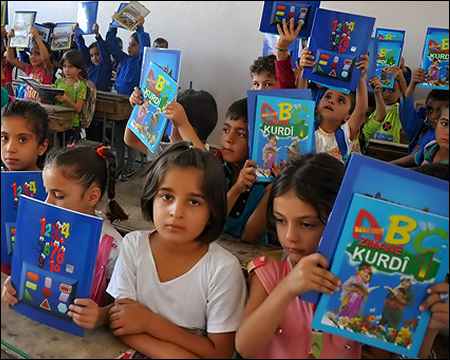
But even without any official decree, schools and universities in Syrian Kurdistan have been teaching in the Kurdish language for more than a decade, following the establishment of Kurdish self-administration after the Kurds took control of the region from Assad’s regime in the 2010s.
In addition, Sharaa declared March 21, the Kurdish new year known as Newroz, an official holiday and restored citizenship to some Kurds who had been stripped of it under a controversial 1962 census.
Despite the announcement, legal experts and Kurdish political figures said the decree offers little substantive change.
Omran Mansour, a Kurdish legal expert from Syrian Kurdistan who now resides in Paris, told Rudaw TV that the decree does not meet the demands of the Kurdish population in Rojava (Syrian) Kurdistan.
“The decisions made by Ahmad al-Sharaa are not at the level of what the Kurds of Rojava seek,” Mansour said. “After 100 years of struggle and revolution, Kurds want their rights guaranteed and enshrined in the constitution, not merely symbolic gestures.”
Mansour said the decree represents a new phase in the Kurdish issue in Syria. While previous regimes actively restricted Kurdish identity and political activity, this decree opens the door to discussions on Kurdish rights.
He added, however, that the action was issued by a regime that lacks democratic legitimacy. “One of the criticisms is that the Syrian president made decisions without consulting Kurdish political forces, as if to say, I own everything,” he said.
The legal expert also questioned the practical impact of declaring Kurdish a national language. “There are many criticisms. Kurdish was expected to become a second official language, appearing on government documents, passports, and identity cards. It should also be taught properly and by choice within educational curricula,” Mansour said.
“This feels like a political game rather than a serious step toward Kurdish rights,” he said.
Regarding the recognition of Newroz as a public holiday, Mansour noted that celebrations were already taking place in Syrian Kurdistan despite government restrictions.
“Even during Assad’s era, people celebrated Newroz as a holiday. Since 2011, Kurdish citizens themselves recognized it. People continued to celebrate despite the risks, often refusing to attend school or work.”
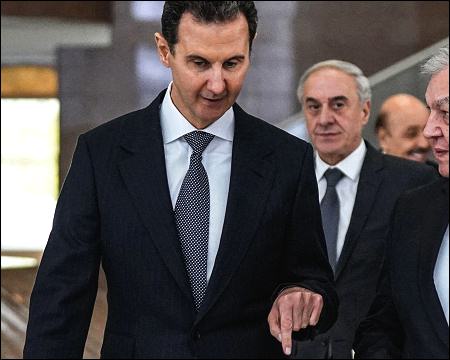
On the issue of citizenship, Mansour recalled that former President Bashar al-Assad issued Decree No. 49 in April 2011, granting citizenship to stateless Kurds. The measure, Mansour said, was designed to limit Kurdish participation in the uprising against Assad.
“The Kurdish nation owns land, language, a political movement, culture, and territory—its own land, which is Kurdistan,” Mansour said. “Ahmad al-Sharaa’s decree mirrors previous tactics used by authoritarian leaders. Saddam Hussein did the same with Kurds in Iraqi Kurdistan. This decree is for foreign audiences, not for the Kurdish people inside Syria.”
The announcement comes amid stalled efforts to integrate the Kurdish-led autonomous administration in northeastern Syria, into the state structure.
Salih Muslim, a senior Kurdish politician, described the decree as “an attempt to evade the rights of the Kurdish people and to divide them,” according to AFP.
The US-backed Kurdish-led Syrian Democratic Forces (SDF), the de facto army of Syrian Kurdistan, control large areas in Syria’s oil-rich north and northeast.
The population of Syria is about 20 million, with around two million Kurds, 1.2 million of them living in the northeast, according to Syria expert Fabrice Balanche.
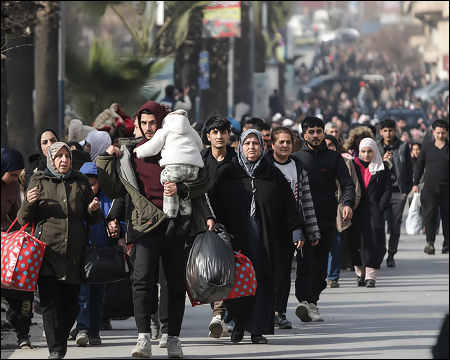
The Syrian army has recently taken aggressive steps to assert control over Kurdish-held territories. Last week, government forces took control of two Kurdish neighborhoods in Aleppo city after Kurdish forces withdrew.
The Syrian army has recently taken aggressive steps to assert control over Kurdish-held territories. Last week, government Islamist militias gained control of two Kurdish neighborhoods in Aleppo after Kurdish fighters withdrew. Over 150,000 people, mostly Kurds, flee Aleppo to Rojava Kurdistan.
Reinforcements were sent near Deir Hafer, about 50 kilometers east of Aleppo, with orders for Kurdish fighters to withdraw.

SDF’s top commander, General Mazloum Abdi posted on X that, based on “calls from friendly countries and mediators,” the group would redeploy forces east of the Euphrates River. The Syrian defense ministry welcomed the announcement, saying troops would occupy the areas being vacated.
Earlier on Friday, SDF spokesman Farhad Shami told AFP that a delegation from the US-led anti-jihadist coalition had met with Kurdish officials in Deir Hafer.
That evening, the Syrian army launched artillery strikes on Kurdish positions in the area. The SDF said the town was under “heavy artillery bombardment.”
Civilians have been fleeing areas ahead of military operations. At least 4,000 people left Deir Hafer after authorities set a deadline for evacuation.
AFP reporters observed residents crossing a branch of the Euphrates River using a makeshift bridge. “The SDF stopped us from leaving, that’s why we used an agricultural back road and then crossed the bridge,” said 60-year-old Abu Mohammad, accompanied by relatives.
Similar evacuations took place in Aleppo, where government Islamist forces took full control of the city after capturing two Kurdish-majority neighborhoods. Syrian authorities have blamed the SDF for hindering civilian departures, a claim the group denied as “unfounded.”
While Sharaa’s decree signals a legal recognition of Kurdish identity and language, experts say the move is primarily symbolic and lacks guarantees for long-term Kurdish rights.
Omran Mansour emphasized the need for Kurds to engage in dialogue and push for constitutional guarantees. “This decree is an important legal step for the Kurdish issue in Syria. It moves it into another phase and opens the door to dialogue so that Kurdish rights can advance to a better stage,” he said.
The situation reflects ongoing tensions in Syria, where the interim Islamist government is attempting to consolidate control after the ouster of Bashar al-Assad, while Kurdish populations and forces continue to resist fully integrating under Damascus’ authority.
Formally established in 2018, the Autonomous Administration in Syrian Kurdistan governs the region under democratic confederalism, a model that emphasizes direct democracy, gender equality, secularism, and environmental sustainability. It is widely recognized for promoting women’s participation in politics and local decision-making.
(With files from AFP | Rudaw | Agencies)
Copyright © 2026 iKurd.net. All rights reserved.
Related posts:
 The Resurrection (Ba’ath) Party – Before the Iran-Iraq War
 Business with ISIS – Updated
 Syria: Revisiting The Caesar Torture Victim Photographs
 Stealing Syria
 Syria: A ‘Caliphate’ by Any Other Name — Would Smell the Same
 Sabotaging Syria
 Turkey: Nato’s Islamic State Member
 Syria: The Hijacking of the Arab Spring: From ISIS to Hayat Tahrir al-Sham
 Hostages to Jihad – Austin Tice, The Long Missing American in Syria – Part One
 The Islamic State of Syria? (Al Dawla al-Islamiya fi al-Sham)