


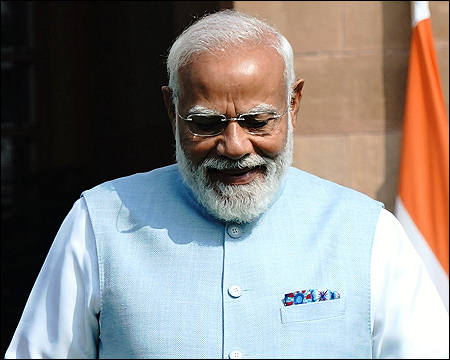
Michael Rubin | American Enterprise Institute
It is time for the world’s largest democracy to embrace and cultivate the world’s largest people without a nation
The Kurds remain the largest people without a nation. Cursed by geography, perhaps 45 million Kurds live spread across Syria, Iraq, Iran, and Turkey. Point 12 of US President Woodrow Wilson’s 1918 Fourteen Points not only promised “secure sovereignty” for “the Turkish portion of the present Ottoman Empire” but also “autonomous development” for “the other nationalities which are now under Turkish rule.” Two years later, the Treaty of Sèvres promised Turkey’s Kurds independence after one year, but after Mustafa Kemal Atatürk militarily changed the facts on the ground, the 1923 Treaty of Lausanne rescinded the promise of a Kurdistan.
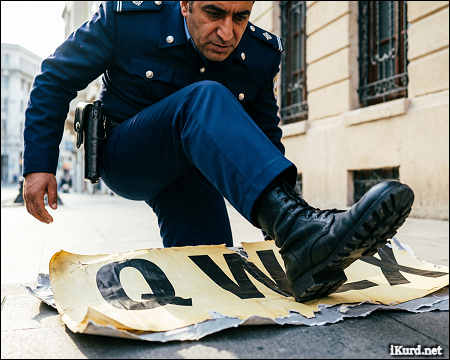
Turkey crushed by brute force subsequent Kurdish uprisings as Kurds sought fulfilment of their national rights while successive Turkish governments pursued a genocidal policy to eradicate the Kurds, not only razing their villages but also banning their language and denying their very existence. Even writing certain letters—Q, W, and X—that exist in Kurdish but not Turkish could lead to lengthy prison sentences. At the height of Kemalism, the laical, Turkish nationalist movement that Atatürk founded, Kurds simply became “mountain Turks” in official parlance.

It was against this backdrop that the Kurdistan Workers’ Party (PKK) emerged. Like anti-apartheid activist Nelson Mandela, PKK founder Abdullah Öcalan initially embraced both Marxism and armed struggle, though he later renounced both. Öcalan’s prison writings reveal a clear evolution of thought.
While the United States designates the PKK as a Foreign Terrorist Organisation, this designation came nearly two decades after the PKK’s founding, at a time when the Clinton administration was finalising a helicopter sale to Turkey. Following a lengthy process triggered by Turkey’s request for the arrest of PKK members in Belgium, the Brussels Court of Appeal ruled in 2019 that the PKK was not a terrorist group but “a party in a non-international armed conflict”. In other words, the Belgian court considered PKK actions a defensive insurgency.
When Syrian Kurds put Öcalan’s philosophy into action, the result was a progressive democracy with full religious rights and women’s empowerment that looked far more like a Scandinavian social democracy than any of the autocracies surrounding it.
Perhaps this is why Turkey was so intent on crushing the Kurdish experiment in Syria. For Turkish President Recep Tayyip Erdoğan, it is hard to abide a functioning democracy next door when his country is an autocracy with a failing economy. Ideologically, Erdoğan simply resents Kurds, both because of his own racism and his religious intolerance. Most Kurds are Muslim, but they embrace a more traditional Sufi exegesis, whereas Erdoğan’s Muslim Brotherhood outlook categorises all those who do not adhere to his own intolerant outlook as blasphemers who deserve death.

Erdoğan now responds to the Kurds in two ways. In Iraqi Kurdistan, he co-opts the tribal leadership. Iraqi Kurdistan today is akin to the Turkish Republic of Northern Cyprus, a proxy state whose governance Ankara decides rather than its own citizens. Massoud, Masrour, and Areen Barzani—respectively the leader, son and heir apparent, and grandson and future leader—all recognise that if they diverge from Ankara, they will be on the receiving end of a Turkish drone. In Turkey and Syria, he uses his army or Islamist proxies.
The Kurds are between a hammer and the anvil; they have nowhere to go.
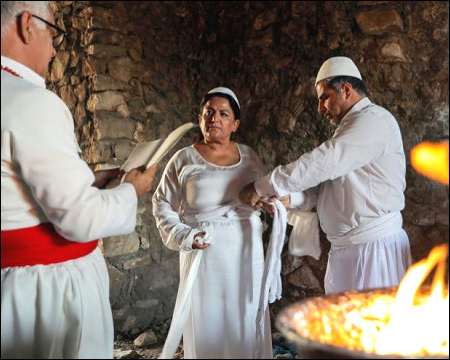
It is against this backdrop that India should step forward. There are ancient cultural and linguistic, if not civilisational, ties between India and the Kurds. Kurds are Indo-Iranians and likely share ethnic ties to South Asia in the distant past. Many scholars believe Kurds were among those prehistoric peoples who migrated from the Indian subcontinent to West Asia.
The Yezidism and Zoroastrianism some Kurds practised and still practise have links to the ancient Vedic religion so influential in the development of Hinduism. Today, Kurds and Indians share an aversion to Islamist extremism and terrorism.
Supporting Kurds, both with scholarships and other opportunities denied to them in Turkey and Syria, would affirm the principles India’s post-independence leaders have embraced. While the PKK had formally dissolved, enabling Kurdish political organisations safe haven to organise would help cultivate moderate forces crucial to future stability in West Asia or the post-Islamic Republic of Iran.
Turkey and Syria might object, but Indian leaders should not allow Ankara and Damascus a veto over New Delhi’s interests. It is time for the world’s largest democracy to embrace and cultivate the world’s largest people without a nation.
Michael Rubin is a former Pentagon official whose major research areas are the Middle East, Turkey, Iran and diplomacy. He is author of “Dancing with the Devil: The Perils of Engaging Rogue Regimes” (Encounter, 2014). He is a resident scholar at the American Enterprise Institute AEI. His major research area is the Middle East, with special focus on Iran, Iraq, Turkey, and Kurdish society.
The article first published at aei.org
The opinions are those of the writer and do not necessarily represent the views of iKurd.net or its editors.
Copyright © 2026, respective author or news agency, American Enterprise Institute | aei.org
Related posts:
 Business with ISIS – Updated
 What makes a good NATO ally? The Case of Turkey
 Turkey: The Psychological War Against the Kurds Through the PKK – Part I
 Turkey: Nato’s Islamic State Member
 Interview with Kurdish hostage, Huseyin Baybasin
 “ISLAMBUL”
 The Resurrection (Ba’ath) Party – Before the Iran-Iraq War
 No democracy in Turkey – ‘insulting Kurdishness’: Interview with Sheri Laizer
 The PKK’s Personality Cult: Changing Influences – Part II
 Iraqi Kurdistan – “Sold Out!” – Part II