


Iraq resumes crude exports via the Kurdistan region pipeline on Wednesday
BAGHDAD,— Iraq’s federal government and the Kurdish authority in Erbil, which still calls itself and acts as the Kurdistan Regional Government (KRG), have agreed to restart oil exports to Turkey’s Ceyhan energy hub, with shipments set to resume on Wednesday, Iraq’s oil minister said.
State media, citing Oil Minister Hayan Abdel-Ghani, reported that flows through the pipeline are scheduled to begin at 10 a.m. local time, or 0700 GMT.
The caretaker KRG authorities in Erbil confirmed the deal in a statement.
They said both sides would create a joint committee to prepare the technical and administrative steps needed to resume exports through the regional pipeline network. Revenue from the shipments will be transferred to Iraq’s federal treasury.
The KRG added that Baghdad and Erbil also agreed to adopt security measures to protect oilfields and maintain stable export operations.
The outgoing KRG Prime Minister Masrour Barzani said in a post on X that the region would allow crude exports through the Kurdistan pipeline as soon as possible due to what he described as exceptional conditions facing the country.
He said talks with Baghdad would continue to remove restrictions on imports and trade affecting the region. He also said efforts were under way to provide guarantees to oil and gas companies so they can safely restart production.
Barzani later wrote that he had spoken by phone with U.S. envoy Tom Barrack.
During the call, he instructed officials in the Erbil Authority to provide all necessary support to restart exports, saying the move was in the interest of citizens given the current situation.
The latest agreement follows days of disagreement between Baghdad and Kurdish authorities over responsibility for halted exports.
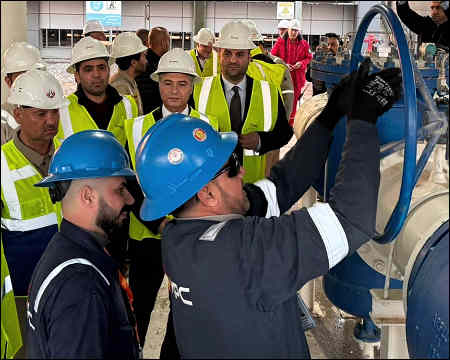
Iraq resumed oil exports on Wednesday through a pipeline in the Kurdistan Region to Turkey after a halt of nearly three years, Iraqi oil officials said, marking a key step for the country’s energy sector as the war involving Iran has halted shipments through the Strait of Hormuz.
Amer Khalil, director general of the state-run North Oil Company, said the process restarted early in the day. Oil began flowing from the Sarlo station in Kirkuk to the Turkish port of Ceyhan at 6:30 a.m., he said.
Khalil said exports are set at 250,000 barrels per day, restoring a significant volume of crude to global markets following the disruption in the Strait of Hormuz.
On Sunday, Kurdish officials said the federal government had failed to resolve key security and economic issues affecting the oil sector. They rejected claims that they were blocking crude exports through the regional pipeline.
Their statement came after Iraq’s oil ministry accused the Erbil Authority of refusing to allow the use of a pipeline as an alternative route for crude flows disrupted by the conflict involving Iran.
The ministry said Kurdish authorities had imposed conditions it described as arbitrary.
Earlier on Tuesday, Iraq’s presidency called on both sides to work together to restore exports, according to an official statement.
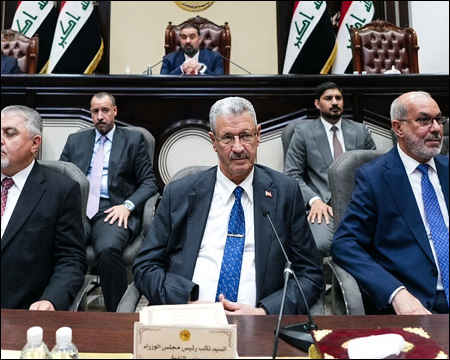
Parliament also addressed the issue during a session focused on shipments through the Ceyhan pipeline. State news agency reports said lawmakers issued a seven point decision urging the federal government to secure export outlets to prevent economic losses under current security conditions.
The measures appeared aimed at strengthening Baghdad’s control over the oil sector. They followed a late meeting on Tuesday between lawmakers and the oil minister to review the impact of suspended exports after the Strait of Hormuz was closed.
In a statement, parliament said it was ready to approve any steps needed to support restoring exports. It also called on the federal government to maintain authority over oil production, transport and distribution across the country.
Lawmakers urged officials to supply fuel oil to both state and private factories to avoid rising stockpiles at refineries. They also called for repairs to the pipeline route linking Kirkuk with western Mosul, Zummar and Fishkhabour, extending toward Ceyhan.
Production in Iraq’s southern oilfields has fallen sharply, sources told Reuters on March 8. Output dropped by about 70 percent to around 1.3 million barrels per day after the Iran conflict led to the closure of the Strait of Hormuz, a key route for global oil supplies.
Earlier this month, the oil ministry sent a letter to the Erbil Authority requesting approval to transport at least 100,000 barrels per day from Kirkuk fields through the Kurdistan pipeline system to Ceyhan, two oil officials told Reuters.
Kurdish officials say tensions with Baghdad have increased following the introduction of a new electronic customs system by the federal government.
The system allows authorities to track imports and revenue, which the KRG views as limiting its autonomy and control over trade.
Oil prices dropped more than $2 per barrel on Wednesday, giving back some of Tuesday’s sharp gains, after Iraq and Kurdish authorities agreed to resume exports through Turkey’s Ceyhan port, easing concerns about Middle East supply disruptions.
Nearly two years have passed since the elections in Iraq’s Kurdistan Region, yet no new government has been formed.
The parliament, once intended to represent the will of the people, now appears to be a dead institution that has completely lost its function.
The Barzanis still present themselves as leaders despite the absence of a functioning government.
The Barzani clan, which rules the Kurdistan Region, has turned control of the region’s oil sector into a family enterprise, drawing widespread criticism for prioritizing private profit over the public good.
(With files from Reuters)
Copyright © 2026 iKurd.net. All rights reserved.
Related posts:
 Iraqi Kurdistan – “Sold Out!” – Part II
 Iraq – The Cynical Swindle
 The Misleaders: Corrupt, Filthy Rich, and Proud of it
 Saddam Hussein’s Enemies: Paving the Road to the Invasion of Iraq
 Business with ISIS – Updated
 Saddam Hussein was a Friend to the West
 The Resurrection (Ba’ath) Party – Before the Iran-Iraq War
 Kirkuk – Wars of Deception And Elections
 Iraq: Revenge and Corruption
 The Suffocation of Iraq Kurdistan