


BAGHDAD,— Iraq plans to resume oil exports from the Kirkuk fields to Turkey within a week through a federal pipeline that bypasses the Kurdistan Region, the country’s oil minister said on Monday, the state-run Iraqi News Agency reported.
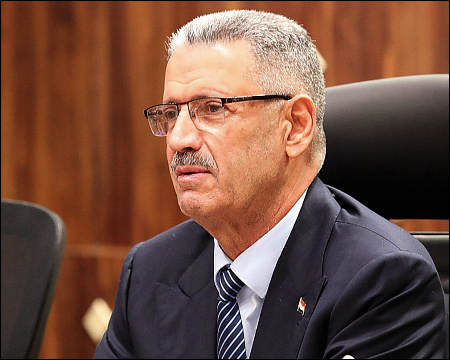
Oil Minister Hayan Abdel Ghani said the shipments will move directly from Kirkuk to Turkey once final technical work on the pipeline is completed.
The minister said the Iraqi-Turkish pipeline used to move Kirkuk crude is now in its last stage of testing. The line has the capacity to carry between 200,000 and 250,000 barrels of oil per day.
Ghani said about 100 kilometers of the pipeline still require hydrostatic testing. Once the process is finished, oil from the Kirkuk fields will be pumped directly into the system without passing through the Kurdistan Region.
The minister was referring to the 48-inch Baiji–Fishkhabour pipeline. The route can handle exports of up to one million barrels per day.
The pipeline has been out of service since 2014 after suffering heavy damage during the expansion of the Islamic State, also known as ISIS, which seized large parts of northern Iraq at the time.
The line runs through Salahaddin and Kirkuk provinces before reaching the border area of Fishkhabour. From there it links with Turkey’s section of the Iraq-Turkey Pipeline.
The announcement comes during rising tensions between Baghdad and the Kurdish authority that calls itself the Kurdistan Regional Government, or KRG.
The dispute has grown in recent days over Baghdad’s request to export oil through the Kurdistan Region’s pipeline network to Turkey. The disagreement is also tied to long-running financial disputes and security concerns in the Region.
Earlier, Baghdad accused officials in Erbil of rejecting a request to export as much as 300,000 barrels of oil per day through the pipeline. The proposed shipments would have been in addition to roughly 200,000 barrels per day produced in the Kurdistan Region.
Observers say the Barzani clan has turned control of the Kurdistan Region’s oil sector into a family enterprise, drawing widespread criticism for prioritizing private profit over the public good.
The Kurdistan Regional Government’s Ministry of Natural Resources rejected Baghdad’s accusations on Sunday. The ministry said Iraq’s federal oil ministry was misrepresenting the situation regarding crude shipments sent through the Region’s pipeline network to Turkey’s Ceyhan port.
Kurdish officials also said Baghdad continues to impose what they described as a suffocating embargo on the Kurdistan Region. The ministry added that federal authorities have not taken action against attacks by Iran-aligned armed groups in Iraq targeting energy infrastructure in the Region.
The dispute has intensified as oil exports from the Kurdistan Region have mostly stopped following repeated drone and missile attacks on energy facilities.
Those attacks have been blamed on armed groups aligned with Iran inside Iraq. The groups say the strikes are connected to tensions involving Tehran, Washington and Tel Aviv.
Ghani said Iraq’s crude oil output currently stands at about 4.4 million barrels per day, matching the country’s quota set by OPEC.
However, he said military operations in the Gulf and the closure of the Strait of Hormuz forced Iraq to halt oil exports days after war began in the region.
The minister said production has since dropped to between 1.5 million and 1.6 million barrels per day to supply domestic refineries and power stations.
Despite the suspension of exports and the resulting loss of revenue, Ghani said oil and gas products are still meeting local demand.
He added that Iraq is studying the option of moving about 200,000 barrels per day by tanker trucks, mainly through Jordan and Syria.
Iraq’s economy generates over 90 percent of its revenue from oil exports.
Experts warn that without oil income the government, which is the country’s largest employer, could struggle to pay salaries to civil servants and may face a shortage of foreign currency needed for imports and exchange rate stability.
(With files from INA | AFP | Rudaw)
Copyright © 2026 iKurd.net. All rights reserved.
Related posts:
 Kirkuk – Wars of Deception And Elections
 Iraq – The Cynical Swindle
 Iraqi Kurdistan – “Sold Out!” – Part II
 Business with ISIS – Updated
 The Misleaders: Corrupt, Filthy Rich, and Proud of it
 Saddam Hussein’s Enemies: Paving the Road to the Invasion of Iraq
 Iran’s Grip on Kirkuk
 Saddam Hussein was a Friend to the West
 Iraq: Revenge and Corruption
 The Resurrection (Ba’ath) Party – Before the Iran-Iraq War