


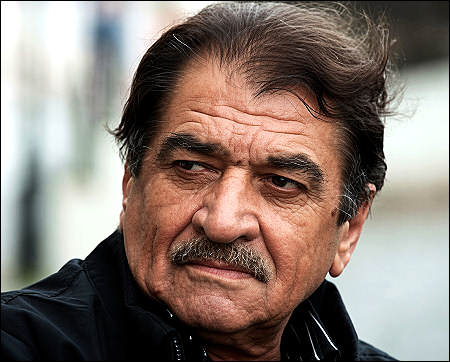
Ali Ashouri | Exclusive to iKurd.net
The anniversary of Sherko Bekas’s death is not merely an occasion to remember the passing of one of the greatest modern Kurdish poets; it is an opportunity to revisit the work of a poet who transformed poetry into a space of freedom, memory, and human dignity. In an age when poetry often risks becoming either a political slogan or a purely formal exercise, Bekas followed a different path. He did not simply write about freedom; he allowed freedom to become present within the very structure and movement of his poetry.
For Sherko Bekas, freedom was not only a political aspiration. It was an existential experience, a way of inhabiting the world, a condition necessary for language, imagination, and human connection. His poetry suggests that when freedom disappears, something deeper than political rights is lost: the ability to dream, to create, and to preserve the meaning of life itself.
Bekas emerged from the wounded history of Kurdistan, a history marked by conflict, displacement, silence, and struggle. Yet his poetry never remains confined to the representation of suffering. Pain in his work is not an endpoint; it becomes a starting point for creation. From destruction, he builds language; from silence, he recovers voices; from loss, he searches for the possibility of renewal.
This is one of the defining characteristics of his poetry. Bekas does not transform suffering into despair. Instead, he transforms it into an aesthetic and ethical experience. His poems preserve the memory of wounds while refusing to surrender the future. In this sense, his work is not merely poetry of resistance; it is poetry of survival — an art form that protects human dignity against forgetting.
One of the most remarkable aspects of Bekas’s poetry is its profound relationship with nature. Mountains, trees, rivers, rain, birds, and wind are not decorative images in his poems. They possess presence, memory, and voice. Nature becomes a living archive, carrying experiences that official histories often fail to preserve.
In Bekas’s poetic world, nature is not simply a refuge from human suffering. It is a witness. Trees remember, rivers carry stories, and birds become messengers of freedom. Through this relationship with nature, Bekas creates a poetic universe in which the human and the natural worlds remain connected. The destruction of one inevitably affects the other.
This understanding brings his poetry close to a broader philosophical question: how can human beings preserve memory in the face of disappearance? The answer in Bekas’s work lies in language itself. Poetry becomes a place where what is threatened with extinction can continue to exist.
Jacques Derrida’s reflections on testimony offer a useful perspective here. For Derrida, testimony is not merely the recording of an event; it is an act of responsibility toward a truth that may otherwise disappear.
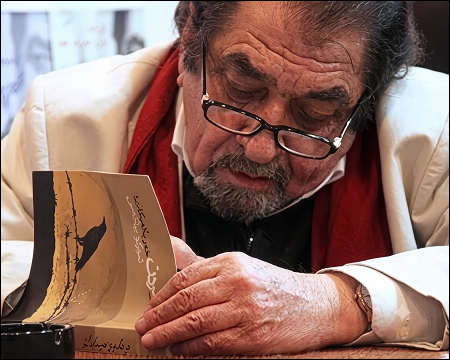
The witness does not simply describe the past; the witness carries it into the future.
In this sense, Sherko Bekas’s poetry can be understood as a form of testimony. His poems do not function as historical documents in the traditional sense. Rather, they preserve the lived experience of individuals and communities — their memories, their losses, their hopes, and their desire for freedom.
Poetry, for Bekas, becomes a form of survival beyond history. It keeps alive what violence, censorship, and forgetting attempt to erase. Through the act of writing, memory becomes not a monument to the past, but a living presence in the present.
Freedom as the Essence of Poetry
One of Sherko Bekas’s most powerful poems reveals his understanding of freedom with remarkable simplicity:
“If they take the flower from my songs,one season will die.
If they take love away,
two seasons will die.
And if they take bread, three seasons will die.
But if they take freedom
from my songs,
the whole year will die.”
The strength of this poem lies precisely in its clarity. Bekas does not rely on complex metaphors or intellectual abstraction. Instead, he creates a profound hierarchy of human necessities through four simple images: the flower, love, bread, and freedom.
The flower represents beauty and the human need for imagination; love represents emotional connection and the possibility of intimacy; bread represents physical survival and the basic conditions of life. Yet freedom stands above them all, because without freedom, beauty loses its meaning, love becomes fragile, and life itself is reduced to mere existence.
The final image of the poem is especially significant: if freedom disappears, it is not one season that dies, but the entire year. This is not simply a metaphor for political oppression. It suggests the collapse of human time itself — the loss of the future, the loss of possibility, and the loss of the ability to create meaning.
In Bekas’s poetry, freedom is therefore not merely a political demand. It is an aesthetic and existential condition. It is what allows language to breathe, imagination to flourish, and human beings to remain connected to the world around them. Freedom is the rhythm that keeps the human experience alive.
The Mother Tongue as a Home of Memory
Another central dimension of Sherko Bekas’s poetry is his relationship with language. For him, Kurdish was not simply a tool of communication; it was a living space of memory and identity. Every language carries a particular way of seeing the world, and when a language is silenced or marginalized, a unique dimension of human experience is placed at risk.
Bekas’s commitment to Kurdish was therefore not a retreat into isolation. On the contrary, by deepening the expressive possibilities of his own language, he opened a dialogue with universal human concerns. Great literature often emerges from a specific language and culture while reaching beyond them. The particular becomes a path toward the universal.
Bekas demonstrated that a language does not need political power or global dominance in order to express profound human experiences. Through Kurdish, he explored questions that belong to all humanity: freedom, love, death, memory, loneliness, and hope.
Language in his poetry functions much like nature: it is alive, changing, and carrying traces of the past. Words are not empty signs; they contain the experiences of generations. In this sense, Bekas was not only a poet of Kurdish language; he was a poet of the possibilities contained within language itself.
Paul Ricoeur, in Memory, History, Forgetting, argues that memory is not simply a return to the past but a dynamic relationship between past, present, and future. Bekas’s poetry embodies this idea. His poems preserve historical experiences, yet they do not remain trapped in nostalgia. They transform memory into a creative force.
The past in Bekas’s poetry is not a closed chapter. It continues to speak. It becomes a source of imagination, ethical reflection, and renewal. This is why his poetry reaches beyond a specific historical moment: it addresses the universal human struggle against forgetting.
Poetry Against Forgetting
Throughout human history, poetry has often served as a form of resistance against disappearance. Before written histories preserved the memories of civilizations, poetry carried voices, emotions, and experiences across generations.
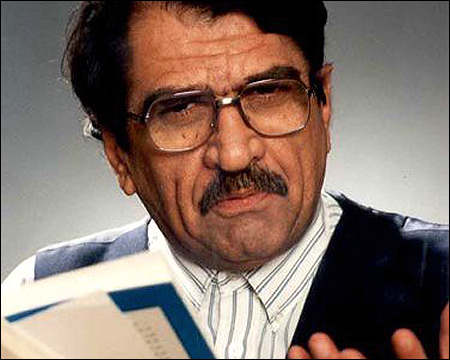
Sherko Bekas belongs to this tradition. He does not write history in the conventional sense; instead, he preserves history through images, emotions, and human voices. A tree can become a witness, a mother can become the guardian of collective memory, and a simple word can contain the experience of an entire generation.
His poetry reminds us that forgetting is not a passive process. It is often connected to power, silence, and the disappearance of voices. Against this process, poetry creates another form of memory — one that cannot be easily erased because it lives within language and imagination.
This is why Bekas’s work continues to speak beyond its original context. His poetry is rooted in Kurdish experience, but its questions are universal: How can people preserve dignity in difficult times? How can memory survive violence? How can language remain alive when it is threatened by silence?
Sherko Bekas in the Landscape of World Literature
The significance of Sherko Bekas cannot be measured only by his contribution to Kurdish literature. His importance lies in his ability to transform a particular historical and cultural experience into a poetic language capable of reaching universal human concerns. Great literature often begins from a specific place, a specific language, and a particular memory; yet when it addresses fundamental questions of human existence, it transcends geographical boundaries.
Bekas’s poetry follows this path. It emerges from the mountains, landscapes, and collective memories of Kurdistan, but it moves toward broader questions of freedom, dignity, love, nature, and the human search for meaning. His work demonstrates that a poet does not become universal by abandoning his roots; rather, universality often grows from a profound engagement with one’s own language and cultural experience.
The presence of poets such as Bekas in world literature reminds us that literature is not a collection of identical voices. It is a conversation among differences. Each language preserves unique ways of understanding existence. The survival of diverse poetic traditions is therefore not only a cultural matter; it is a preservation of different possibilities of being human.
Bekas expanded the expressive possibilities of Kurdish poetry. He demonstrated that Kurdish, like every great literary language, possesses the capacity to explore the deepest dimensions of human experience. His achievement was not simply to write poetry in Kurdish, but to reveal the richness and philosophical depth contained within that language.
Poetry, Testimony, and the Life of the Work
The concept of testimony offers another way to understand the lasting power of Bekas’s poetry. For Jacques Derrida, testimony involves a responsibility toward something that cannot be fully preserved except through an act of remembrance. A testimony carries an experience from the fragile space of the present into the uncertain future.
Sherko Bekas’s poetry functions in this way. His poems testify to histories of suffering, but they are not limited to suffering. They testify also to resilience, imagination, beauty, and the human capacity to create meaning despite hardship.
The poet, in this sense, is not merely a recorder of events. The poet becomes a guardian of possibilities. Poetry preserves what cannot be reduced to statistics or historical records: the emotional reality of human beings, their fears, their hopes, and their dreams.
Umberto Eco’s reflections on interpretation are also relevant here. Eco argues that literary works remain open to new readings because their meanings are not exhausted by a single historical moment. A great poem continues to generate interpretations because it contains a depth that exceeds its original context.
Bekas’s poetry possesses precisely this quality. A poem written from the experience of Kurdistan can also speak to anyone who has experienced the threat of silence, the loss of memory, or the struggle for dignity. Its meaning expands because its foundation is not limited to one political moment; it is rooted in fundamental human experiences.
The Legacy of Sherko Bekas
The true legacy of Sherko Bekas is not only found in the number of poems he wrote or in his influence on later generations of Kurdish poets. His deepest legacy lies in his understanding of what poetry can be.
For Bekas, poetry was a way of protecting humanity. It preserved language when language was threatened, memory when memory was endangered, and hope when despair seemed overwhelming. His work reminds us that poetry is not an escape from reality; it is one of the ways through which reality can be understood more deeply.
He showed that a poet can speak from a particular homeland while addressing universal human questions. A poet can defend a language without creating barriers between cultures. A poet can describe suffering without surrendering to hopelessness.
In a world increasingly shaped by rapid forgetting, technological acceleration, and the disappearance of individual voices, Bekas’s poetry remains a reminder of the importance of memory and attention. His work asks us to listen again — to languages, to nature, and to the fragile voices of human experience.
Conclusion: Poetry as a Possibility of Life
Sherko Bekas remains one of the remarkable poetic voices of modern literature because he understood that poetry is ultimately a defense of life itself. His work reveals that freedom is not only a political idea; it is the condition that allows imagination, language, and human dignity to exist.
If freedom disappears from poetry, something more profound than artistic expression is lost. The human ability to dream, to remember, and to imagine another future begins to fade. This is why Bekas’s poetry continues to live: it speaks to the enduring need for freedom as a foundation of human existence.
The anniversary of his death is therefore not only a moment of remembrance. It is an invitation to return to the questions his poetry continues to ask: What protects human beings from forgetting? What keeps language alive? What allows hope to survive?
Sherko Bekas’s answer remains within his poems. As long as his words are read, the rivers, trees, mountains, and voices of his poetic world continue to speak. His poetry reminds us that when language is joined with freedom and truth, it does not disappear. It becomes part of the shared memory of humanity.
References
دیوانی شێرکۆ بێکەس لە ستۆکهۆڵم ١٩٩٠
Derrida, Jacques. The Gift of Death. Translated by David Wills. University of Chicago Press, 1995.
Derrida, Jacques. Demeure: Fiction and Testimony. Stanford University Press, 2000.
Eco, Umberto. The Limits of Interpretation. Indiana University Press, 1990.
Eco, Umberto. Interpretation and Overinterpretation. Cambridge University Press, 1992.
Ricoeur, Paul. Memory, History, Forgetting. University of Chicago Press, 2004.
Bachelard, Gaston. The Poetics of Space. Beacon Press, 1994.
Eagleton, Terry. How to Read a Poem. Blackwell Publishing, 2007.
Ali Ashouri, a contributing writer for iKurd.net based in San Diego, California, U.S.
The views expressed are solely those of the author and do not necessarily reflect the opinions of iKurd.net or its editorial team.
Copyright © 2026 iKurd.net. All rights reserved.
Hêmin Mukriyanî: Language, Memory, and the Incompleteness of Modernity in Kurdish Poetry
Related posts:
 Hêmin Mukriyanî: Language, Memory, and the Incompleteness of Modernity in Kurdish Poetry
 The Resurrection (Ba’ath) Party – Before the Iran-Iraq War
 Iraq: Revenge and Corruption
 Angels of Sinjar: Body, Memory, and the Afterlife of Genocide in Cinema
 The Kurdish Diplomacy: Historical, Political, and Legal Explanation – Book Review
 What makes a good NATO ally? The Case of Turkey
 Ocalan’s Secular Lens on a “Democratic Islam”
 Kurdish Women Are Our Intellectual Firepower
 Business with ISIS – Updated
 The Double Cross of Iraq And The Discordant Death of WMD Inspector, Dr David Kelly – The 17th Anniversary