

Islamic Shame Gangs Declare War on Kurdish Women Without Hijab
Dlêr Mohammed Nuri | Exclusive to iKurd.net
Translated by iKurd.net from Kurdish Awene
Fear of the Headscarf or the Hijab?!
If you gathered all religious speeches from every pulpit, platform, media outlet, social media platform, page, and account, it would not be an exaggeration to say that women’s clothing, hair, voices, appearance, and world take up the lion’s share of these speeches.
Of the speeches that discuss women, only a small number offer advice; the lion’s share consists of mockery, insults, humiliation, threats, and public shaming of women and girls.
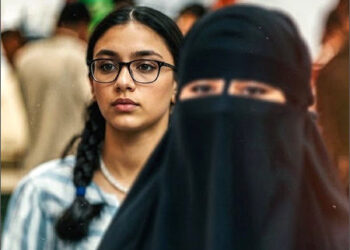
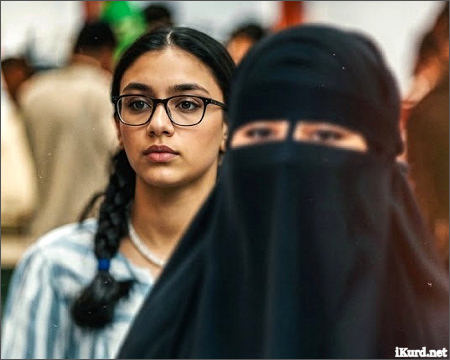
Which women? Certainly, those girls, sisters, mothers, and women who do not cover their heads, do not wear the hijab, and do not wear clothing that fully covers their bodies.
Listen carefully and keep count. Find out how many insults and degrading comments are directed at people every day by Salafists, ISIS and its imitators, and mullahs and fashionable preachers on pulpits, platforms, and social media. In addition to insulting women, they also deeply insult their fathers, brothers, and husbands.
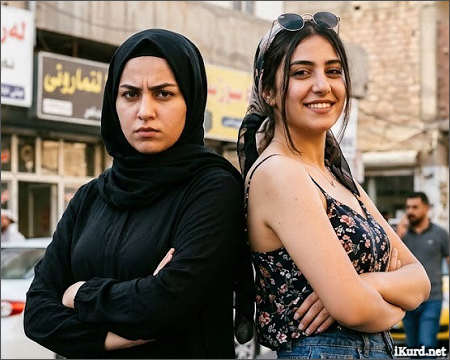
The purpose of these organized attacks is simple: to corner women who do not wear the hijab, along with the men close to them, and pressure them until they give in to efforts to make society wear the hijab. This kind of social and psychological pressure is no different from forcing people to act against their will.
The forced hijab imposed in Iran, Afghanistan, Saudi Arabia, and elsewhere, whether through morality police or under any other name, has far less influence than psychological pressure or forcing people through shame, social pressure, and making others feel hated and rejected.
Today, in this region, where laws and constitutional rules are in complete disarray and there is no real authority, I do not know of any official or person in power who has as much influence or standing as an aging preacher of unknown credentials or a mullah who graduated only yesterday from some poorly regarded Islamic institute. These people have become the holders of absolute social power, and neither the law nor the authorities dare to stand in their way.

Go ahead and take four teachers, four doctors, four engineers, and four students today, and bring them before a court over a comment or criticism of religion or a religious figure.
The media would pay little attention, and the public would barely notice. But let a young man dare to stand up to Mazhar, Halo, Karwan, or others like them, and you will see how they can turn his life into a living hell.
Today, in this country, people who carry prayer beads, wear turbans, grow beards, wear headscarves, and don niqabs can impose their own religious laws, while those who hold the scales of justice cannot enforce their own civil laws.
Who among you can post a comment criticizing a mullah, a religious figure, a Salafist, or even a filthy ISIS member, or raise a logical objection or question about a religious law or a rule of Sharia, without them dragging your wife, sister, or mother into it to silence you? But go ahead and freely shame women and girls who do not wear the hijab by attacking their clothes, bodies, and hair. Quite a few people will praise you and cheer you on, shouting, “Well done!” and “Bravo!”
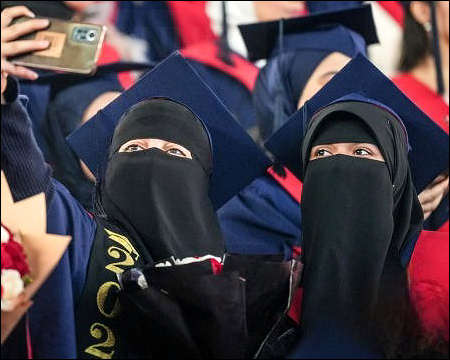
Every day, we hear from women we know who do not wear the hijab about the questions and pressure they face in their neighborhoods, at the market, and at work. People ask them why they do not cover themselves from head to toe. As a result of this kind of psychological coercion, dozens of women give in to these demands every day.
Some women have started wearing the full covering simply to improve their chances of getting married because society has confused morality with clothing. We are close to redefining a good woman as someone who wears the full covering and a good young man as someone who has a beard and never misses his prayers.
Regarding the incident involving Omar Sheikh Mous and the female journalist who wears the full covering and headscarf, I disagreed with Mr. Omar’s approach. However, we should not forget the other side of the picture.
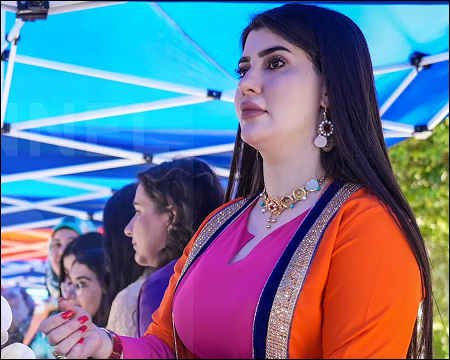
The respected woman, who invokes freedom of dress to object to Mr. Omar’s criticism, should ask herself: Who will stop the insults, abusive language, name-calling, and public shaming that take place every day on the pulpits, platforms, and social media pages run by mullahs, preachers, members of the Muslim Brotherhood, Salafists, and others?
If wearing the full covering and headscarf is a matter of personal freedom, and no one should insult or harass a woman for wearing them, shouldn’t the same principle apply in the opposite case? My challenge to the female journalist is to prepare an investigative report covering all the issues raised in this article.
Let her find out who, in today’s chaotic and lawless society, actually faces physical oppression, psychological abuse, and the judgmental scrutiny of society: you, the woman who wears the full covering and headscarf, or those who do not wear the full covering and have not placed a “golden crown!!” on their heads?
Even today, the majority of women in Kurdistan do not wear the full covering or cover their heads. Yet, under the protection of turbans, beards, robes, and imported headscarves, the female journalist’s position still carries more weight than Omar Sheikh Mous’s.
This article was originally published in the Kurdish language in Awene Newspaper on August 21, 2026.
The opinions are those of the writer and do not necessarily represent the views of iKurd.net or its editors.
Copyright © 2026 iKurd.net. All rights reserved.
Related posts:
 Ethics Hammer and the Fall of Sacred Illusions
 Political Islam in Kurdistan and Its Impact on Human Rights, Freedom
 The changing faces of Kurdish women: How fillers redefined beauty in Kurdistan
 Iraq: Revenge and Corruption
 Niqab makes a comeback in Syrian universities and beyond
 Business with ISIS – Updated
 The Resurrection (Ba’ath) Party – Before the Iran-Iraq War
 Iranian student strips down to underwear in anti-Hijab protest
 Syrian Kurdish Women Fighters: A Beacon of Women’s Empowerment
 The Truth About The Saddam Hussein Affair