

Dlêr Mohammed Nuri | Exclusive to iKurd.net
Translated by iKurd.net from Kurdish Awene
I believe it is one of the misfortunes of the Kurds that what fire and iron could not force upon them, freedom is now on the verge of forcing. Religion speaks most clearly under the shade of freedom; in no other shelter or protection can it raise its voice so strongly, spread itself, and impose its ideas and philosophy. At the same time, it leaves no room for opposing viewpoints to exist.
Today in Kurdistan, the followers of political Islam and the networks and connections of Turkey, Qatar, Iran, and Saudi Arabia have taken control of the entire space of freedom in Kurdistan for themselves.
Yet whenever they hear an opposing opinion, they quickly push it into a narrow corner and, under the pretext of insulting religious sanctities, shower it with hatred and turn the masses of society against it. Not only that, but they also attack the very freedom under whose protection they live, sleep, and launch their assaults.
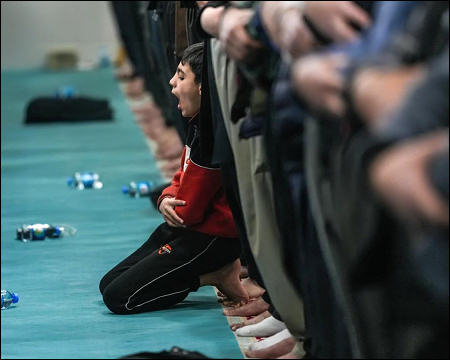
The philosophy and thought of freedom have never had a problem with religion itself, but the political interpretation of religion always tries to occupy the entire space of freedom alone and leaves no opportunity for its opponents to express a different view.
Since the Spring Uprising of 1991, different ideas and opinions have been engaged in competition, dialogue, and conflict, from the left and secular side to the right and religious side. Yet never before has the voice of religion and its representatives become as dominant and dictatorial as it is today over every Kurdish street, public mood, social life, language, art, literature, politics, and our entire world.
Today, political Islam has created such pressure and influence that a committed leftist begins speeches with “Bismillah,” a secularist seeks refuge in religious laws and rules, a Christian recites Al-Fatiha, a drinker fasts during Ramadan, and even a sex worker goes on Umrah.
All of this is done simply to secure a place in society and avoid criticism and attacks. Today, if an uneducated preacher copies an Arabic prayer and posts it on social media, it is very easy in this environment to like it, share it, or comment on it.
But if a writer with decades of experience, an experienced researcher, or an informed intellectual presents a scientific critique of religion, you would not even dare to like it, let alone write a positive comment. You may face dozens of insults, threats, accusations of unbelief, and intimidating private messages.
On top of that, warning messages get sent to people close to you. What kind of destructive inequality has befallen the Kurdish intellectual and knowledge community? What dark future is this process of making society uniform and burdening it with extreme religious ideology creating for future generations and society as a whole?
Look at this: all religious parties and movements in Kurdish society receive only 10–12% of the votes in elections, yet through their dominant voice they occupy 95% of the social space. Of course, this is supported by the power of declaring others unbelievers, controlling the public sphere, creating fear, and denying equal opportunities to different ideas, philosophies, and groups in discussions and critiques of religion.
That is why political Islam presents us with an entirely artificial society. A society that rushes to respond to the cries of religious activists while feeling ashamed to support the voice of a religious critic. Imagine if there were as many houses of philosophy, wisdom, and enlightenment, with the same budgets allocated to them, as there are places of worship.
Imagine if we had as many intellectuals, writers, philosophers, and fearless researchers as we have clerics and preachers. Imagine if the same atmosphere of freedom, respect, and protection provided to clerics and preachers were also available to everyone else.
What kind of society would we see? A society full of free-thinking individuals who are honest, straightforward, consistent in word and action, and capable of making independent decisions. Not a society where the overwhelming majority begin conversations with phrases like “Barak Allah,” “Jazak Allah,” and “Al-Hamd wa Al-Thanaa” without even knowing what they mean.
A society where someone can immediately lead the prayer line simply because they know Al-Fatiha by heart. A society filled with advertisements of charity for the poor, where people give with their right hand and take photos with their left.
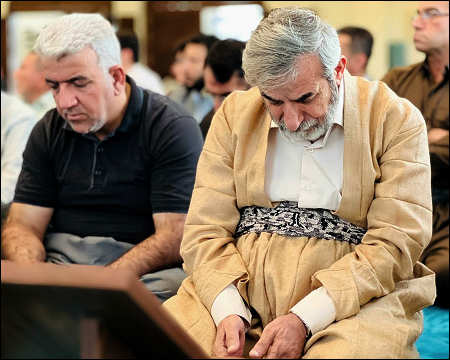
In short, political Islam has filled our world with lies, hypocrisy, and double standards; a religion that tolerates secretly harassing girls while engaging in deception and fraud, as long as you put on a saintly guise, dress like the companions of the Prophet, and dye your beard with henna or coal-black color.
Today, political Islam has even become a factor in helping parties and leaders succeed in elections, lowering the value of science, attacking civilization, and weakening the language. I challenge any leader of a leftist, socialist, secular, democratic, liberal, or social democratic party to openly present a serious critique of religion.
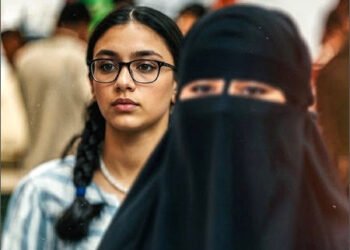
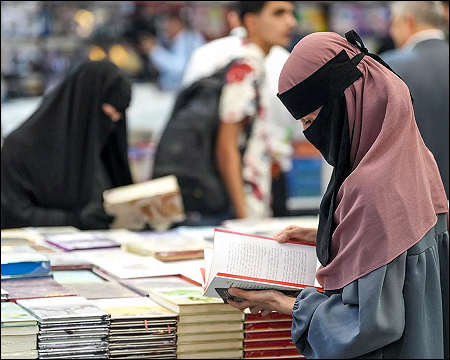
Political Islam, like rust and corrosion, is busy distorting the entire real picture of Kurdish identity and has replaced its diversity with white robes, hijabs, and black niqabs.
For years, what is called intellectual terrorism, carried out by political Islam, has distorted every corner of Kurdish life.
Why is it acceptable that a dance performance on the ice rink in the city of Sulaimani becomes the subject of every Friday sermon, that a female artist’s music video on Salim Street becomes the focus of dozens of preachers, that an artistic dance performance on a stage is discussed from pulpits the next day?
Why is it acceptable that the speech of an intellectual professor and famous novelist shakes all political clerics, that demonstrations supporting the “Women, Life, Freedom” movement in Eastern (Iranian) Kurdistan are portrayed as a threat to religion?
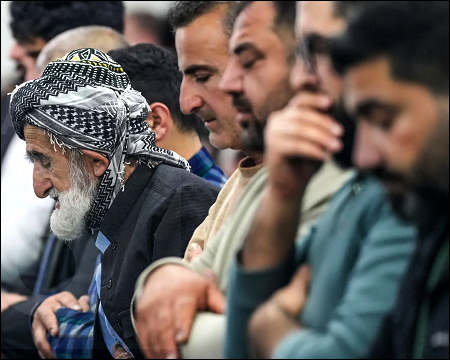
And why is it acceptable that there are dozens upon dozens of unjustified attacks by political Islam against every social, artistic, or political movement that differs from its views?
What is even worse and more dangerous than all of this is the attack on the Kurdish language, culture, and heritage. These are the only free weapons that have ensured our survival against fire, iron, genocide, and the Anfal campaigns. Yet, at the hands of Kurdish political Islam, a process resembling the Anfal of the Kurdish language and heritage itself has been underway.
Today, in addition to distorting the everyday language of the people, they are trying to turn every ordinary statement here and there into a case study used to intimidate people out of saying it again in the future.
What kind of logic is it that you do not even dare say that you dislike your own name because it is Abu Bakr and wish instead that your name were Shorish or Tekosher? By whose authority is it acceptable that saying the dishdasha is unattractive and does not belong to Kurdish culture becomes an act of disbelief, atheism, or a red line? This is nothing but the creation of an atmosphere of imaginary fear against expressing any free opinion or idea.
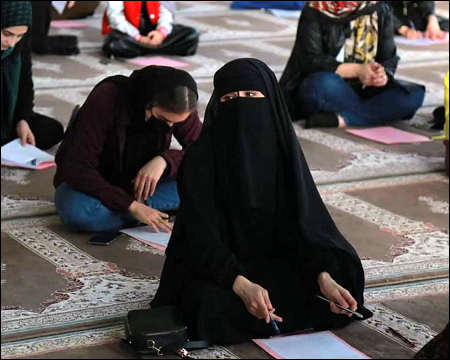
If this intimidating force is not stopped within limits, its sparks will reach everyone and color society with a mentality and attitude similar to that of ISIS. In the end, before anyone else, the flames of that fire will burn the Kurdish authorities themselves, who have allowed space for these extremist ideological groups to grow.
What matters most to me here is our Kurdish language and culture and how we can save them from these threats, because, as I said, language and culture are the only free tools of our survival. Today, the dual-party authority is so opportunistic that it needs every strange and unfamiliar vote it can get for electoral competition. Moreover, I doubt that a self-governing authority, no matter how concerned it claims to be, can both stand against the enemies surrounding it and also find the will to confront the fifth column of political Islam from within.
This article was originally published in the Kurdish language in Awene Newspaper on July 15, 2026.
The opinions are those of the writer and do not necessarily represent the views of iKurd.net or its editors.
Copyright © 2026 iKurd.net. All rights reserved.
The Stockholm Syndrome of Kurdish Islamists and Muslim Brotherhood members
Related posts:
 Ocalan’s Secular Lens on a “Democratic Islam”
 The Resurrection (Ba’ath) Party – Before the Iran-Iraq War
 Political Islam in Kurdistan and Its Impact on Human Rights, Freedom
 Business with ISIS – Updated
 Building Mosques in Kurdistan: Imitation, Ego, Self-Promotion, and Gain
 Ethics Hammer and the Fall of Sacred Illusions
 The Kurdish Mind – Critique of Practical Reason – Book review
 Kurds need leaders to serve Kurdish nationalism, not the Islamic faith
 Kurds Must Stay Clear of Gaza Conflict and Hamas’s Anti-Jew Aims
 The Sun Also Rises in Western Iran