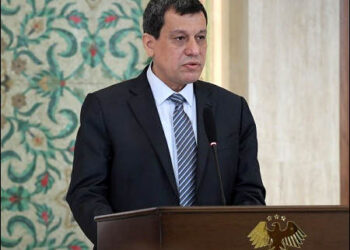



DAMASCUS,— Holding elections in Syria could take up to four years, according to the country’s de facto leader, Ahmed al-Sharaa, also known as Abu Mohammed al-Golani, who spoke in an interview broadcast on Sunday.
This marks the first time Sharaa has addressed a potential electoral schedule since Bashar al-Assad was ousted earlier this month.
In written excerpts of the interview with Saudi state-run broadcaster Al Arabiya, Sharaa explained that the drafting of a new constitution could take as long as three years, with a further year needed for noticeable changes. “It will take at least a year before Syrians experience significant changes,” Sharaa said.
Sharaa’s remarks come after the Islamist Hayat Tahrir al-Sham (HTS) group, which he leads, deposed Assad on December 8, 2024 ending a brutal 13-year civil war. His comments reflect ongoing efforts by Syria’s new leadership to reassure both domestic and international communities that the country is moving away from the militant Islamist roots of the group.
HTS, formerly known as the Nusra Front, has long been associated with extremist factions like al-Qaeda and the Islamic State. However, in recent years, it has sought to reposition itself as a more moderate force and act as the Muslim Brotherhood, which is also labeled as terrorist group in many countries.
The group has promised to protect Syria’s minority communities, who are worried about the possibility of Islamist rule under the new government. However, many experts are doubtful. They say that HTS is not engaging with other groups in Syria, like the Kurds, Druze, Alawites, or Shiites. Instead, they have filled all temporary government positions with their own Salafi Islamists.
Despite the end of Assad’s regime, questions remain about Syria’s future, particularly regarding its governance structure. Sharaa has suggested that HTS will dissolve itself as part of a broader national dialogue, signaling a shift from its militant origins.
“We are committed to creating a government that serves all Syrians, with the inclusion of minorities,” Sharaa told Al Arabiya. However, concerns remain over how the group’s leadership will balance its Islamist past with its promises of moderation and democracy.
Sharaa also addressed Syria’s ongoing relationship with Russia, a key ally during the Assad era, saying that the two countries share strategic interests. Russian Foreign Minister Sergey Lavrov recently stated that discussions about the status of Russia’s military bases in Syria would be part of future negotiations with the new leadership. Sharaa reiterated his government’s intention to maintain strong ties with Russia.
Meanwhile, Sharaa expressed hopes that the incoming administration of U.S. President-elect Donald Trump would ease sanctions on Syria. Senior U.S. diplomats who visited Damascus this month noted Sharaa’s pragmatic approach, and Washington has now dropped the $10 million bounty on his head.
As Syria moves forward with the complex task of rebuilding after years of conflict, the direction of its political future remains uncertain, particularly with the involvement of multiple foreign powers like Russia and Turkey, each with its own strategic interests in the region.
(With files from Reuters)
Copyright © 2024 iKurd.net. All rights reserved
Related posts:
 Stealing Syria
 The Resurrection (Ba’ath) Party – Before the Iran-Iraq War
 Syria: A ‘Caliphate’ by Any Other Name — Would Smell the Same
 The Islamic State of Syria? (Al Dawla al-Islamiya fi al-Sham)
 Syria: The Hijacking of the Arab Spring: From ISIS to Hayat Tahrir al-Sham
 Syria: The Truth Lies Buried beneath an Edifice of Lies
 Hostages to Jihad – Austin Tice, The Long Missing American in Syria – Part One
 Syria: Revisiting The Caesar Torture Victim Photographs
 What makes a good NATO ally? The Case of Turkey
 Business with ISIS – Updated