


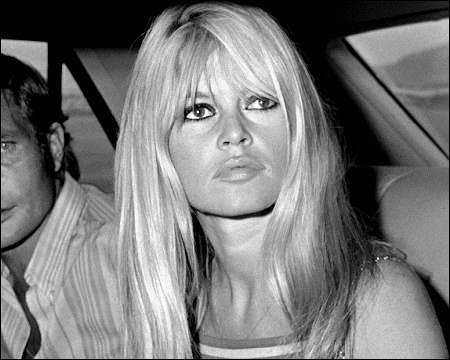
PARIS,— Brigitte Bardot, the French film star who rose to global fame in the 1950s and later became a high-profile animal rights activist, has died at the age of 91.
Bardot died Sunday at her home in southern France, the Brigitte Bardot Foundation for the protection of animals said. Bruno Jacquelin, a representative of the foundation, confirmed the death and said no cause had been released.
He added that funeral or memorial arrangements had not yet been announced. Bardot had been hospitalized in recent weeks.
Bardot was one of the most recognizable figures in postwar European cinema and a defining symbol of France’s cultural shift during the late 1950s and 1960s.
Her film career, which included more than two dozen movies, made her an international icon, while her later political and activist positions frequently placed her at the center of controversy.
She became an international star with the 1956 film And God Created Woman, directed by Roger Vadim, whom she had married several years earlier. The film portrayed Bardot as a young woman whose sexuality openly defied social conventions.
Scenes of her dancing barefoot and wearing revealing clothing caused public debate and censorship efforts in some countries. Despite the criticism, the film was a box office success and established her reputation worldwide.
At the height of her career, Bardot symbolized a France moving away from traditional bourgeois values. Her blond hair, distinctive voice, and public image made her one of the most photographed women of her time.
While her popularity was immense, Bardot later said she found fame overwhelming and described long struggles with depression.
In 1969, her cultural influence was formally recognized when her likeness was chosen as a model for Marianne, the national emblem of France. Her image appeared in town halls, on postage stamps, and on official government seals. French President Emmanuel Macron wrote on X that the country was mourning a legend.
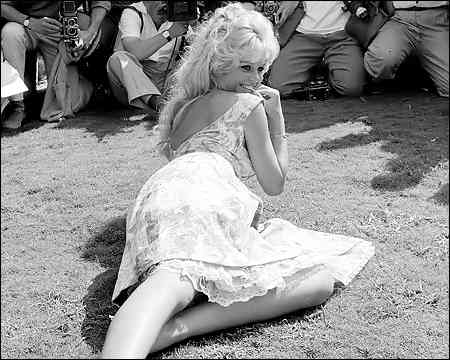
Bardot retired from acting in 1973 at the age of 39 and withdrew from public entertainment life. She later reemerged as a campaigner for animal welfare, founding the Brigitte Bardot Foundation in the mid 1980s. She sold personal possessions, including jewelry and film memorabilia, to finance the organization.
Her activism included opposition to seal hunting, criticism of animal testing, and campaigns against the consumption of certain meats.
She also spoke out strongly against religious slaughter practices, particularly those associated with Muslim traditions. In an interview with The Associated Press in 2007, she said her past fame had little meaning compared to the suffering of animals.
In 1985, Bardot received the Legion of Honor, France’s highest award, in recognition of her animal protection work. Over time, however, her public statements increasingly focused on immigration and religion, drawing legal action.
French courts convicted and fined her five times for inciting racial hatred, rulings linked to her remarks about Muslim slaughter practices and immigration.
Her political shift became more pronounced after her 1992 marriage to Bernard d’Ormale, a former adviser to National Front leader Jean-Marie Le Pen. Bardot later expressed admiration for Le Pen and supported Marine Le Pen’s presidential campaign in 2012.
Marine Le Pen, now leader of the National Rally party, described Bardot as an exceptional woman following her death.
In 2018, during the MeToo movement, Bardot criticized actors who spoke publicly about sexual harassment in the film industry. She said many exaggerated their experiences and stated she had not been a victim herself.
Brigitte Anne-Marie Bardot was born on Sept. 28, 1934, in Paris to a wealthy family. She trained as a ballet dancer and entered modeling as a teenager. At age 14, she appeared on the cover of Elle magazine. Bardot later described her childhood as strict and said her father imposed harsh discipline.
Her marriage to Vadim in 1952 marked the beginning of her film career. And God Created Woman influenced a generation of filmmakers, including Jean-Luc Godard and François Truffaut, and came to represent the sexual freedom associated with the 1960s.
Bardot later criticized her early acting performances, saying she felt inexperienced and undervalued. Her personal relationships were widely publicized, including her affair with actor Jean-Louis Trintignant.
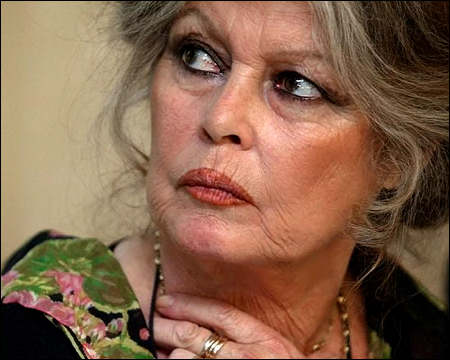
In 1959, she married actor Jacques Charrier and gave birth to her only child, Nicolas. Bardot later said intense media attention contributed to a suicide attempt after her son’s birth. She acknowledged that she was unprepared for motherhood and allowed Charrier to raise the child.
Her third marriage was to German businessman Gunther Sachs in 1966. The couple divorced three years later.
Her films included A Parisian, In Case of Misfortune, The Truth, Private Life, Contempt, Shalako, Women, The Bear And The Doll, Rum Boulevard, and Don Juan. Many of the productions emphasized her appearance rather than complex storytelling.
After leaving the film industry, Bardot lived quietly in St. Tropez. Following her death, local authorities called for respect for the privacy of her family and the places where she lived.
In later years, Bardot continued international animal rights campaigns, writing to world leaders and criticizing traditional practices involving animals. Environmental activist Paul Watson, who worked with her for decades, said disagreements over her political views did not alter her dedication to animal causes.
Bardot once told the AP that she identified with animals pursued by hunters because of her own experience with relentless media attention. Her life combined global fame, cultural influence, and lasting controversy.
(With files from AP)
Copyright © 2025 iKurd.net. All rights reserved.
Related posts:
 The Resurrection (Ba’ath) Party – Before the Iran-Iraq War
 A no-fly zone and safe enclave for the Kurds and other ethnicities in northern Syria
 Syria: Revisiting The Caesar Torture Victim Photographs
 A no-fly zone and safe enclave for the Kurds and other ethnicities in northern Syria
 France’s Marine Le Pen barred from running for president in 2027
 Macron downplays wife pushing him in the face during Vietnam trip
 French cinema icon Alain Delon dies at 88
 A Film Review of The President’s Cake (Le Gâteau du President)
 Marine Le Pen slams Macron over abandoning Syria’s Kurds
 Animal activists protest stray dog killings in Iraqi Kurdistan