


Shakhawan Shorash | Exclusive to iKurd.net
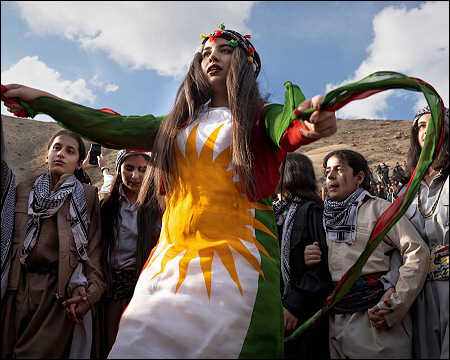
Within Iran’s political geography live numerous ethnic, religious, and national communities that are not Persian and that, for centuries, have been governed by centralized and often repressive authorities. Kurds, Lurs, Baloch, Azeris, Arabs, Ilamis, Bakhtiari, and several other groups have experienced varying degrees of political subordination.
Since the medieval era, successive Iranian empires, frequently ruling under the banner of Shi’a Islam, consolidated control over these peoples and territories, incorporating them into imperial structures and subjecting them to centralized rule.
Like many empires throughout history, these states were built on force, conquest, and expansion, extending their authority through coercive means. In conditions shaped by political and military imbalance, many non-Persian communities were compelled to submit to central power.
After the establishment of Reza Shah’s monarchy, centralization and repression persisted. His government moved decisively against regional autonomy movements, including the Republic of Kurdistan and Azerbaijan, and executed Kurdish leaders and many political activists. This pattern of suppression continued, with even limited dissent often met by severe punishment.

Mohammad Reza Shah, pursuing an ambitious nationalist vision under the Pahlavi name, sought to strengthen a highly centralized state and promote Persian language and culture as dominant national symbols.
His policies were shaped by an assertive form of state nationalism that aimed to consolidate
territorial unity and cultural homogeneity at the expense of Iran’s ethnic and linguistic diversity.
When the Islamic regime came to power in 1979, centralization and ideological control continued in a new form. Alongside its revolutionary and religious agenda, the state maintained tight restrictions on political pluralism and limited recognition of ethnic and national rights. Under the banner of the Islamic Revolution and the ideology of Ayatollah Khomeini, the government curtailed many civil liberties, imposed Islamic law within the legal system, and suppressed dissent.
Over the decades, political opposition has been met with imprisonment, executions, and other forms of coercion. Revolutionary Courts have handed down thousands of death sentences, particularly in cases involving political activism and security related charges.
Beyond its domestic policies, the Islamic Republic has sought to extend its ideological and strategic influence abroad. It has supported allied political and armed groups in several countries and played an active role in regional conflicts, including in Iraq, Syria, Lebanon, and Palestine.

The Shah’s regime and the Islamic Republic both suppressed non-Persian peoples under ideological frameworks that emphasized a centralized national identity rather than cultural pluralism.
Under the Pahlavi dynasty, Persian-centered nationalism and state policies sought to strengthen territorial unity by promoting a dominant Persian culture and language at the expense of ethnic diversity, contributing to systemic marginalization of groups such as Kurds, Azeris, Arabs, Baluch, and others.
Scholars describe how the modern Iranian state’s formation involved defining a uniform national identity that denied ethnic difference and limited political recognition of minority communities. Neither Iran’s imperial dynasties nor the Islamic Republic derived their authority from broad popular consent across all national and ethnic communities.
Their political systems enforced central control through assimilationist policies and coercive measures rather than democratic inclusion, denying many communities meaningful self-determination or effective participation in governance.

Following the outbreak of war between the United States and Israel on one side and the Islamic Republic on the other on 28 February 2026, and the reported killing of Khamenei along with several senior officials, the Iranian state would stand at a historic turning point. Such developments would mark the beginning of a profound and uncertain transition.
The fall of the Islamic Republic would carry far reaching consequences not only for the peoples of Iran but also for the broader Middle East and the international order. Its collapse could reshape regional power balances, security dynamics, and energy markets. From the perspective of those advocating freedom and political reform, such a transformation would represent an opportunity to move away from authoritarian governance toward a more open, pluralistic, and accountable political system.

However, if the son of Mohammad Reza Shah were to return to power, particularly if his approach emphasized strong centralization and rejected meaningful self-determination for diverse communities, the risk of continued repression would increase.
Policies justified in the name of preserving territorial integrity and uniform citizenship could once again marginalize non-Persian peoples and suppress demands for regional autonomy.
Such a trajectory would be unlikely to produce stability in a post Ayatollah Iran. Imposing another centralized and authoritarian model could deepen mistrust, fuel internal tensions, and potentially lead to unrest or violent conflict. Sustainable peace and cohesion would require inclusive governance rather than a restoration of rigid hierarchy.
The peoples of Iran need accountable institutions, political pluralism, and democratic safeguards. Replacing one form of authoritarian rule with another, even under monarchical symbolism, would not address the structural challenges that have long shaped the country’s political crisis.
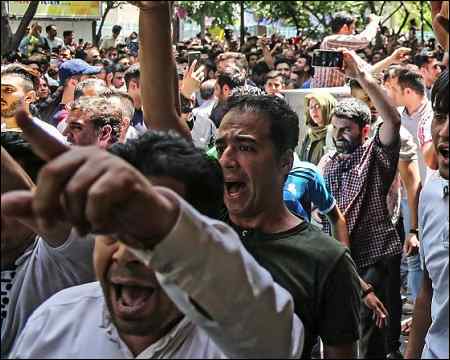
All peoples who have lived under Tehran’s rule should have the opportunity to participate freely in determining their political future. Invoking territorial unity or equal citizenship cannot substitute for meaningful recognition of cultural, political, and national rights, especially for communities with distinct histories, identities, and geographic homelands.
A durable and peaceful settlement requires consent, inclusion, and constitutional guarantees. Attempts to preserve unity solely through central authority, while dismissing demands for autonomy or self-governance, are unlikely to produce long term stability. On the contrary, denying collective rights and political agency risks deepening alienation and perpetuating cycles of repression and resistance.

With the fall of the Islamic regime, it would be important to reassess internal administrative boundaries that were shaped by central authorities, particularly where such divisions were designed to consolidate control or influence demographic balances.
A transparent and democratic review of regional governance structures could help address long standing grievances and promote fair representation. In areas such as parts of Eastern Kurdistan that are currently administered under the designation of West Azerbaijan, the existing provincial boundaries are widely viewed as not reflecting the region’s historical, cultural, and demographic realities.
Any reconsideration of these arrangements, however, should take place through inclusive dialogue, legal procedures, and democratic mechanisms to ensure that changes are peaceful, legitimate, and broadly supported by the populations concerned.

The peoples of Iran should have the opportunity to participate meaningfully in governing their own affairs, whether through autonomous arrangements, federal structures, or other forms of decentralized authority developed through democratic consensus. On a democratic foundation, regions should be able to shape their local political institutions while ensuring that the cultural, linguistic, and political rights of minorities are fully protected within their territories.
A flexible system that combines elements of autonomy and federalism, adapted to the specific historical and social characteristics of each region, could provide a balanced framework. Such a model would require strong constitutional safeguards, protection of human rights, and effective representation of all communities within central institutions to ensure shared governance.
State borders that were historically shaped by force or power politics should not be treated as beyond discussion. Questions of territorial organization and political status should be approached through principles of justice, democratic legitimacy, and the rights of peoples under international law. Where communities clearly express their will and meet recognized criteria for self-determination, peaceful and lawful constitutional mechanisms should exist to address those aspirations.
Major powers, while advancing their economic and political agendas and competing with one another, tend to act primarily in accordance with their strategic interests and the logic of realpolitik. Within this framework, national security priorities often outweigh concerns about the rights of marginalized or subjugated peoples, particularly when those rights do not align with broader geopolitical objectives.
The United States has focused on curbing or dismantling Iran’s nuclear program, limiting its regional military influence, and protecting strategic energy and security interests. Israel, for its part, views Iran’s nuclear ambitions, military posture, and regional network of allied armed groups as direct threats to its national security.

Iranian leaders have repeatedly issued hostile rhetoric toward Israel and have supported organizations such as Hamas, Hezbollah, and the Houthis, which Israel considers adversaries. From Israel’s perspective, these factors constitute tangible security threats that justify efforts to weaken or contain the Islamic Republic. In such a strategic environment, geopolitical calculations tend to dominate decision making, often leaving broader questions of democratic reform and minority rights in a secondary position.
The actor that will have the greatest influence on the change is the United States. However, it is difficult to understand Trump’s hidden intentions and his next steps, since we do not know what decisions are being made behind closed doors.
Nevertheless, if we pay attention to his statements—as seen in Syria—the direction of the Trump administration regarding the resolution of international conflicts reflects an approach influenced by Turkey. It is an understanding that distances itself from the ideas of autonomy and federalism. It insists on territorial unity and emphasizes citizenship and civil rights, while opposing the recognition of national rights and the division of countries along ethnic lines.
In short, it does not favor federal or autonomous solutions. Only in cases where an oppressed nation proves itself as a nation, becomes strong and united, and firmly insists on its rights might some flexibility occur.
The Trump administration practices a form of realism in which American nationalist interests constitute the basis of its actions, while human rights and moral considerations are not a priority. In short, the Trump administration has no problem with the existence of a dictatorial authority that violates the rights of peoples, as long as it remains stable and acts in accordance with the wishes and interests of the United States.
For example, what was done in Venezuela could easily be repeated by the United States. The direction the United States is taking does not align with the aspirations of the oppressed peoples of Iran and may even run counter to them, making their struggle for freedom much more difficult.
If we look at Syria, it becomes clear that the struggle for freedom and liberation of the peoples in Iran faces a very difficult test. Therefore, determining what kind of solution or political system would be suitable for Iran after the Islamic regime will not be easy—especially if, on the one hand, the United States stands against democratic principles and installs or imposes a dictator.

For the political parties of Eastern Kurdistan, unity and cohesion around a clear and coherent political strategy are essential. Such a strategy should safeguard the interests of the Kurdish people, firmly commit to the protection of human rights, and address decisive political questions in a coordinated manner with both domestic and international actors.
A unified front built on shared principles, internal discipline, and strategic clarity would strengthen Eastern Kurdistan’s political position. Cohesion enhances credibility, increases negotiating power, and signals political maturity. By demonstrating organizational capacity and collective resolve, Kurdish political forces would be better positioned to participate effectively in negotiations and to secure meaningful guarantees in any future political settlement.
Shakhawan Shorash, BA and Master of political science from Southern University of Denmark and University of Copenhagen. A freelance writer concerning human right, genocide, ethnic conflicts, democratization and similar subjects. Shorash is a long-time contributing senior writer for iKurd.net, See below.
The opinions are those of the writer and do not necessarily represent the views of iKurd.net or its editors.
Copyright © 2026 iKurd.net. All rights reserved
Related posts:
 A Root Cause Review of the Israeli-Hamas Conflict
 The Assassination of Abdurrahman Ghassemlou: No Friends but the Mullahs?
 Iran Regime Change Vs. Map Change
 The Sun Also Rises in Western Iran
 The Resurrection (Ba’ath) Party – Before the Iran-Iraq War
 Who Are the Persians? – Part IV
 The Suffocation of Iraq Kurdistan
 Iran, a Failed Country by Enemies Within
 Iran – Toxic Theocracy – Part I
 Who Are the Persians? – Part VI