



Ardishir Rashidi Kalhur | Exclusive to iKurd.net
On the eve of America’s 250th Independence Day celebration, decorating homes and gathering for festivities alone does not fully capture the significance of this historic milestone. The Fourth of July is more than a celebration—it is a reminder of the principles of liberty, self-government, and the sacrifices made to secure them.
The American quest for independence was driven by ordinary men and women who believed they should no longer be governed by a distant authority that they viewed as unresponsive to their rights and concerns.
Motivated by a vision of self-determination, the American colonists fought through the Revolutionary War, enduring tremendous hardship and personal sacrifice in pursuit of freedom from British rule under King George III.
The Declaration of Independence, adopted on July 4, 1776, outlined twenty-seven grievances against the British Crown. Those grievances were presented as evidence of what the colonists considered repeated violations of their rights and liberties.
Concluding that reconciliation was no longer possible, they declared the colonies to be free and independent states. Although the fighting continued until 1783, the Declaration marked the birth of the United States as an independent nation.
Two hundred fifty years later, the determination of those early Americans continues to inspire people around the world who seek greater political freedom and self-determination.
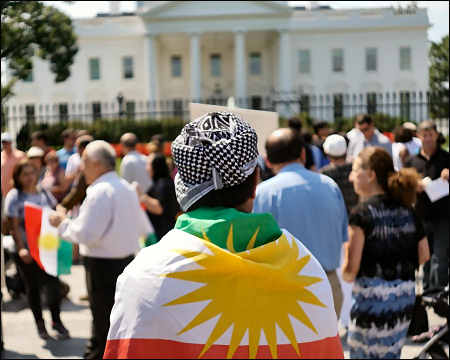
Among those who see parallels with America’s struggle are many Kurdish people, whose aspirations for greater autonomy or independence have shaped their modern history.
Over the past century, Kurds have experienced conflict, displacement, and political repression in different parts of the Middle East. Many Kurdish leaders and communities have looked to the United States as an important partner in promoting regional stability and protecting vulnerable populations.
Supporters of the Kurdish cause argue that the region continues to be influenced by competing regional powers, including Iran and Turkey, whose interests often conflict with Kurdish political aspirations. They also contend that these rivalries have broader implications for the strategic role of the United States in the Middle East.
As Americans commemorate 250 years of independence, the celebration should also serve as a reminder that freedom carries responsibilities. It is an opportunity to reflect on the nation’s founding ideals, the importance of defending democratic institutions, and the continuing struggle for liberty in many parts of the world.
President Donald Trump,
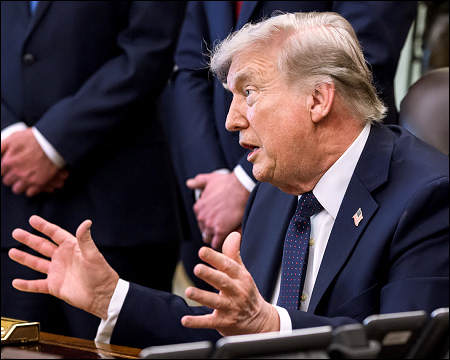
As President of the United States during this historic semi quincentennial year, you occupy a position of great influence. The office of the presidency carries responsibilities that extend beyond economic prosperity and national celebration. It also presents opportunities to shape America’s role in supporting allies and advancing the cause of freedom abroad.
Many advocates for the Kurdish people believe that Kurdistan represents a strategic and historically significant region whose people have consistently demonstrated resilience and partnership with the United States. They urge your administration to consider policies that strengthen those ties and support efforts toward lasting peace, security, and political stability.
Whether one agrees or disagrees with specific policy proposals, the enduring lesson of America’s founding is that the pursuit of liberty has inspired generations across the world. As the United States marks its 250th anniversary, may the principles of freedom, justice, and self-determination continue to guide its leadership at home and abroad.
Ardishir Rashidi-Kalhur, the President of Kurdish American Education Society, Los Angeles, U.S.
The opinions are those of the writer and do not necessarily represent the views of iKurd.net or its editors.
Copyright © 2026 iKurd.net. All rights reserved.
Related posts:
 Spiritual Revival of the Forgotten Traditions of NuRoj
 The Resurrection (Ba’ath) Party – Before the Iran-Iraq War
 What makes a good NATO ally? The Case of Turkey
 Business with ISIS – Updated
 Saddam Hussein was a Friend to the West
 Iraq’s Internal Enemies: Shi’a rivalries and the fallout from the US-led invasion
 American Democracy is on Trial!
 The Truth About The Saddam Hussein Affair
 Iraqi Kurdistan – “Sold Out!” – Part II
 A Christmas Dialogue with President-Elect Donald Trump