

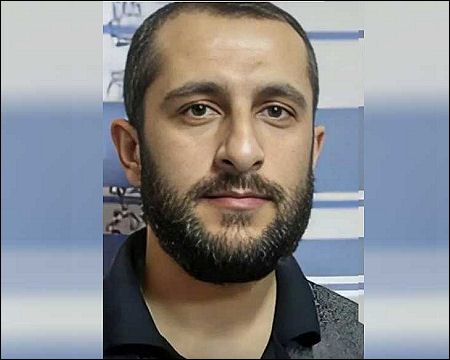
URMIYE, Iranian Kurdistan,— Iranian authorities executed Kurdish political prisoner Kamran Sheikheh on Thursday, the last defendant in a case related to the 2008 killing of a Muslim cleric, according to rights groups.
Sheikheh, arrested alongside six others more than 14 years ago, was executed in Urmia prison in Iranian Kurdistan (Rojhelat), northwest Iran, as reported by the Norway-based Iran Human Rights (IHR) and the US-based Human Rights Activists News Agency (HRANA).
The other six co-defendants, all from Iran’s Kurdish minority, were executed separately since November 2023. Amnesty International condemned the death sentences, calling the trials grossly unfair and marred by allegations of torture and mistreatment. The seven men were convicted of “corruption on earth,” a capital crime in Iran.
IHR described Sheikheh as a political prisoner, stating that his death sentence was based on confessions obtained through torture during a deeply flawed trial process. Mahmood Amiry-Moghaddam, IHR director, declared the execution unlawful under both international and Iranian law, equating it to an extrajudicial killing.
HRANA detailed that the case stemmed from the killing of a mosque imam in Mahabad in September 2008. Sheikheh and his co-defendants were detained in early 2010 and subsequently sentenced to death in 2018.
Activists argue that Iran’s death penalty disproportionately affects Kurdish and Baluch minorities, who primarily follow Sunni Islam in contrast to the Shia-majority nation.
Recently, the Revolutionary Court of Tehran sentenced Pakhshan Azizi, a Kurdish woman held in Evin prison, to death on charges of rebellion. Earlier, another Kurdish woman, Sharifeh Mohammadi, received a death sentence for alleged links to an outlawed Kurdish group.
IHR highlighted a surge in executions in Iran following a temporary lull that coincided with snap presidential elections. At least 20 people have been executed since Saturday, indicating a troubling trend.
Since its establishment in 1979, the Islamic regime has enforced discriminatory practices against Kurds in Iranian Kurdistan across social, political, and economic spheres. Kurds in Iran face significant barriers to their religious, economic, and cultural rights. Restrictions include banning parents from registering babies with certain Kurdish names and targeting religious minorities that are predominantly Kurdish to isolate them.
Kurds also encounter discrimination in employment, housing, and political participation, leading to entrenched poverty and further marginalization.
There are an estimated 12 million Kurds living in Iranian Kurdistan, continually facing systemic discrimination and human rights abuses.
(With files from AFP, Agencies)
Copyright © 2024 iKurd.net. All rights reserved
Related posts:
 The Assassination of Abdurrahman Ghassemlou: No Friends but the Mullahs?
 The Resurrection (Ba’ath) Party – Before the Iran-Iraq War
 Iran – Toxic Theocracy – Part I
 The Mustashar and the Jash – A View from the Position of ‘Iraqi National Unity’ on the ‘Descendants of Treason’
 The Suffocation of Iraq Kurdistan
 The Sun Also Rises in Western Iran
 Anfal – The Black Stain on Iraqi History Spreads
 What makes a good NATO ally? The Case of Turkey
 Iraq in the Shadow of Khomeinism – Part I: Baghdad And Erbil Under Threat
 Iran, a Failed Country by Enemies Within