

PENJWEN,— Kurdish PJAK rebel fighters in the mountains of Iraqi Kurdistan near the border with Iranian Kurdistan say they are prepared to fight Iran’s Islamic republic, though they prefer to see a popular uprising inside Iran before taking action.
The comments follow statements from US President Donald Trump about a potential Kurdish attack. Trump had initially said he would be “all for” such an offensive but on Saturday clarified that the United States does not want Kurdish forces entering the conflict.
“We’re not looking to the Kurds going in,” he said, adding Washington does not want to make the war more complex.
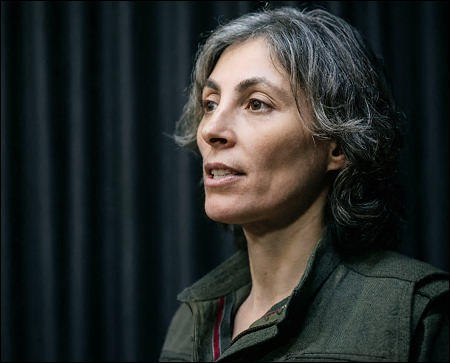
Senior commander Roken Nerada of the Party of Free Life of Kurdistan (Partiya Jiyana Azad a Kurdistane), or PJAK, spoke to AFP from a mountain position. She said the Kurdish fighters are ready to resist if their communities are attacked.
“If there is an attack on the Kurdish people, then with every means we are ready to resist as we always have,” Nerada said.
Nerada, 39, said the fighters could pursue their goals without help from the United States or other countries. She joined PJAK 17 years ago and has been active since then.
PJAK, the most active group in Iranian Kurdistan, like other Iranian Kurdish rebel groups, operates bases in the mountains of Iraqi Kurdistan while also maintaining hideouts inside Kurdish-majority areas in Iran.
Iran has designated Kurdish rebel groups as “terrorist” organizations. Several have fought Iranian security forces in Kurdish regions near the border.
In recent years, the rebels have largely limited armed operations, partly due to political pressure from authorities in Iraqi Kurdistan. This has raised questions about their ability to lead a major offensive against Iran.
AFP reporters met about 30 PJAK fighters in a mountain bunker decorated with photos of fallen comrades. A television showed war coverage, including smoke rising over Tehran and Beirut.
The current conflict in the Middle East began late last month after US and Israeli strikes on Iran. Tehran has since repeatedly targeted Kurdish positions inside Iraq, accusing the militants of serving Western or Israeli interests.
PJAK fighters say they are prepared to fight if needed. One fighter, Shwan, cited the Iranian crackdown on protests 50 days ago, which left thousands dead, as a reason for readiness.
Just before the war, PJAK joined a coalition of Kurdish parties seeking to overthrow the Islamic republic and secure Kurdish self-determination.
Iran has warned Kurdish militants not to cross the border from Iraqi Kurdistan and threatened to strike “all facilities” in the region if they do.
Another PJAK commander, Amir Karimi, said discussions had taken place with American representatives in the area.
“The Americans are already in the area, and we have had a dialogue,” Karimi said, calling it a political exchange. She said a joint ground offensive is not planned.
“A ground attack is not on the table at this stage,” she said, adding that Iranian forces have strengthened border positions.
Karimi stressed that change in Iran must be driven by its population. “The most important thing is that the population itself becomes a driving force. There must be a popular uprising,” she said.
She added that outside support is important, but Kurdish groups are not waiting for approval from Tehran or Washington. Karimi said the rebels want guarantees for Iran’s democratic future.
“Who can say tomorrow they will not support another dictator and bring him to power,” she said, referring to the United States.
Commander Nerada said the goal remains political transformation. “What is important is to change this current darkness into a democratic Iran,” she said.
In February 2026, Mazloum Haftan, a senior commander of the PJAK, said he would continue pushing for regime change in Tehran, regardless of whether the United States launches military strikes against Iran.
Since 2004 the PJAK took up arms to push for the establishment of semi-autonomous Kurdish regions or federal Kurdish states within Iran. The group reportedly has more than 3,000 fighters, with women making up roughly half of its ranks.
The organization is a member of the Kurdistan Communities Union, or Koma Civaken Kurdistan (KCK), a political umbrella organization that unites Kurdish groups under an elected Executive Council. The KCK also includes the Kurdistan Workers’ Party, or PKK.
Since its formation in 1979, Iran’s Islamic regime has imposed policies that Kurds say discriminate against them in social, political, and economic spheres.
Kurdish communities in Iran face restrictions on religious, cultural, and economic rights. Authorities reportedly prevent parents from registering certain Kurdish names for their children, while religious minorities that are wholly or partly Kurdish face measures designed to isolate them.
Kurds also experience discrimination in access to employment, housing, and political participation. These restrictions have contributed to widespread poverty and further social marginalization.
Estimates suggest that more than 12 million Kurds live in Iranian Kurdistan.
(With files from AFP | Agencies)
Copyright © 2026 iKurd.net. All rights reserved.
Related posts:
 The Assassination of Abdurrahman Ghassemlou: No Friends but the Mullahs?
 Kurds seek self-rule regardless of U.S. action on Iran: PJAK
 The Suffocation of Iraq Kurdistan
 Business with ISIS – Updated
 The Mustashar and the Jash – A View from the Position of ‘Iraqi National Unity’ on the ‘Descendants of Treason’
 The Resurrection (Ba’ath) Party – Before the Iran-Iraq War
 Saddam Hussein was a Friend to the West
 The Sun Also Rises in Western Iran
 Iran, a Failed Country by Enemies Within
 The Suffering of Halabja