

Kurdish peshmerga must fall under state control, a senior Iraqi politician says
BAGHDAD,— A senior Iraqi politician is calling on the federal government to bring Kurdish Peshmerga militia forces and their weapons under full state authority, separate them from the two dominant Kurdish political parties in Iraq’s Kurdistan Region, and place them under the command of the Iraqi Armed Forces’ General Commander.
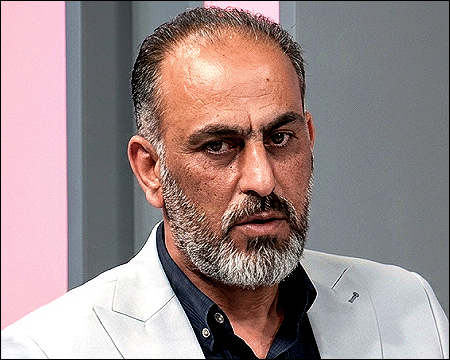
Hassan Fadam, a senior leader within the Al-Hikma National Movement, also known as the National Wisdom Movement, made the remarks in an interview on Thursday with the Iraqi Ahd television channel. The movement is led by Ammar al-Hakim.
Fadam said the current structure of Kurdish forces is divided along party lines. He noted that two separate Peshmerga forces exist in the Kurdistan Region, each reporting to one of the two dominant parties. He said in some cases, Peshmerga units have used tanks against civilians.
“Any weapon, whether tribal or Peshmerga, that is outside state control, this decision must be enforced,” Fadam told the channel.
“The government must not negotiate. This decision must apply to everyone. It cannot be allowed that someone fights against America or Israel on their own while others outside the law are not held accountable. Weapons outside the state’s authority must not be permitted. This is not acceptable.”
Fadam also pointed to what he described as violations and major deviations within Kurdish security forces, including the use of tanks against a single person.
He noted that these forces are still called Peshmerga, even though the constitution grants the Kurdistan Region the right to form Regional Guards, not party-controlled armed forces.
He referred to Law No. 91, issued during the time of former U.S. administrator Paul Bremer, which required all armed groups operating before 2003 to be merged under the state.
Fadam said that process included groups such as the Badr Organization, which were integrated into state forces. He said the Peshmerga were also integrated and given military ranks based on that decision.
He added that even Iraqi opposition parties during the era of the former regime supported this process, but that after being integrated, the Peshmerga later returned to being affiliated with their respective parties.
Responding to statements made by Massoud Barzani regarding Peshmerga weapons, Fadam said the Kurdistan Democratic Party was among those that agreed to integration.
“If their weapons are not steel, fine, let’s say they are not steel,” he said. “Then why did you agree in 2003 and 2005 to integrate the Peshmerga into the security forces? Based on that agreement, they have been receiving rights and salaries for 23 years.”
Fadam said currently in the Kurdistan Region there are two Peshmerga forces, not one, and each is linked to a political party. He said these forces are still managed through the parties, not through the state.
He called on Kurdish parties to act as two respected political parties focused on political work, and said Regional Guards should be formed in accordance with the constitution, not under party authority.
He said those guards must operate under the command of both the Kurdistan Regional Government and the federal government, specifically for Peshmerga units linked to the Iraqi Ministry of Defense and funded by the federal budget, not from the region’s 12 percent share.
“The federal government must address the issue of separating the Peshmerga in Kurdistan from these two Kurdish parties and link them directly to the General Commander of the Armed Forces,” Fadam said.
“Regional Guards should be formed to protect the Kurdish people, who are part of the Iraqi people, and their protection is the responsibility of Iraq.”
The Peshmerga forces in Iraqi Kurdistan are not unified. They function as separate paramilitary forces taking orders directly from the two ruling parties: the Kurdistan Democratic Party, led by Massoud Barzani, and the Patriotic Union of Kurdistan, led by the Talabani family.
Copyright © 2026 iKurd.net. All rights reserved.
Related posts:
 The Resurrection (Ba’ath) Party – Before the Iran-Iraq War
 The Mustashar and the Jash – A View from the Position of ‘Iraqi National Unity’ on the ‘Descendants of Treason’
 Business with ISIS – Updated
 Iraq: A State of Surveillance – Databases, Tracking And Corruption
 Iraqi Kurdistan – “Sold Out!” – Part II
 The Suffocation of Iraq Kurdistan
 Developments in Syria Can Give Opportunity to ISIS to Bounce Back: Peshmerga
 The Suffering of Halabja
 The Double Cross of Iraq And The Discordant Death of WMD Inspector, Dr David Kelly – The 17th Anniversary
 Iraq – The Cynical Swindle