

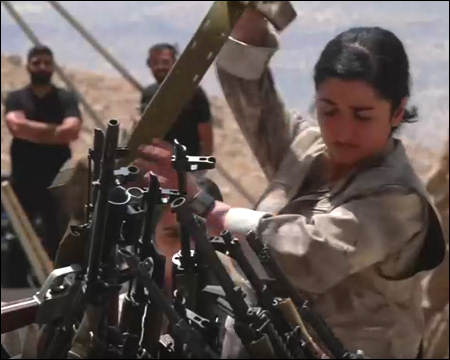
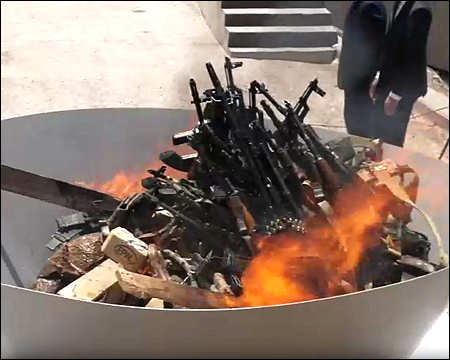
SULAIMANI, Iraqi Kurdistan,— In a formal ceremony held outside the Casene cave near the town of Dukan near Sulaimani city in Iraqi Kurdistan, 30 members of the Kurdistan Workers’ Party (PKK) publicly destroyed and burn their weapons on Friday, signaling a major step away from decades of armed struggle against Turkey.
The event, described by officials as a symbolic yet practical milestone, marks a turning point in efforts to transition the PKK from a guerrilla force into a political organization.
The group announced its dissolution in May and pledged to pursue democratic avenues for addressing Kurdish concerns.
The fighters—both men and women—were dressed in khaki fatigues as they laid down rifles, a machine gun, and a rocket-propelled grenade into a pit that was later set on fire.
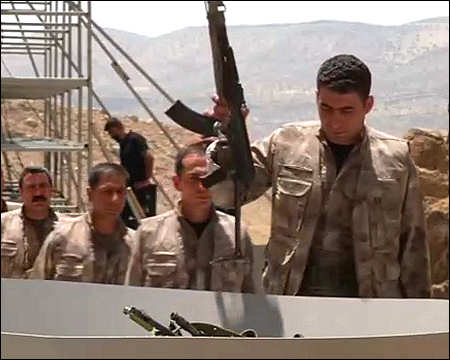
Flames rose as around 300 people, including Kurdish leaders, intelligence officials, and party representatives, looked on. Some applauded; others wept.
“We voluntarily destroy our arms to demonstrate our goodwill and commitment to peace,” a statement from the PKK was read aloud in both Kurdish and Turkish.
Turkish authorities welcomed the act. “The laying down of arms in Sulaimani is a significant and irreversible step toward peace,” a senior Turkish official said.
The move is part of a broader disarmament and reconciliation process that has been unfolding since late last year.
The disarmament ceremony was the result of months of indirect talks involving the jailed PKK founder Abdullah Ocalan, who has been serving a life sentence in Turkey since 1999.
According to sources familiar with the discussions, Turkey’s pro-Kurdish DEM party played a key role in facilitating the process.
Security was tight around the site, with helicopters circling overhead and Kurdish security forces stationed throughout the surrounding mountains. Local officials said two drones were shot down the previous night—one near a peshmerga base in Sulaimani and the other near Kirkuk. No injuries were reported, and no group has claimed responsibility.
The ceremony took place at Casene cave—also known as Jasana—a location with historical significance to the Kurdish movement, previously used as a base for Kurdish publishing activities. Vehicles carrying party officials and observers began arriving at the site early Friday morning, according to the Firat news agency.
Among the attendees were representatives from the de facto Kurdistan Regional Government, including envoys of the Kurdistan Democratic Party (KDP), and members of the Patriotic Union of Kurdistan (PUK).
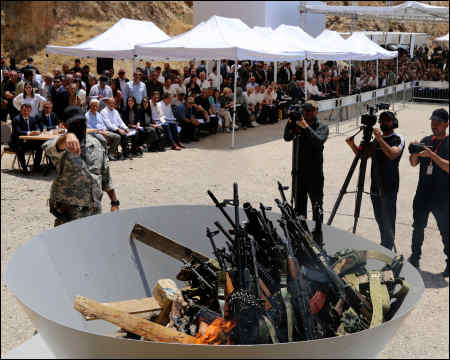
Delegates from the Turkish and Iraqi intelligence agencies and lawmakers from the DEM party were also present.
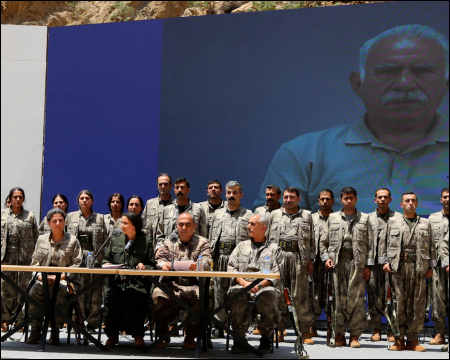
PKK commander Bese Hozat read the disarmament declaration in Turkish, followed by another commander delivering the same message in Kurdish. Both emphasized the group’s intent to end armed conflict and instead work through democratic institutions.
The move follows a February 27 appeal by Ocalan, who urged the PKK to disarm and join political life.
Earlier this week, in a rare video message, Ocalan reiterated his call for peace and urged Turkish lawmakers to establish an oversight body to monitor the transition.
“I believe in the power of politics, not weapons,” Ocalan said. “This disarmament must be implemented swiftly and effectively.”
Turkish President Recep Tayyip Erdogan acknowledged the disarmament as a potentially transformative moment. “The process will gain momentum as this decision is carried out on the ground,” Erdogan said earlier this week.
The PKK launched its armed campaign in 1984, seeking greater autonomy for Kurds in Turkey Kurdistan (Bakur Kurdistan), the Kurdish region in southeastern Turkey. The conflict spanned more than four decades, leaving deep scars across the region and fueling tensions between Ankara and Kurdish communities.
Observers believe Friday’s disarmament marks a significant, though cautious, step toward long-term stability. Further disarmament ceremonies are expected, but no specific timetable has been announced.
With this initial group of 30 fighters surrendering their arms, discussions now turn to what comes next: the legal and social reintegration of former militants, reconciliation efforts in conflict-hit regions, and the broader political recognition of Kurdish rights within the Turkish state.
(With files from Reuters | AFP)
Copyright © 2025 iKurd.net. All rights reserved
Related posts:
 Business with ISIS – Updated
 Turkey: The Psychological War Against the Kurds Through the PKK – Part I
 Debunked PKK Leader Ocalan Will Never Be Set Free
 What makes a good NATO ally? The Case of Turkey
 The Resurrection (Ba’ath) Party – Before the Iran-Iraq War
 Turkey: Nato’s Islamic State Member
 Turkey’s Parliamentary Approval to Dissolve the PKK
 Ocalan Festooned the Ballroom: Turkey Celebrates the Death of the Kurdish Goal
 The PKK’s Personality Cult: Changing Influences – Part II
 The Mustashar and the Jash – A View from the Position of ‘Iraqi National Unity’ on the ‘Descendants of Treason’