

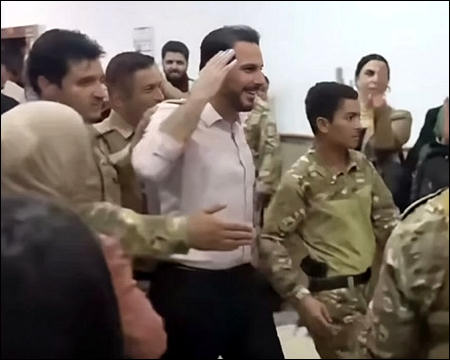
Jailed Shaswar Abdulwahid barred from giving TV interview
SULAIMANI, Iraqi Kurdistan — Security forces affiliated with the Patriotic Union of Kurdistan, or PUK, blocked a planned television interview with Shaswar Abdulwahid, a jailed Kurdish opposition leader and owner of Sulaimani-based NRT news channel, the broadcaster reported Sunday.
The interview, which was conducted over a phone call and set to air at 7:00 p.m., was halted by interior ministry personnel connected to the PUK.
NRT said the forces arrived at the station under orders from “the authorities and the Ministry of Culture,” and stopped the program “Tawtwe,” which features discussions in Kurdish with Abdulwahid.
Abdulwahid, head of the New Generation Movement (NGM) (Cûłanewey Newey Nwê), the main opposition in the Iraqi Kurdistan Region, was arrested in mid-August by Sulaimani security forces.
His detention followed a judicial ruling issued on August 3 that sentenced him in absentia to six months in prison under Article 431 of the Iraqi Penal Code, which deals with making serious threats against individuals, property, or reputation. The court later reduced the sentence to five months.

In October, authorities in the Kurdistan Region auctioned off nearly 60 properties belonging to Shaswar Abdulwahid from the Chavy Land entertainment complex in Sulaimani, raising more than 91 billion Iraqi dinars, or about $69.5 million U.S. dollars, according to authorities.
The Metro Center for Journalists’ Rights and Advocacy, based in Sulaimani, criticized the decision in a statement posted on Facebook.
The group pointed out that “dozens of convicts for drug trafficking, hashish users, women killers, child killers, and several other criminals have had cameras brought into prisons and interviews conducted with them,” yet authorities blocked Abdulwahid’s interview.
The center questioned whether ministries follow parliamentary law or the rules of political parties and voiced “full support for NRT.”
NRT said it had been warned in advance by the Ministry of Culture not to air the interview, citing legal restrictions, though the broadcaster disagreed with that assessment.
A ministry decree dated October 29 instructed media outlets to refrain from interviewing prisoners, referencing Articles 3 and 6 of a 2017 instruction from the Ministry of Labor and Social Affairs that prohibits bringing recording equipment into correctional facilities.
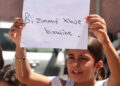
The arrest of Abdulwahid comes as Iraq prepares for federal elections on November 11. Campaign materials for Abdulwahid carry slogans that roughly translate to “Woe to the enemy whose hope lies in prison,” signaling defiance against opponents who may assume imprisonment will weaken him.
Since his detention, the NGM has said Abdulwahid’s arrest is politically motivated.
Earlier Sunday, Qubad Talabani, Deputy Prime Minister of the Kurdistan Region and a senior PUK figure, met with several media representatives in Erbil.
Talabani described media work in the KDP-controlled city as “difficult” but expressed support for journalists. He posted on Facebook that the PUK has protected press freedom and prevented “the other side” from restricting it, without specifying the parties he meant.
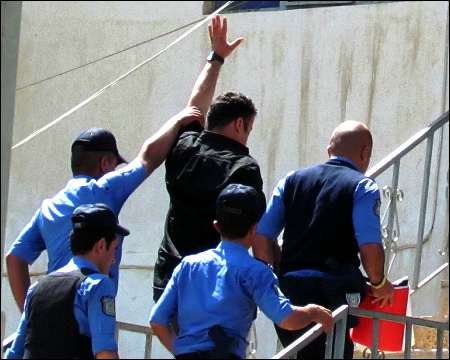
By contrast, authorities in areas controlled by the Kurdistan Democratic Party (KDP), led by Massoud Barzani, have jailed numerous Kurdish journalists. In August, the KDP extended the prison term of prominent journalist Sherwan Amin Sherwani just before his scheduled release.
In recent months, concerns over press freedom have been highlighted internationally.
In August 2025, a European Union report criticized caretaker Prime Minister Masrour Barzani of the Kurdistan Region for governance and human rights issues.
In September 2025, prominent Kurdish journalist and activist Hêmin Mamend, who escaped the KDP-controlled area, was shot and injured in Sulaimani.
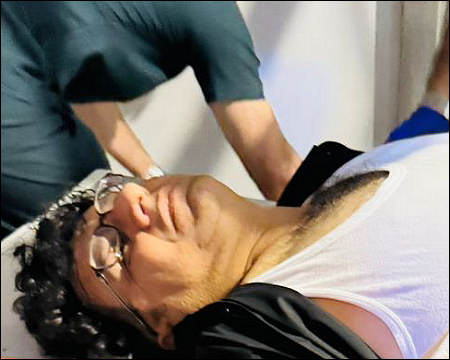
Mamend, a presenter at Sterk TV, is a well-known critic of the Kurdistan Democratic Party (KDP) and the Barzani family. Authorities in Erbil had previously issued a warrant for his arrest following a 2019 report, prompting him to flee KDP territory and settle in Sulaimani.
The political landscape in Iraqi Kurdistan remains divided between the KDP and PUK. Erbil and Duhok governorates fall under KDP control, while Sulaimani is dominated by the PUK.
This division has led to fragmented governance, with each party maintaining its own security forces, including separate Peshmerga units, police, and intelligence services, alongside the nominally centralized Asayish internal security service.
Residents in KDP-controlled areas face strict limits on free expression and public demonstrations, and critical media outlets are often barred.
By comparison, according to observers, in PUK-controlled areas, citizens can voice criticism of the party in the media and take part in protests. Critical media outlets operate more freely, though incidents such as Abdulwahid’s blocked interview show that limits still remain.
The incident highlights ongoing tensions over press freedom, political influence, and the treatment of opposition figures in the region, as the November elections approach.
(With files from Rudaw | NRT | Agencies)
Copyright © 2025 iKurd.net. All rights reserved.
Related posts:
 The Mustashar and the Jash – A View from the Position of ‘Iraqi National Unity’ on the ‘Descendants of Treason’
 The Suffocation of Iraq Kurdistan
 Shaswar Abdulwahid sentenced to five months in jail in Iraqi Kurdistan
 New Generation’s Shaswar Abdulwahid arrested in Sulaimani, Iraqi Kurdistan
 The Resurrection (Ba’ath) Party – Before the Iran-Iraq War
 Shaswar Abdulwahid released from jail on bail
 Iraqi Kurdistan: The Emperors’ New Clothes
 Iraqi Kurdistan – “Sold Out!” – Part II
 Shaswar Abdulwahid detention extended to 12 months despite time served
 Iraq: A State of Surveillance – Databases, Tracking And Corruption