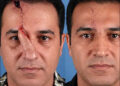

“SDF does not represent our people”, says Hassan al-Dughaim, the spokesperson for the preparatory committee
DAMASCUS,— Armed groups that refuse to disarm and submit to the authority of Syria’s Islamist-led Defense Ministry will not be included in a planned national dialogue on Syria’s future, a committee tasked with organizing the conference said Thursday.
The statement signals a potential exclusion of the Kurdish-led Syrian Democratic Forces (SDF), which control the Kurdish region in the north and east of the country, unless they comply with demands from Syria’s new administration in Damascus.
The SDF, the de facto army of the autonomous Kurdish-led administration in Syrian Kurdistan (Rojava), has had an ongoing presence in the region since the Syrian conflict escalated.
The seven-member preparatory committee, launched on Thursday, is responsible for laying the groundwork for a national conference. Interim President Ahmed al-Sharaa, also known as Abu Mohammed al-Golani, has said the conference will issue a statement that will serve as the foundation for a constitutional declaration.
The new Syrian administration has called for the U.S.-backed SDF to integrate into the national armed forces but has rejected the SDF’s proposal to merge as a single military bloc under its own leadership.
Hassan al-Dughaim, spokesperson for the preparatory committee, said the “SDF does not represent our people” and that it would have no role in the dialogue unless it lays down its arms.

“We are talking about a national dialogue. Whoever does not disarm will have no role in this process,” Dughaim said at a press conference in Damascus.
Sharaa, in a Jan. 31 interview with The Economist, said the SDF was willing to incorporate its forces into the Syrian state but needed more time to negotiate the terms.
Sharaa, leader of the Islamist group Hayat Tahrir al-Sham (HTS), which played a key role in ousting former President Bashar al-Assad on December 8, 2024, has said the preparatory committee will conduct consultations across Syria.
The national conference will invite “those we think truly represent the Syrian people.”
The committee consists of Dughaim, an Islamic affairs researcher, along with Mohammed Mastet, a former official in the HTS-affiliated government in northwestern Syria; Youssef al-Hijr, a former HTS politburo chief; and Mustafa al-Moussa, who also served in the HTS-backed administration.
It also includes two women: Hind Kabawat, a Christian opposition figure who has worked on interfaith relations and women’s empowerment, and Houda Atassi, co-founder of the humanitarian NGO International Humanitarian Relief.
Kurdish Response and International Concerns

Prominent Syrian Kurdish politician Salih Muslim criticized the committee’s composition, calling it politically one-sided and unrepresentative of Syria’s ethnic and religious diversity.
“Our concern is that individuals and groups aligned with Salafist movements will be invited in order to push their own agendas rather than serving the interests of the Syrian people,” Muslim said.
A Western diplomat focused on Syria echoed these concerns, saying the committee was not as inclusive as expected. The diplomat noted that six of its members are Sunni Muslims, with most having strong ties to Sharaa or HTS.
The Democratic Union Party (PYD), the main Kurdish political force in Rojava, and its military wings, the YPG and YPJ, have been key U.S. partners in the fight against the Islamic State (IS). The YPG, which forms the backbone of the SDF, has led military efforts against IS and taken control of large parts of Syria’s northeast.
In March 2019, Kurdish-led forces expelled IS from its last territorial stronghold in Baghouz, eastern Syria. Since then, Kurdish authorities have detained approximately 12,000 suspected IS fighters in makeshift prisons.
More than 21,000 Kurdish fighters, both men and women, have been killed in battles against IS and Turkish-backed Syrian Islamist groups.
On September 6, 2018, the Democratic Autonomous Administration of North and East Syria was officially established in Ain Issa. Since its formation, the Autonomous Administration has taken on the responsibility of implementing the principles of democratic confederalism across municipalities and regions in northeastern Syria.
Led by the Democratic Union Party (PYD), the Autonomous Administration in Syrian Kurdistan has garnered international recognition for its secular and decentralized governance model. It is noted for prioritizing gender equality, direct democracy, and environmental sustainability, positioning itself as a progressive alternative in the region’s complex political landscape.
In a December 2024 interview with The Jerusalem Post, Israel’s Foreign Minister Gideon Sa’ar described Syria as a fractured state, calling the Islamist-led regime in Damascus a “gang” and warning of the dangers posed by extremist groups across the country.
In a December 2024 interview with The Jerusalem Post, Israel’s Foreign Minister Gideon Sa’ar described Syria’s new Islamist rulers as “gangs,” rather than a legitimate government.
(With files from Reuters | Agencies)
Copyright © 2025 iKurd.net. All rights reserved
Related posts:
 Syria: A ‘Caliphate’ by Any Other Name — Would Smell the Same
 Stealing Syria
 The Resurrection (Ba’ath) Party – Before the Iran-Iraq War
 Syria: Revisiting The Caesar Torture Victim Photographs
 The Islamic State of Syria? (Al Dawla al-Islamiya fi al-Sham)
 Syrian political parties call ‘national dialogue conference’ outcomes meaningless
 Business with ISIS – Updated
 Sabotaging Syria
 Syria: The Truth Lies Buried beneath an Edifice of Lies
 Syria: The Hijacking of the Arab Spring: From ISIS to Hayat Tahrir al-Sham