

HASAKA,— Kurdish forces guarding an ISIS prison in northern Syria have firmly opposed transferring control of the facility to the new Islamist rulers in Damascus.
The move comes as Kurdish-led fighters brace for renewed attacks by the Islamist extremist group, which seeks to exploit Syria’s ongoing turmoil to reestablish its presence.
The Syrian Democratic Forces (SDF), a U.S.-backed coalition that controls about a quarter of Syria, reported two recent ISIS attempts to attack prisons in efforts to free detained fighters.
These assaults have occurred since Syrian President Bashar al-Assad’s government was overthrown on December 8, 2024, according to SDF officials.
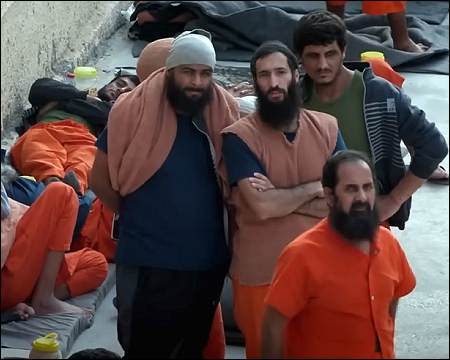
In the city of Hasaka, where approximately 4,500 ISIS fighters, including many foreign nationals, are held in a high-security prison, Kurdish officials warned of imminent threats.
“When the Syrian regime collapsed, ISIS seized significant quantities of weapons. They will reorganize and attempt to attack prisons again,” said a masked Kurdish officer speaking on the condition of anonymity.
Journalists, including those from Reuters, were granted rare access to the heavily fortified prison over the weekend. Among the detainees interviewed were a British citizen, a Russian national, and a German-Tunisian man, all of whom expressed regret over their involvement with ISIS.
The SDF, which functions as the military arm of the autonomous Kurdish administration in Rojava, Syrian Kurdistan, has been a key ally in the U.S.-led campaign against ISIS.
The Kurdish-led forces drove the group out of its de facto capital, Raqqa, in 2017 and captured its final stronghold, Baghouz, in 2019. Despite these victories, Kurdish officials remain wary of ISIS’s ongoing attempts to regroup.
The debate over who should control the prisons housing ISIS fighters has intensified since Hayat Tahrir al-Sham (HTS), a former al-Qaida affiliate, assumed power in Damascus and established a new government.

While Turkey advocates for handing over the facilities to the Syria’s new Islamist administration and has offered its support, the outgoing U.S. administration has backed the SDF in maintaining control.
Former U.S. Secretary of State Antony Blinken stated on January 8 that preventing an ISIS resurgence hinges on enabling the SDF to continue its operations. “The SDF has been crucial in securing foreign terrorist fighters, and they must be supported in this mission,” Blinken said.
The SDF has identified a rise in ISIS activity in parts of Syria, including sightings of fighters donning ISIS insignia. The Kurdish officer noted that recent footage showed individuals wearing ISIS flags among fighters who captured Damascus.
HTS, which opposes ISIS’s transnational jihadist agenda, reported thwarting an ISIS plot to target a Shiite shrine in Damascus on January 11. However, the SDF remains skeptical about any collaboration with the new government.
“Sharing control of the prisons is unacceptable. Securing these facilities is the sole responsibility of the SDF and its coalition partners,” the officer stated.
The Hasaka prison has previously been targeted by ISIS, including a deadly assault in 2022. One British detainee at the facility, who joined ISIS in 2014, described life in captivity as uncertain.
“We don’t know anything about our families, our wives, or our children,” he said, speaking through a barred window. A German detainee expressed similar sentiments, claiming regret for his actions and longing to return to his family.
Prison officials remain unconvinced by detainees’ expressions of remorse. “These are hardened fighters who fought until the last breath in Baghouz. They continue to appoint commanders and plan escape attempts,” the Kurdish officer noted.
The Kurdish-led administration has repeatedly urged foreign governments to repatriate their nationals held in Syrian detention facilities. In 2023, the administration announced plans to begin prosecuting these detainees locally. Human rights organizations report that many nations remain reluctant to reclaim their citizens due to security concerns.
In addition to prisons like the one in Hasaka, the SDF oversees al-Hol, a sprawling detention camp housing tens of thousands of people, including family members of suspected ISIS fighters. Authorities warn that the detainees at al-Hol, much like those in prison, continue to uphold extremist ideologies.
“Our experience shows that these detainees have not abandoned their beliefs. They are still dangerous and remain a threat,” the officer concluded.
(With files from Reuters)
Copyright © 2025 iKurd.net. All rights reserved
Related posts:
 Business with ISIS – Updated
 Turkey: Nato’s Islamic State Member
 Syria: Revisiting The Caesar Torture Victim Photographs
 Syria: The Triumph of Terrorism
 Hiding in Plain Sight: Turkey’s ISIS Links, Al-Baghdadi’s Last Refuge and the Jihadist-Controlled “Safe” Zone
 The Resurrection (Ba’ath) Party – Before the Iran-Iraq War
 The SDF–Damascus deal: A gamble over keys to Kurdish homeland
 Sabotaging Syria
 Syria: A ‘Caliphate’ by Any Other Name — Would Smell the Same
 Interview with Kurdish hostage, Huseyin Baybasin