


Sirwan Obaidi | Exclusive to iKurd.net
Translated by iKurd.net from Kurdish Awene
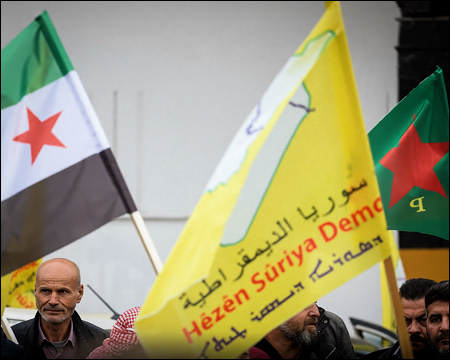
Syrian Kurdistan, Rojava, now finds itself facing a historic, destiny-defining test. The latest agreement between the Kurdish Syrian Democratic Forces SDF and the interim government in Damascus is not only a change in the military balance of power, but also a shift in the direction of a project moving from real self-administration toward forced reintegration.
In reality, this cannot be described as an ordinary agreement, it is the biggest political gamble over the keys to a home for which blood has been shed for years, a gamble between the “bad” and the “worse” that places the fate of a nation on a dangerous scale. These dangers can be summarized in the following points:
First: The New Power Dynamics and Geography of Conflict
At this stage, the agreement is the product of a convergence of interests among three main actors: the SDF, which is forced to seek a legal umbrella; the interim government, which wants to restore state legitimacy and control financial resources; and Turkey, which stands as an influential shadow behind Damascus’s decisions.
Ahmad al-Sharaa appears here as the representative of a new central authority that wants to regain, without military cost, the areas that have been outside Damascus’s control for years.
This shift is happening at a very sensitive and rapid moment. Setting a tight timeline such as “February 2” and allowing only one month for the handover of all institutions shows that Damascus wants to strip the Kurds of all strategic cards before they can secure effective political guarantees or stable international support. This rush itself raises serious doubts about the true and long-term intentions of the interim government regarding Kurdish cultural rights.
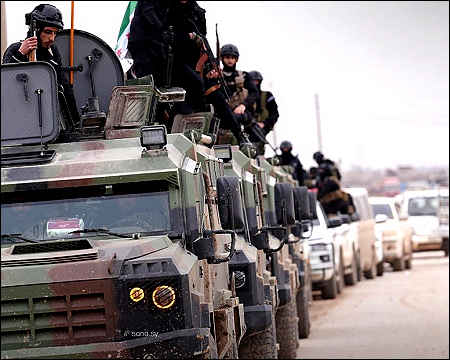
Geographically, the agreement places Hasaka and Qamishlo inside a new security integration zone. When the Rmeilan oil fields, Qamishlo airport, and border crossings are handed over to Damascus, the Kurds become, geographically and geopolitically, an encircled minority, inside a territory where they no longer control their economic keys or their gateways to the outside world. This changes the balance of power from “a partner that owns land and resources” to “an administrative component,” whose salary, livelihood, and security depend on the center.
Therefore, in my view, the substance of this agreement resembles more a process of military surrender than a political deal. What the Kurds gain from this arrangement are mostly symbolic promises, such as education in Kurdish, while what they give up is military sovereignty, land control, and the project of autonomy. The main motivation of the SDF here is simply to prevent complete collapse and to avoid the threat of Turkish attacks, in return, Damascus seeks to satisfy Ankara by ensuring that no independent Kurdish military force remains on the border.
In short, the method of implementing this agreement, by gradually dismantling “self-administration” and turning it into subordinate branches of Damascus ministries, is a clear sign that Kurds in Syria will no longer be treated as an independent political actor, but rather as civil servants and soldiers of a state centered in Damascus. This creates the danger that, in the future, all Kurdish national characteristics could be sacrificed within a narrow cultural framework for the sake of the state’s larger interests.
Second: The Strategic Trap, A Shadow Alliance Between Damascus and Ankara
This shift in power dynamics is not only internal to Syria, at its core lies a larger strategic trap jointly designed by Ankara and Damascus.
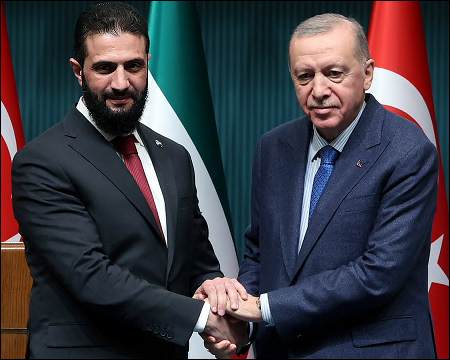
Behind this agreement stands a key actor whose signature is not on the document, but whose influence is greater than all others: Turkey. Ahmad al-Sharaa, as head of the interim government, needs regional backing and therefore cannot take any step that contradicts Ankara’s top interests. The danger here is that Damascus may act as a “political contractor” to implement what Turkey failed to achieve militarily, namely, the formal and legal dismantling of Kurdish military and political structures in Rojava.
The timeline of implementation, beginning in early February, is itself a dangerous temporal trap. This speed prevents the Kurds from establishing any international monitoring mechanism to guarantee the rest of the agreement, such as cultural rights. Damascus wants to disarm the Kurds as quickly as possible and seize the security and economic keys, so that later it can negotiate from a position of overwhelming strength with a Kurdish structure that has lost all leverage.
The geography of this trap is embedded in the heart of Kurdish cities like Qamishlo and Hasaka. The entry of Damascus security units and the integration of Kurdish forces into a centrally commanded army resembles a “hunter’s trap.”
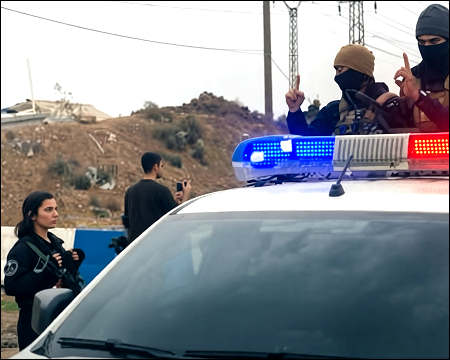
Without firing a single bullet, Damascus has penetrated Kurdish security walls and entered the cities. By transforming Kurdish forces from a “somewhat national protective force” into an auxiliary brigade under the Ministry of Defense, Kurds become legally bound to obey Damascus’s orders rather than defend Kurdish interests.
Here, the main goal of Damascus and Turkey is to transform the Kurdish question from a political issue into an “administrative problem.” Once Turkey sees that oil and borders are back under Damascus control and that the SDF effectively no longer exists, it considers its strategic goals achieved. In return, the interim government reassures Ankara that the threat of a Kurdish entity on the border has ended.
The greatest danger in the way this plan is implemented is this, after Damascus takes all powerful cards from the Kurds, including weapons, oil, airports, borders, and city security, it can easily, under Turkish pressure or in the name of territorial unity, withdraw from any commitments related to Kurdish national rights. At that point, the Kurds will have neither military power to defend themselves nor economic independence to survive, while streets and borders are controlled by Damascus. This is the short-term strategic trap that, in my opinion, Ahmad al-Sharaa and Turkey have set for the Kurdish political future.
Third: Cultural Rights, Protection of Identity or Political Neutralization?
Inside the agreement are several clauses about the Kurdish language and recognition of certificates, presented as a “political gift” by the interim government. But in reality, these rights are framed within a very vague and unstable legal structure. To be clear, what is happening is the reduction of the Kurdish question from a national, political, and human rights issue to merely a “cultural characteristic” within a centralized Arab state.

This approach effectively says, “You may speak your language and sing your songs,” but you do not have the right to register official documents in Kurdish in state institutions. This makes Kurdish citizens second-class citizens in Syria. Moreover, these decisions remain at the level of temporary presidential decrees under a government that still lacks a permanent constitution, they could easily be reversed with a single signature.
The implementation timeline is especially alarming because cultural rights are placed after the handover of oil fields, border crossings, and city control. Damascus speaks of Kurdish education as a “reward,” but only after the Kurds surrender all sources of power. This sequencing leaves the Kurds with no leverage to prevent the Syrian Ministry of Education from reshaping or restricting Kurdish curricula in the future.
The scope of these rights is limited only to Kurdish areas. Strategically, this means Kurdish will not become an official language across Syria, but merely a local optional language. This turns Kurds from a “partner nation” into a “linguistic minority.” Implementing this through Damascus ministries, without an elected parliament, places Kurdish rights under a bureaucracy that historically pursued Arabization policies.
The main driver of Ahmad al-Sharaa’s government in this regard is to silence Kurdish public opposition so that they more easily give up military power. This is a form of “political blinding,” granting linguistic rights in exchange for surrendering sovereignty, economy, security, and land. Once the SDF becomes part of the Syrian army, Kurdish weapons will no longer protect Kurdish language and culture, they will protect the borders of the Arab Syrian state, which could ban Kurdish education again tomorrow.
Since these rights are not enshrined in a permanent constitution, they resemble a “political mirage” rather than real achievements. If Kurds cannot turn these administrative promises into constitutional law backed by international guarantees and UN monitoring, history will repeat itself, and with the first shift in power, Kurdish language and culture will again be pushed underground.
Fourth: Challenges on the Ground, From Demography to Economic Dependence
During implementation, this agreement will face major political, geopolitical, and social obstacles that neither the interim government nor the SDF can easily overcome. The greatest tension lies in Afrin, Serekaniye, and Tel Abyad. The return of displaced people is not only dependent on Damascus’s will, but also on armed groups currently present in those areas under direct Turkish command. This creates a high risk of violent clashes between original Kurdish residents and Arab families resettled as part of demographic change, potentially triggering a new internal conflict and further Arabization of occupied areas.
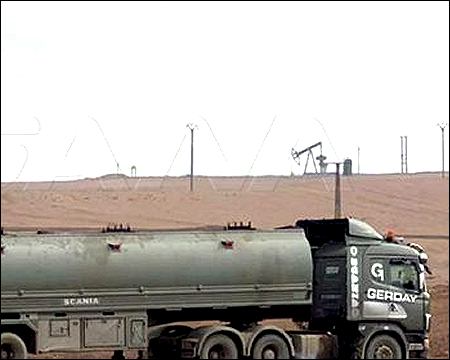
The timeline again traps the Kurds into economic dependence. Within just ten days, handing over the Rmeilan and Hasaka oil fields to the Ministry of Energy cuts off the financial lifeline of the Kurdish region. From next month onward, salaries of public employees and reconstruction budgets will depend entirely on Damascus ministries.
This dependence can later be used as political pressure, similar to how Baghdad treats the Kurdistan Region in Iraq. Whenever Kurds demand national or political rights, Damascus could cut budgets and fuel, paralyzing life in northeastern Syria.
Meanwhile, the security clauses revive the risk of a police state in Kurdish cities. The entry of internal security forces into Qamishlo and Hasaka and the takeover of civil institutions are not merely administrative changes, but a transformation of social control systems. Ahmad al-Sharaa aims to prevent any future Kurdish political movement or mass protest against central authority.
This weakens Kurdish society and deprives it of its collective defense capacity. If Damascus acts in bad faith, it could, under international legitimacy and coordination with Turkey, restart military pressure on the SDF without facing serious global backlash, since it would appear as a “national army enforcing law.”
This article was originally published in the Kurdish language in Awene Newspaper on February 3, 2026.
The opinions are those of the writer and do not necessarily represent the views of iKurd.net or its editors.
Copyright © 2026 iKurd.net. All rights reserved.
Related posts:
 What makes a good NATO ally? The Case of Turkey
 Business with ISIS – Updated
 The Resurrection (Ba’ath) Party – Before the Iran-Iraq War
 Turkey: Nato’s Islamic State Member
 Turkey: The Psychological War Against the Kurds Through the PKK – Part I
 Damascus, Kurdish SDF agree to de-escalate after Aleppo clashes
 The SDF–Syrian Regime Agreement: Context, Gains, and Ongoing Risks
 Syria: Revisiting The Caesar Torture Victim Photographs
 Martyrs for Millionaires: The Black-Market Politics behind the Theft of Syria’s Oil
 Syria: A ‘Caliphate’ by Any Other Name — Would Smell the Same