

LONDON,— The British government has issued its first wave of sanctions aimed at dismantling international people-smuggling rings, with a sharp focus on Iraqi Kurdish operatives and other syndicates stretching across Asia, the Balkans, and North Africa.
Announced on Wednesday, the U.K. Foreign, Commonwealth & Development Office (FCDO) revealed that 25 individuals and entities are being sanctioned for facilitating irregular migration into Britain.
According to the official press release from GOV.UK, this move marks the launch of a new global sanctions regime explicitly designed to disrupt immigration crime.
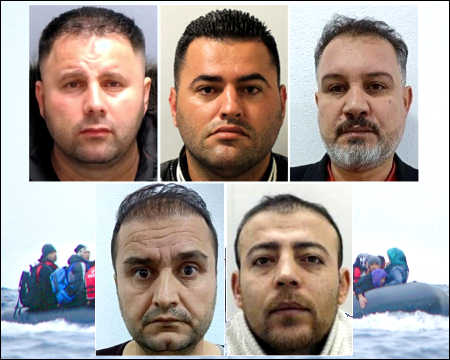
Among those penalized are key Iraqi Kurdish figures accused of trafficking migrants through concealed truck compartments and across the English Channel via inflatable boats. British officials say these actors form a core part of transnational criminal systems profiting from human displacement.
The U.K. has frozen assets and imposed travel bans on several individuals, including Iraqi Kurds Goran Assad Jalal and Hêmin Ali Salih, who are reportedly involved in smuggling migrants into Britain using lorries. Others, such as Azad Khoshnaw and Nuzad Khoshnaw, are accused of supplying inflatable boats and outboard motors for dangerous Channel crossings.
Sanctions have also been applied to hawala networks tied to smuggling operations through the Kurdistan Region of Iraq. British authorities have named three Kurdish individuals allegedly central to these financial pathways.
Muhammed Khadir Pirot, a hawala banker, is accused of managing payments from migrants moving from Iraq through Turkey toward Europe.
Mariwan Jamal is said to operate behind the scenes, helping direct funds through hawala intermediaries linked to smuggling networks. Meanwhile, Rafiq Shaqlaway, another Iraqi Kurd, is alleged to act as a financial advisor to migrants arranging payment to traffickers along key routes into Europe.
These informal money channels—difficult to trace and largely unregulated—allow smuggling operations to receive payments undetected, British officials say. By cutting off access to the UK financial system, the sanctions aim to sever these pipelines and cripple the support structure behind trafficking operations.
“These actions show the UK will go after smugglers no matter where they operate,” said Foreign Secretary David Lammy. “We are using every tool available to hold these criminals accountable and prevent further loss of life.”
The designations target those engaged in activities ranging from maritime equipment supply to arranging forged travel documents and managing migrant transport routes. The U.K. asserts that halting financial and material support is crucial to interrupting the business model of human trafficking.
Other names on the list include Bledar Lala, an Albanian member, identified as overseeing the Belgium operations of a smuggling ring; Alen Basil, an ex-police interpreter accused of leading a violent network in Serbia; and Mohammed Tetwani, described as the “King of Horgos,” who allegedly ran a camp known for brutal treatment of refugees.
In North Africa and the Balkans, entire smuggling gangs such as the Kazawi and Tetwani groups are included, both reportedly known for extortion, violence, and sexual abuse of migrants unable to pay. The sanctions also apply to figures involved in manufacturing fake passports, including members of the Kavač and Škaljari gangs in Montenegro and Serbia.
One Chinese company, Weihai Yamar Outdoors Product Co., has been blacklisted for manufacturing and promoting small boats online allegedly tailored for illegal crossings.
British authorities say this comprehensive enforcement strategy supports the “Plan for Change,” a national effort to reduce unauthorized migration and reinforce border controls. The campaign aligns with the National Crime Agency (NCA), which works alongside international law enforcement to dismantle organized smuggling operations.
NCA Director General Graeme Biggar said the sanctions provide “a powerful new way” to dismantle criminal networks exploiting migrants for profit. “These sanctions will disrupt the financial and logistical capabilities of key networks facilitating illegal entry into the UK,” he added.
The policy also introduces new legal powers under the Sanctions and Anti-Money Laundering Act, giving the U.K. government authority to freeze assets, ban travel, and disqualify individuals from holding corporate positions in the U.K.
The new Global Irregular Migration Sanctions Regime will be reviewed in Parliament after summer recess. Until then, the FCDO says it will continue building cases against offenders and collaborate with allies to expand the list.
Officials note that over 35,000 individuals without legal status in the U.K. have been returned to their countries since the last election, marking a 13% increase from the previous year. This approach falls under the broader “disrupt, deter, return” strategy intended to minimize irregular migration routes.
The government says future designations will continue to target traffickers across all regions, reinforcing Britain’s stance against organized immigration crime.
(With files from gov.uk)
Copyright © 2025 iKurd.net. All rights reserved
Related posts:
 Business with ISIS – Updated
 Saddam Hussein’s Enemies: Paving the Road to the Invasion of Iraq
 Iraqi Kurdistan – “Sold Out!” – Part II
 The Resurrection (Ba’ath) Party – Before the Iran-Iraq War
 Two Kurdish human traffickers plead guilty in UK
 Martyrs for Millionaires: The Black-Market Politics behind the Theft of Syria’s Oil
 Germany raids Iraqi Kurdish network suspected of migrant smuggling to UK
 The Double Cross of Iraq And The Discordant Death of WMD Inspector, Dr David Kelly – The 17th Anniversary
 The Mustashar and the Jash – A View from the Position of ‘Iraqi National Unity’ on the ‘Descendants of Treason’
 Iraq’s Internal Enemies: Shi’a rivalries and the fallout from the US-led invasion